Sotomayor drops blistering dissent as Supreme Court reverses itself on Black voting power
The US Supreme Court’s right-wing majority Monday opened the door for Alabama to eliminate a majority-Black congressional district before this year’s midterm elections in a decision that came as Tennessee voters sued to stop their state’s racially rigged redistricting.
The nation’s high court issued a 6-3 order with no explanation allowing Alabama officials to revert to a congressional map which, despite the state population being roughly 26% African American, has just one majority-Black district out of seven. The order came just a week before Alabama’s primary election and less than three years after the same court ordered the state to create a second majority-Black district.
In that case, Allen v. Milligan, two right-wing members—Chief Justice John Roberts and Justice Brett Kavanaugh—joined their liberal colleagues who sided with Black voters in defense of the Voting Rights Act.
The decision ironically voided the last remaining provision of Section 2 of the Voting Rights Act, which allows voters of color to challenge racially discriminatory electoral maps in court.
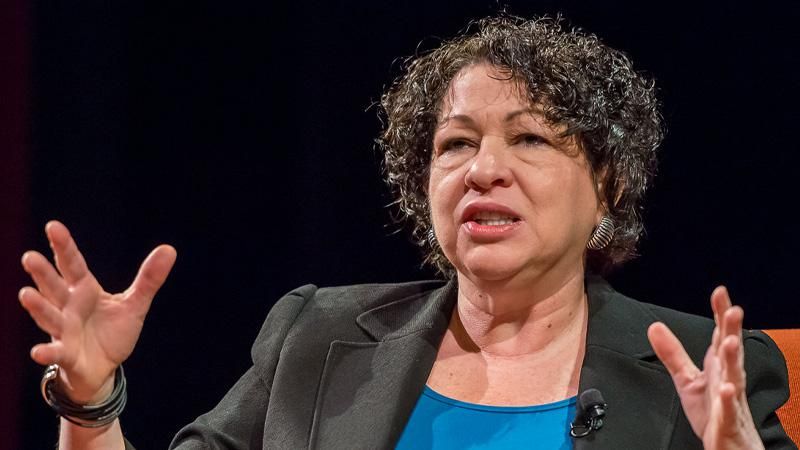
Dissenting in Monday’s decision, liberal Justice Sonia Sotomayor noted that the high court previously found that “Alabama violated the 14th Amendment by intentionally diluting the votes of Black voters.”
“That constitutional finding of intentional discrimination is independent of, and unaffected by, any of the legal issues discussed in Callais,” she added.
Earlier on Monday, the ACLU and ACLU of Tennessee filed a federal lawsuit on behalf of three Black voters, the Black Clergy Collaborative of Memphis, the Memphis A. Philip Randolph Institute, and the Equity Alliance seeking to block the state’s racially rigged congressional map approved last week by the state Legislature and signed into law by Republican Gov. Bill Lee despite tremendous opposition from African American Tennesseans and their allies.
The lawsuit argues that the new map violates the Constitution by intentionally discriminating against Black voters in Memphis and retaliates against them for exercising their First Amendment right to political expression and association.
As the ACLU of Tennessee explained:
Tennessee has had a Memphis-based congressional district for the better part of a century. The challenged map dismantles that district, which is the state’s only majority-Black congressional district. It divides Black voters in Memphis and Shelby County across three majority-white districts that stretch from Memphis hundreds of miles into central Tennessee, diluting Black Memphians’ votes and stripping those communities of any meaningful voice in Congress...
A white-controlled supermajority of the Tennessee General Assembly enacted the new map targeting Black Memphians over mere days in a special legislative session that had been called after the candidate-qualifying deadline had already run.
“Black voters in Memphis did exactly what the Constitution empowers every American to do, which is to choose their representative,” ACLU of Tennessee executive director Miriar Nemeth said in a statement. “The Legislature’s response was an effort to ensure that those votes never carry the same weight again. The law has a name for this, and it’s not redistricting, it is textbook First Amendment retaliation. And it is, at its heart, racism.”
The Tennessee branch of the NAACP, state Democratic Party, Democratic candidates, and voters have also sued to challenge the redistricting.
The current partisan redistricting war began when President Donald Trump and congressional Republicans, who fear losing control of Congress after November’s midterms, pushed Texas to enact a mid-decade redistricting. California retaliated with its own voter-approved redraw, and numerous red and blue states have followed suit or announced plans to at least consider doing so.
On Monday, Virginia’s Democratic attorney general and party legislative leaders asked the US Supreme Court to block a state high court ruling against a voter-approved redistricting that favors Democrats.
Last week, Roberts dismissed the increasingly prevalent public perception that Supreme Court justices are “political actors.”
Following Monday’s ruling, Loyola Law School professor Justin Levitt said sardonically on Bluesky, “Boy, it’s a complete mystery why the public thinks the court is making partisan political decisions.”