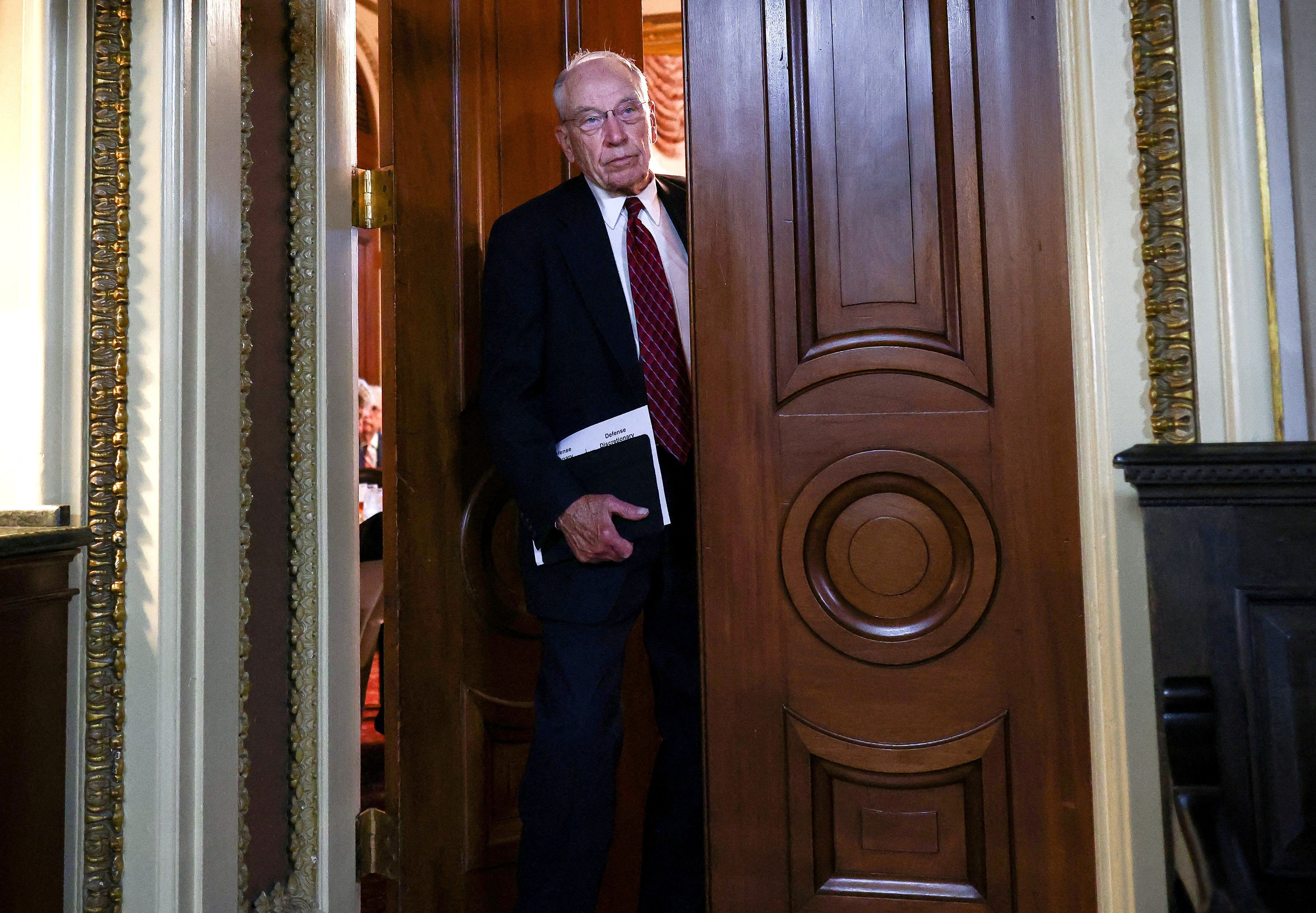
Sen. Chuck Grassley (R-IA) urged President Donald Trump Saturday night to take emergency action to combat the soaring cost of diesel fuel across the United States, in what Politico’s Meredith Lee Hill described as “another warning sign for the Iowa Senate race.”
“W diesel $6.57 in Iowa why doesn’t Pres Trump put an embargo on diesel exports like presidents in the 70s put embargoes on ag products bc food prices were inflated,” Grassley wrote in a social media post on X, using his characteristically casual writing style. “High diesel prices ARE KILLING FARMERS INCOME.”
The average price of a gallon of diesel hit an all-time high in the United States on Saturday, reaching $6.49 — nearly $1 higher than a month ago and up 33 cents from a week earlier, according to AAA. In Iowa, diesel averaged $6.21 a gallon Saturday, having climbed at a similar pace over the past month.
As flagged by Lee Hill, Grassley’s plea could be seen as a dire sign for GOP Senate nominee Ashley Hinson, who’s running against Democratic nominee Josh Turek in a race that’s gone on to become “increasingly competitive.”
“Diesel prices are so high in Iowa that Chuck Grassley is calling for Trump to take 1970s style emergency actions,” Lee Hill wrote in a social media post on X.
“As Politico has reported - GOP lawmakers have been privately pressing Trump officials for weeks to take emergency actions to try to lower gas prices ahead of the midterms — including during the GOP convention in Dallas.”
Given Grassley’s senior role in Congress as Senate president pro tempore, journalist Molly Jong-Fast questioned out loud whether the 93-year-old lawmaker had better options for making such requests.
“There has to be a better way to communicate with the leader of your party,” Jong-Fast quipped. “Maybe you know a senator from the party in power? Oh wait,” she wrote in a follow-up post.
ABC News’ Ben Siegel warned that, should Trump oblige Grassley’s request, such an embargo could ultimately backfire.
“One analyst told ABC News banning diesel exports would bring prices down in some gulf and midwestern states for a few weeks, before refineries cut production in response, causing prices to spike again,” Siegel wrote in a social media post on X. “It could also cool foreign investment in U.S. energy industry & production.”