Colombian government set to announce 'historic' peace deal with FARC rebels
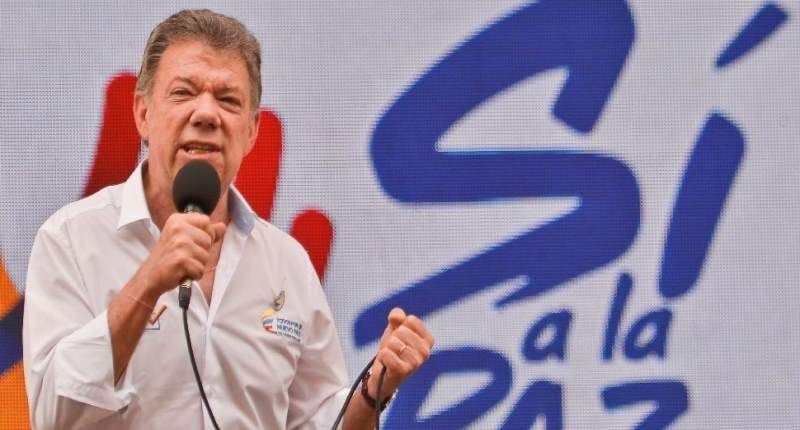
Colombia's government and FARC rebels are expected to make what President Juan Manuel Santos called a "historic" announcement Wednesday on a peace deal to end their half-century civil war.
Sources close to the peace negotiations said there would be a major announcement in Cuba, where the two sides have been in talks for nearly four years. Cuban officials called a press conference for 7:00 pm (2300 GMT).
Speaking in Colombia, Santos said negotiators were "putting the finishing touches" on a final peace accord.
"I hope to give the country historic and very important news today," he said.
Over the past few days, the government and the Revolutionary Armed Forces of Colombia (FARC) have been discussing a range of unresolved topics, and worked late into the night Tuesday to draft a joint statement, sources from the two delegations told AFP in Havana.
However, officials contacted by AFP were unable to say when the final peace accord would be signed.
"We are working on drafting an announcement on the conclusion of the negotiations. Certain technical matters still have to be discussed," a member of the FARC negotiating team said, on condition of anonymity.
Government negotiators confirmed the information.
FARC leader Timoleon "Timochenko" Jimenez tweeted that negotiators were "at the threshold of important announcements to bring a final accord."
A smiling President Santos called it a "very special day," speaking to a group of children taking part in a government-sponsored art competition called "Paint a Colombia in Peace."
"May this country that you are imagining and painting become a reality," he said.
Once a peace deal is signed, the FARC will begin moving its fighters from their jungle and mountain hideouts into disarmament camps set up by the United Nations, which is helping monitor the ceasefire.
- Referendum looms -
The war, which began in 1964, is the last major armed conflict in the Americas. It has killed 260,000 people, uprooted 6.8 million and left 45,000 missing.
Along the way, it has drawn in several leftist rebel groups and right-wing paramilitaries. Drug cartels have also fueled the violence in the world's largest cocaine-producing country.
Three previous peace processes with the FARC ended in failure.
But after a major offensive by the army from 2006 to 2009 -- led by then-defense minister Santos -- a weakened FARC agreed to come to the negotiating table.
This time, a final peace accord looks all but certain.
However, the deal must still be endorsed by Colombians in a referendum. Santos's top rival, former president Alvaro Uribe, is leading the "No" campaign, arguing his successor has given too much away to the FARC.
Meanwhile, the government is still fighting a smaller rebel group, the National Liberation Army (ELN), whose ongoing kidnappings have derailed efforts to open peace negotiations.