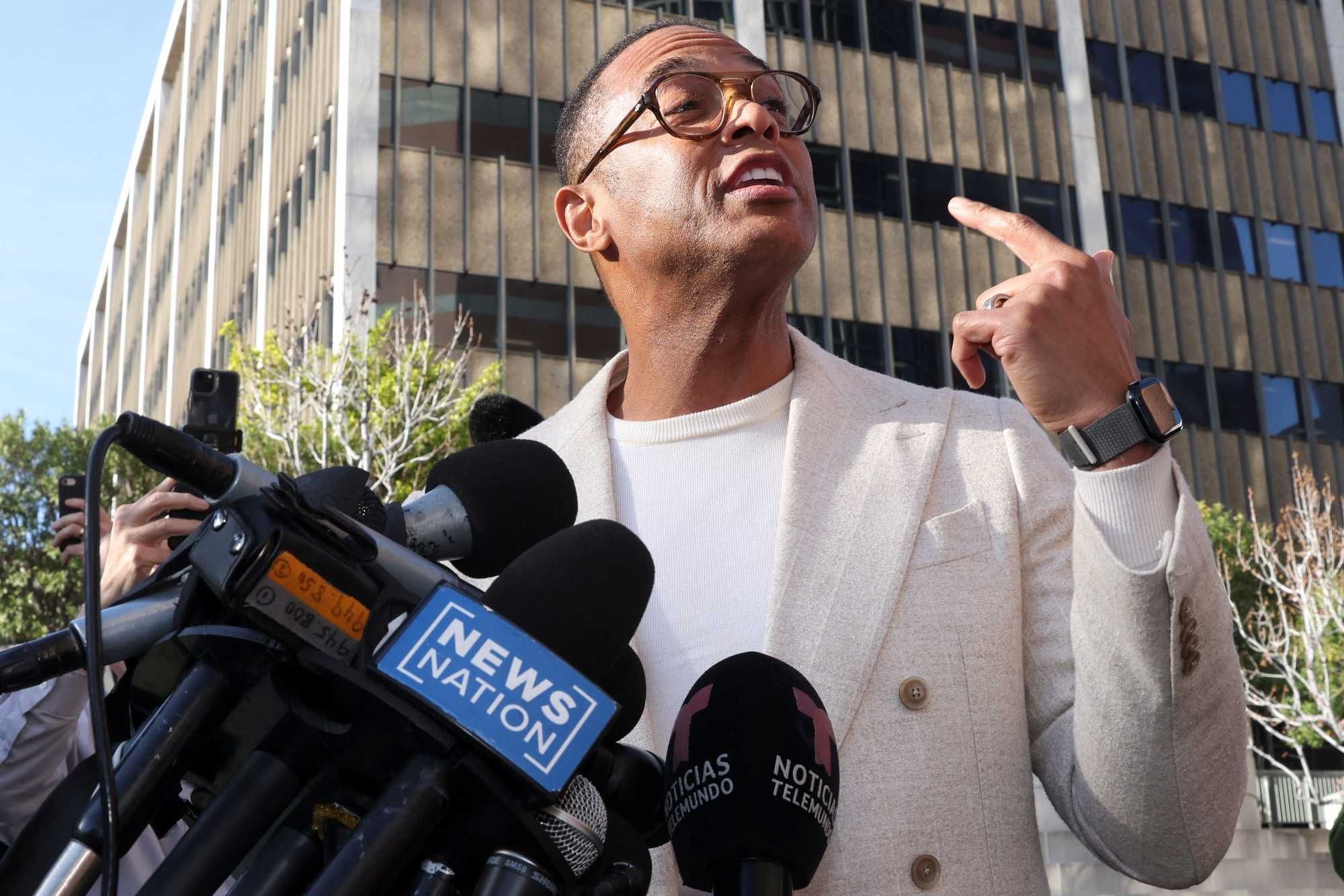
President Donald Trump's administration is trying to prosecute former CNN reporter Don Lemon, for his presence at a protest in Cities Church in Minnesota that targeted a pastor who has worked with Immigration and Customs Enforcement. One of the main charges stems from the Freedom of Access to Clinic Entrances (FACE) Act, a statute traditionally used to stop anti-abortion protesters from interfering with patients, but which also has a provision granting similar protections to houses of worship.
Some experts and pundits have speculated the case could be thrown out due to the First Amendment's protection of freedom of the press — but in fact, Anna Bower, Eric Columbus, and Troy Edwards argued for Lawfare on Wednesday, there's a different provision of the Constitution that makes a much stronger case for throwing out the FACE Act charges: the Commerce Clause.
A First Amendment defense, they argued, isn't so straightforward: "As the Supreme Court has noted, there is a 'well-established line of decisions holding that generally applicable laws do not offend the First Amendment simply because their enforcement against the press has incidental effects on its ability to gather and report the news.'" So if the prosecution can successfully argue Lemon and his co-conspirators intimidated churchgoers with the threat of force, the First Amendment wouldn't shield that.
A better argument, and one that could set a major precedent in law, they said, is the fact that the Commerce Clause didn't actually give Congress the authority to apply the FACE Act to houses of worship in the first place.
The FACE Act only covers churches, conservative legal scholar Ed Whelan has noted, because Republicans forced debate on an amendment to do so in a bid to stop the bill from passing altogether, only for Democrats to catch them off guard by agreeing to the amendment. Despite this, the FACE Act has almost never been used to prosecute church disruptions, as there are other statutes on the books for this, chiefly the Church Arson Prevention Act of 1988.
For this reason, the authors point out, the FACE Act's application to churches has not been given a lot of constitutional scrutiny by courts — but that may change now.
"As the Supreme Court has explained, the Commerce Clause permits Congress to regulate 'the channels of interstate commerce,' the 'instrumentalities of interstate commerce, and persons or things in interstate commerce,' and 'activities that substantially affect interstate commerce,'" said the analysis. "This power extends even to 'purely local' activities so long as they are 'part of an economic class of activities that have a substantial effect on interstate commerce.'"
Courts have clearly held that abortion clinic access is an interstate commerce issue, due to the far-reaching impact of health care access — but they have never made such a ruling for local church services, and the same arguments don't apply very well in this case. Moreover, the analysis noted, the FACE Act doesn't have a “jurisdictional hook” provision, a common legal device in Commerce Clause laws that limits its application to activities that clearly have an interstate commerce element — giving courts a compelling potential reason to strike it down.
"Absent a valid exercise of Congress’s Commerce Clause authority, the FACE Act’s religious worship provisions are unconstitutional and unenforceable," wrote the authors. And to top it all off, the other charge the Trump administration has filed — a "conspiracy against rights" charge under the Ku Klux Klan Act of 1870 — would have to be dismissed if the FACE Act charge is dismissed, because it "depends on the deprivation of a right 'secured” by that provision.'"