Facebook
Here’s how Russian money infiltrates American political campaigns — and why ISIS funding could be next
February 6, 2019 7:46PM ET
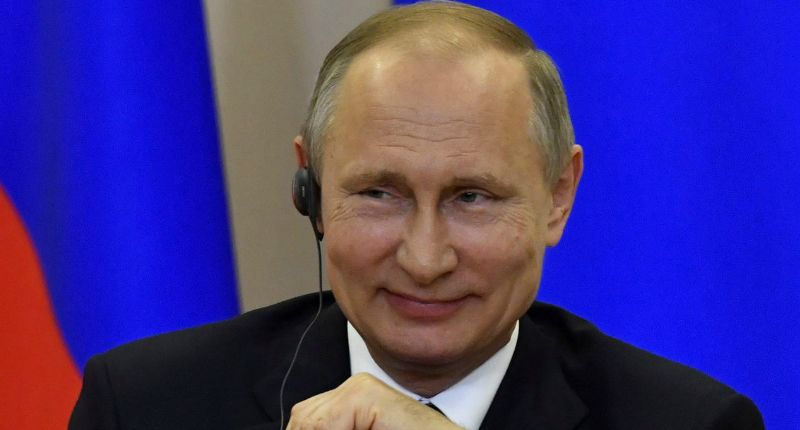
Russian President Vladimir Putin (Photo: Screen capture)
Money from Russians and other foreign nationals and governments can easily infiltrate American political campaigns thanks to the 2010 Citizens United ruling.
Thomas O. Melia, a senior fellow at the Foreign Policy Research Institute think tank, wrote in The American Interest that Citizens United opened the door for the type of "dark money" expenditures that lead to foreign money flowing into American campaigns.
Because of that seminal Supreme Court ruling, Super PACs are allowed to take donations from designated 501(c)4 "social welfare" nonprofits that can do "much more direct politicking" than campaigns and PACs — all while hiding who their donors are, Melia wrote, in what's known as a "dead-end disclosure."
Although the Supreme Court ordered that such groups disclose their donors ahead of the 2018 midterms in a move many lauded as closing the "dark money" loophole, the advent of such groups continues to raise alarms as recent reports reveal that these donations are soon to reach the $1 billion mark since the 2010 ruling.
The American Interest noted that the Kremlin allegedly funneling money through the National Rifle Association to get it to Donald Trump's 2016 campaign is perhaps the largest example of foreign dark money entering American politics — but that it's possible other countries and foreign organizations could do so as well.
"There is no reason the Chinese or Iranian or North Korean governments, or the Islamic State for that matter, could not be doing the same—if they were so inclined and could also find useful idiots or willing cutouts," Melia wrote.
Neither Republicans nor Democrats, the FPRI fellow wrote, seem interested in investigating the possibility of foreign dollars entering American politics.
"Even the recent—and otherwise quite impressive—report by the Senate Foreign Relations Committee minority staff on Russia’s aggression against western democracies failed to mention this vulnerability created by the Supreme Court," Melia added.
Days after Citizens United was decided, Melia noted, then-President Barack Obama warned that "foreign entities" may snake their way into American politics during his 2010 State of the Union.
"Justice Samuel Alito famously disagreed—'not true' he said at the time, prompting a few days of handwringing about inter-branch relations at the highest level," the FPRI fellow added. "It may turn out that Obama was correct in ways he did not anticipate. New developments, new knowledge, would seem to require reconsideration of this decision, by Congress if not by the Supreme Court."