House GOP stealthily moves to reshape US military in ‘unprecedented’ fashion: report
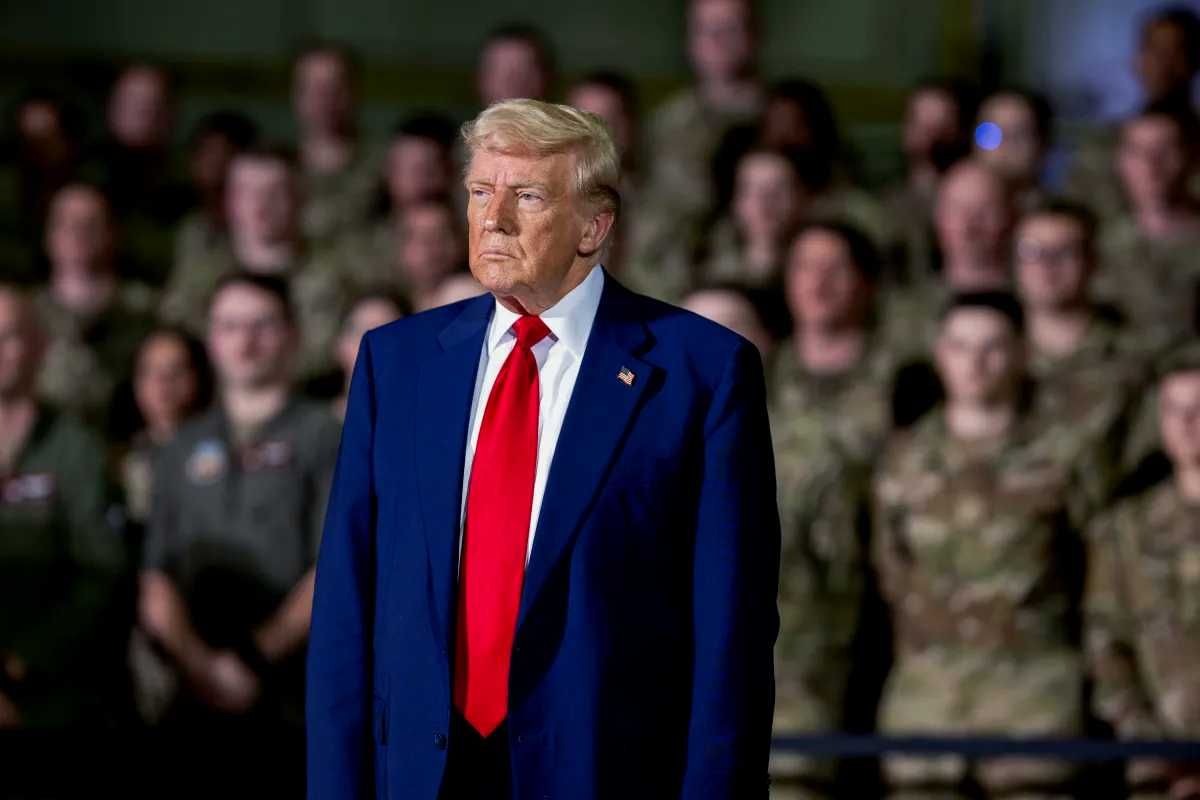
President Trump speaks at Selfridge Air National Guard Base in Harrison Township, Michigan on April 29, 2025. (White House)
May 29, 2026
House Republicans on the Armed Services Committee released their defense budget proposal this week for fiscal year 2027, which includes more than $1.1 trillion in spending, but buried within the 500-plus-page document is a provision that one foreign policy analyst warned Friday was “unprecedented,” and could reshape the U.S. military indefinitely.
That provision is titled the “United States-Israel Defense Technology Cooperation Initiative,” and according to Ben Freeman, a foreign policy analyst at the Quincy Institute for Responsible Statecraft, it would “provide a higher level of military-industrial integration [with Israel] than the U.S. has with any other country in the world.”
Writing in a report published by Responsible Statecraft, Freeman noted that the United States and Israel “already work together heavily” on military operations and intelligence sharing. He also acknowledged that the United States “has worked closely with its NATO partners” militarily. The provision buried within the defense spending proposal, however, was “a different beast entirely,” Freeman warned.
“It would fuse the U.S. and Israeli defense sectors in multiple areas vital to the battlefields of the future, like autonomous systems and cyber,” Freeman wrote. “It would also bring extraordinary Israeli influence to the U.S. beyond what it already has through the Israel lobby and its robust network of social mediainfluencers.”
The expanded Israeli influence on U.S. politics that the budget provision may clear a path for, Freeman cautioned, could become irreversible.
“It would give the Israeli government the opportunity to greatly expand one of the most powerful levers of influence in U.S. politics: jobs in the U.S.,” Freeman wrote.
“By expanding or starting new co-production facilities like it already has in Mississippi and Arkansas, the Israeli government could boast of providing jobs on U.S. soil, thereby securing allies among members of Congress who represent the districts where those jobs lie.”
Freeman continued, “The result could well be a U.S. political system even more susceptible to the whims of an Israeli government that seemingly has no qualms about drawing the U.S. into military conflicts in the Middle East.”