'Just want to kill it': Dems say Trump absence from health care talks shows true GOP aim
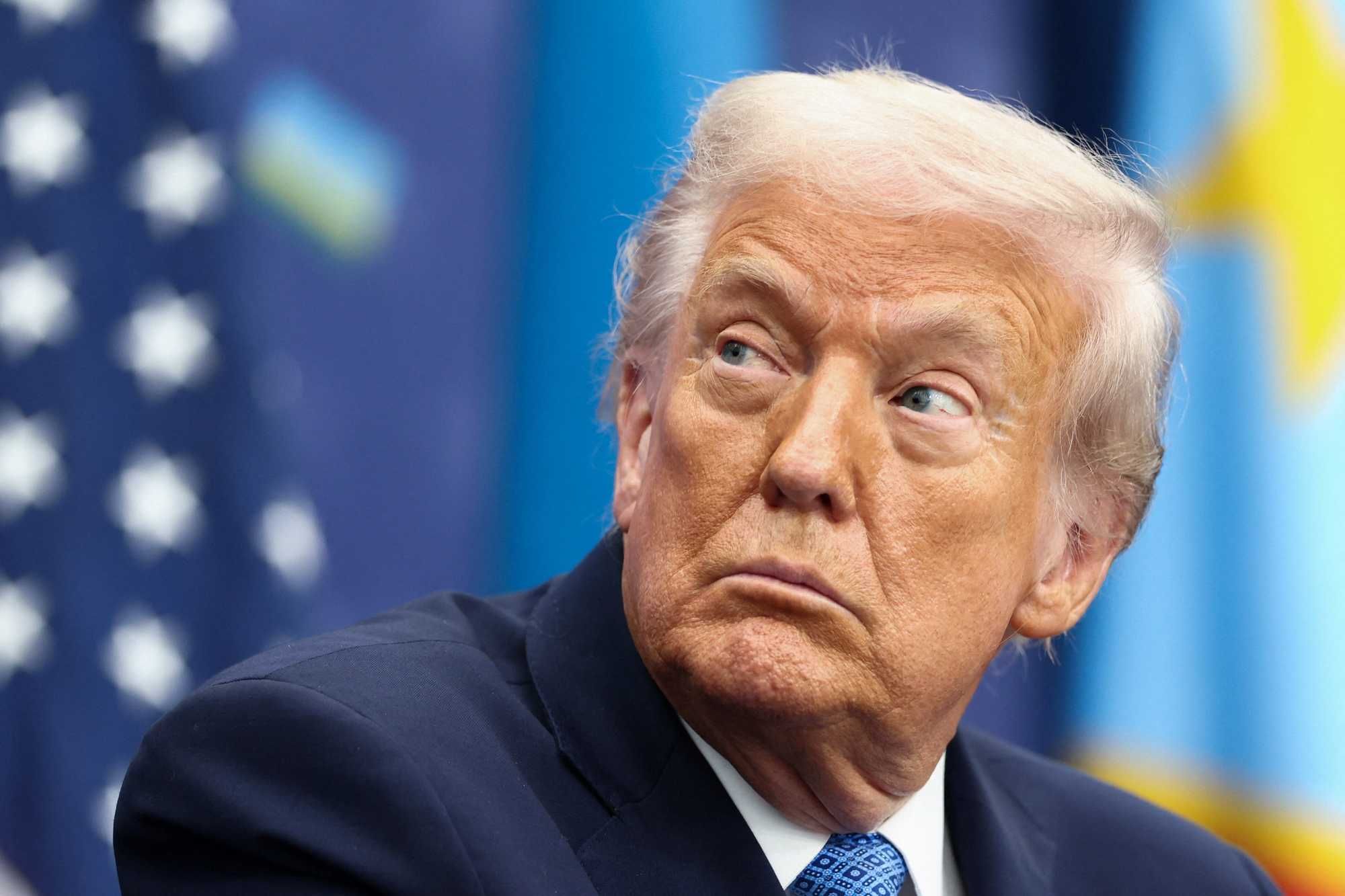
Donald Trump looks on during a ceremony in Washington. REUTERS/Kevin Lamarque
December 05, 2025
WASHINGTON — To end the longest government shutdown in American history, a bipartisan group of U.S. Senators came together and agreed to kick the can.
The can seems to have hit a brick wall.
Unless Congress acts, massive spikes in health-care premiums are coming in the New Year for millions of Americans — the reason Democrats refused to fund the government this fall.
“This whole year we've been moving backwards on health-care because of this administration,” Sen. Andy Kim (D-NJ) told Raw Story just off the Senate floor.
While President Donald Trump and congressional Republicans have yet to offer a policy solution, this week, Senate Minority Leader Chuck Schumer introduced a measure to stave off premium spikes by extending COVID-era health insurance subsidies for three years.
As part of the deal that ended the shutdown, Senate Majority Leader John Thune promised to bring Democrats’ proposal up for a formal vote. That is now scheduled for next Thursday.
But the measure’s fate is all but sealed. Many Republicans say they could stomach a one- or two-year extension but not three, which is why many in the GOP dismiss Schumer’s bill as a show vote aimed at next year’s midterm elections.
“No, not to the people in Nevada. They don't think that's a show vote. They need it,” Sen. Catherine Cortez Masto (D-NV) told Raw Story as she walked through the basement of the U.S. Capitol.
“They need us to extend those subsidies if they're going to be able to afford health care. That's what we should be doing.”
No one in Washington was really discussing health-care until the shutdown. Now it’s the talk of the town. Cortez Masto says that’s because, unlike in 2024, Democrats are now listening to voters.
“If you just are talking to the American public, we got a health-care crisis,” Cortez Masto said. “Too costly, too high — prices are too high. People can't afford medicine when they need it, so we do need reform.”
For most of the shutdown, the mood was so bitter on Capitol Hill, party leaders refused to talk to each other. But as the shutdown stretched to a record-breaking seven weeks, rank-and-file lawmakers reported productive bipartisan talks on health reform, just way off our screens.
“I had been somewhat hopeful during the shutdown,” Kim, who served in the House until he was sworn in as a Senator in January, said. “I was engaged with a number of House Republicans that were expressing a similar sentiment of wanting to make progress, but Speaker [Mike] Johnson successfully silenced them during the shutdown.”
“Has their tune changed since the government reopened?” Raw Story inquired.
“They're still pissed,” Kim said. “… but I think that they're feeling like … Johnson's just continuing to be obstructionist.”
Kim’s not too optimistic ahead of next week’s vote to extend Obamacare subsidies, in part because the Republican whose opinion matters most has been MIA.
“We’ll see. I'm still engaged with my colleagues on both sides right now,” Kim said. “But right now, what we need to have to actually move this is for Trump to weigh in and get engaged. And so far, he's been not only unwilling but often being obstructionist as well.”
The New Jersey Democrat wonders what happened to Trump’s populist appeal, let alone heart.
“It just boggles my mind. I mean like, the majority of people that are going to be hurt by these tax credits expiring live in states that he won,” Kim said.
“And it just makes no sense. Even if they have thoughts about reforms that they could be doing, none of that can get implemented in the next month, so, like, why not extend this work to try to get some type of reform going forward? It just makes no sense to me. We're just pulling out the rug on these people.”
While the current debate centers around extending Affordable Care Act subsidies, Democrats say that’s just the start.
“That's the first step. There's more that needs to be done,” Cortez Masto said. “We've been fighting this battle against big pharma, against health companies, against PBMs [Pharmacy Benefit Managers].”
Most all small bipartisan efforts, even as health-care remains a bipartisan wedge issue, political leaders love to use to fearmonger and fundraise.
Many Republicans are itching to rally behind a GOP plan — most any GOP plan to “replace” Obamacare will do, as they didn’t campaign on specifics.
But they need Trump-sized cover and gold spraypainted salesmanship — they need President Trump. Otherwise, Republicans on Capitol Hill aren’t going to walk the legislative plank alone.
“The White House clearly believes that we need to have a solution,” retiring Sen. Thom Tillis (R-NC) told congressional reporters. “That would be very helpful for them to weigh in.”
After refusing to engage with Democrats on health-care subsidies during the shutdown, a growing number of Republicans now say the party should take the lead on health-care reform.
“It's an opportunity. Health-care really hasn't been addressed for years, for decades,” Rep. Troy Nehls (R-TX) told a gaggle of reporters on the Capitol steps.
Nehls is retiring at the end of his term — his twin brother running to replace him — but he says the GOP will be rewarded by voters if they take the lead.
They just need an actual proposal first.
“This is an opportunity for us to do it and address it, because we have a unified government. So everybody gather around President Trump. He's got smart people, very smart people around him. Come up with a good plan,” Nehls said.
“Let's get it done and then get this done in 2026. I think it'd be great. And forget about the 2026 election, it's just good for the American people. It's the right thing to do. It's the right thing to do, and I then believe that the American people would reward us.”
As with all things policy, the devil is the details. And thus far, the GOP’s all over the map.
Like many on the right, freshman Sen. Bernie Moreno (R-OH) says Democrats are just calling for a band-aid to keep health insurance premiums from spiking by extending COVID tax credits — aka “five-year subsidies,” because they were passed in 2021 with a sunset at the end of 2025 — instead of addressing cost savings.
Like many in the GOP, Moreno’s touting tax-free health savings accounts. He also wants to end free, $0.00 premium plans offered to qualifying low-income families through Medicare or Affordable Care Act marketplaces.
“We have to fix that eventually. The Democrats are talking about this very hyper-specific five-year subsidy, but I think we can go along with extending it for those two reforms,” Moreno told reporters. “I would like to see the money go into household accounts."
Demands like those have Democrats wary.
A part of the reason health-care politics have heated up is, the GOP already raided Medicaid to the tune of $1 trillion as a part of their GOP-only Budget Reconciliation Act — aka the One Big Beautiful Bill.
“It really is a mess,” Rep. Glenn Ivey (D-MD) told Raw Story as he rode an elevator up to the House floor during a vote this week.
That’s why many Democrats, especially in the House, aren’t expecting any help from the other side of the aisle.
Rather, they think the issue paints a stark contrast between the parties ahead of next year’s winner-take-all midterms.
“That's our view, because even if they fix the ACA tax credit, you still got the $1 trillion in cuts to Medicaid,” Ivey said.
“And so if they just extend the ACA tax credits, that's a big step in the right direction, helps millions of people, but the Medicaid cuts are putting even more people at risk. And then you're also putting medical institutions at risk, hospitals — especially in rural and urban areas, that sort of thing.”
Then there’s “repeal and replace” — the GOP’s repeated promise to eradicate Obamacare.
“They just want to kill it. They want to repeal but not replace,” Ivey said. “Going back to, like, when pregnancy was a pre-existing condition? I just can't see folks being okay with that. Or your kid, you know, not being able to stay on your insurance until he turns 26?
“I mean, why would people walk away from that?”
