Lindsey Graham 'has taken on Donald Trump's contempt for the law': former ethics czar
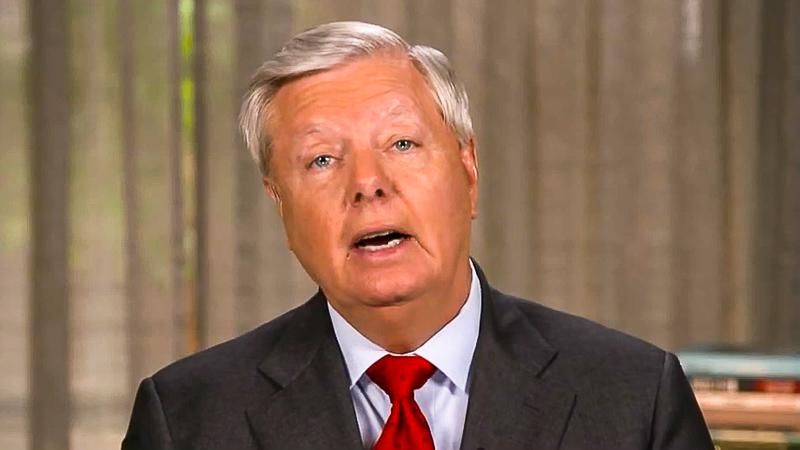
Former White House ethics czar and impeachment lawyer Norm Eisen explained to CNN that Sen. Lindsey Graham (R-SC) isn't above the law, regardless of his attempts to dodge a subpoena out of Fulton County, Georgia.
Speaking on the network Sunday, Eisen said flatly, that Graham "seems to have fully taken on Donald Trump's contempt for the rule of law. It is a great disappointment to those who have known and worked with him for decades in Washington, D.C. But as a Trump acolyte with total disregard for the Constitution of the law, he will fight to the last breath. But Fred, as I wrote in the Post, he has no basis to do that."
Graham is using the so-called "speech and debate clause" in the Constitution, saying that as a member of Congress, he is protected from being arrested based on what he says and does while speaking on the floor of the Senate, "except Treason, Felony and Breach of the Peace." Graham is being subpoenaed not for a speech to the Senate, but for a call he made to Georgia officials to help lobby to overturn the 2020 election results in Georgia.
In Bob Woodward and Robert Costa's book Peril, the reporters revealed that Graham, along with Sen. Mike Lee (R-UT) personally vetted Trump's so-called fraud claims. He personally called Secretary of State Brad Raffensperger after the election to see if some of the mail-in-ballots could be thrown in the trash because the signatures may not perfectly match. It was a conspiracy theory, Raffensperger testified last month to the House Select Committee, there wasn't a massive signature-match issue. Graham swears he was really only asking about the requirements, not telling the Republican official to toss ballots.
Graham, who regularly visits Mar-a-Lago, met with Trump lawyer Rudy Giuliani in the White House about the election conspiracy. He also spoke with retired Army Colonel Phil Waldron, who had the PowerPoint presentation that pushed the coup plot.
Eisen called Graham's ploy to dodge the subpoena based on the speech and debate clause as nothing more than a "political act."
"There is no protection for testifying about possible crimes you may have committed, so he will go far but he will lose," he explained.
See the interview discussion below: