Legal expert: Mark Meadows 'not in the clear' from DOJ criminal charges
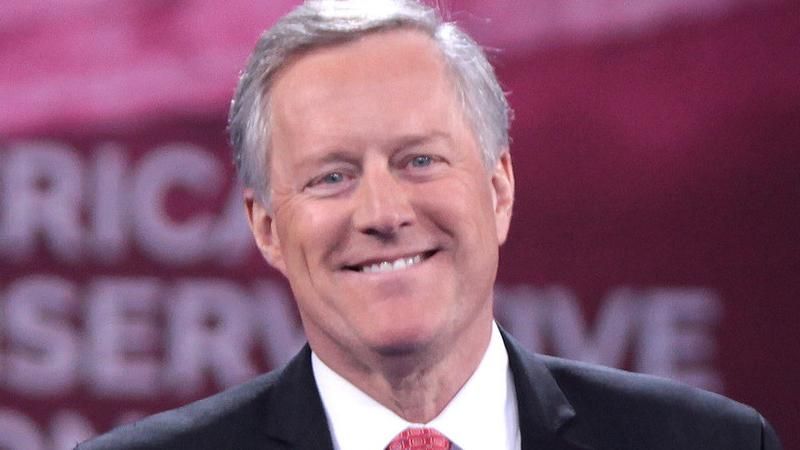
Former White House chief of staff Mark Meadows has been linked to many of the conversations between Donald Trump's campaign and the White House. Also of concern are his relationships with the far-right activists who coordinated the attack on Congress on Jan. 6.
Typically, there's a wall between official government offices and a campaign. But after Trump lost the election in November 2020, the official White House began coordinating with campaign groups and activists.
Meadows, who was working at tax-payer expense, was coordinating efforts to overthrow the 2020 election results. He held meetings at the White House with Republican officials, some of whom weren't sworn into office yet, and participated in conference calls with political groups working to get folks to Washington for the 'Stop the Steal' rally.
Jared Kushner told the Jan. 6 committee under oath that he wasn't paying much attention to the election issues because he was otherwise focused on pardons to be issued ahead of the last day of the Trump administration.
“Like I said,” Kushner said, “my interest at that time was on trying to get as many pardons done. Him (sic) and the team were always saying, ‘Oh we are going to resign, we are not going to be there if this happens, if that happens.’ So I kind of took it up to just be whining, to be honest with you.”
Kushner actually wasn't working on pardons on Jan. 6. He was on his way back from the Middle East where he met with leaders as part of his father-in-law's demand to get a peace deal. Kushner later returned to the region as part of his effort to set up a personal investment fund.
Among the things that were discovered in last week's public hearing was that some Republican officials asked for pardons after their participation on Jan. 6. It begged the question of what they did that would necessitate a pardon since they hadn't been charged with a crime.
Rep. Madeleine Dean (D-PA) revealed to Raw Story on Thursday that Rep. Scott Perry (R-PA) was one of those Republicans who asked for the pardon. Perry has denied it.
"We also learned that, not only with Perry, but other Republican members of Congress also requested a pardon for their conduct in and around Jan. 6," said MSNBC legal analyst, Glenn Kirschner.
"I'll tell you, as a former career prosecutor that is evidentiary gold. I would argue, that learning that somebody requested a pardon can even be more powerfully incriminating than a confession. The reason I say that, if someone is arrested, they're Mirandized, they waive their rights, they're interrogated and they confess to a crime."
Kirschner further explained that a defense attorney might argue they were coerced and nothing they said was part of voluntary testimony. That won't be the case here.
"You can't make an argument that they were coerced," he continued. "And when members of — Republican members of congress, reached out to the president and sought a pardon for their conduct, it shows, one: they potentially committed crimes. But even more importantly, two: they have corrupt intent. They have consciousness of guilt because they know they committed a crime, and they need help getting away with it from the president. So, I suspect we're gonna hear a lot more about pardons in the coming weeks."
He went on to say that we shouldn't read anything into the idea that Mark Meadows and Dan Scavino haven't been indicted by the Justice Department yet.
"All they announced, was that they wanted to indict those two men for the misdemeanor crime of contempt of Congress," Kirschner said. "Because they defied congressional subpoenas. Two other individuals, who committed precisely the same crimes, Steve Bannon and Peter Navarro, were indicted. Why? Because they didn't have any executive privilege claims. Meadows and Scavino, being the former chief of staff and deputy chief of staff, respectively, to the president...they benefited from an OLC memo, from many years ago, saying that they have such a potentially robust executive privilege — even though I believe it could've been defeated in court — that the Department of Justice should shy away from indicting those top government officials for defying congressional subpoenas."
This doesn't mean, however, that they are completely in the clear, he explained.
"The more information we learn about Mark Meadows, for example, when he's passing on treasonous text messages, phone calls... that were coming in from Don Jr., we know from Ginni Thomas. He still has a world of potential criminal exposure ahead of him. Let's not read in too much the DOJ's decision, not to bring these misdemeanor charges," Kirschner closed.
See the discussion below or at this link.