As part of a new series, The Washington Post's editorial board on Monday profiled political prisoners from around the world — and the ways that authoritarian regimes targeted them for retribution.
"The world’s political prisons are bulging," wrote the board. "A string of popular uprisings over the past few years brought hundreds of thousands of demonstrators to the streets, protesting against authoritarianism in Hong Kong, Cuba, Belarus and Iran; against the military junta that toppled democracy in Myanmar; and against strict restrictions on speech and protest in Russia and China. Also, Arab Spring uprisings swept Egypt, Syria and elsewhere a decade ago, and protests broke out in Vietnam in 2018. Most of these protests were met with mass crackdowns and arrests. Thousands of participants — largely young and demonstrating for the first time — have been held in prison for demanding their rights to speak and think freely and to choose their leaders."
"Imagine being locked up for a tweet," wrote the board. In many cases, the prisoners in question did little more than that — post their intent to protest, or simply express criticism of the government.
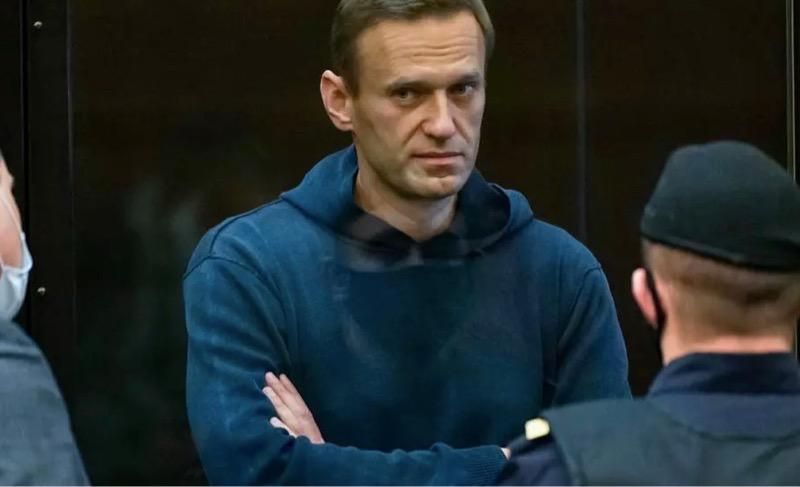
Some of the names on the list are high profile, like Alexei Navalny, the Russian opposition leader who was first targeted with poison and then jailed in Russia.
But there are others who are less known. Maedeh Afrawi, 19, who took to the streets in Iran to protest the brutality of the religious police and now faces charges of "participation in a public gathering." Otero Alcántara, 35, a Cuban artist who posted a video saying he would join a protest, was intercepted by police before he got there and received five years in prison. Zhang Zhan, 29, who posted footage of pandemic unrest in Wuhan, China on YouTube and got four years in prison for "picking quarrels and provoking trouble."
Once upon a time, the report noted, the internet was a tool of liberation, allowing activists to organize underground and disseminate information — "free speech began to outpace the ability of government to control it." The use of social media to organize during the "Arab Spring" protests of the 2010s has been well documented. But, the board noted, eventually dictators began to use the internet themselves, blocking content on social media, spying on people's accounts to monitor their activity and track them down. "They planned to take back the public square, and now they are doing it."
A case that exemplifies this, the board noted, is 21-year-old Belarusian university student Danuta Perednya who, in February 2022, reposted a message on Telegram calling for protests of her country's support for Russia's invasion of Ukraine, and the next day was arrested getting off a bus to go to class and sentenced to over six years in prison for "insulting the president."
"Every political prisoner’s case is a travesty of justice," wrote the board. "Freedom of expression, association and belief are not crimes. The most powerful answer is to shine a spotlight on the plight of political prisoners, and make sure they are not forgotten."