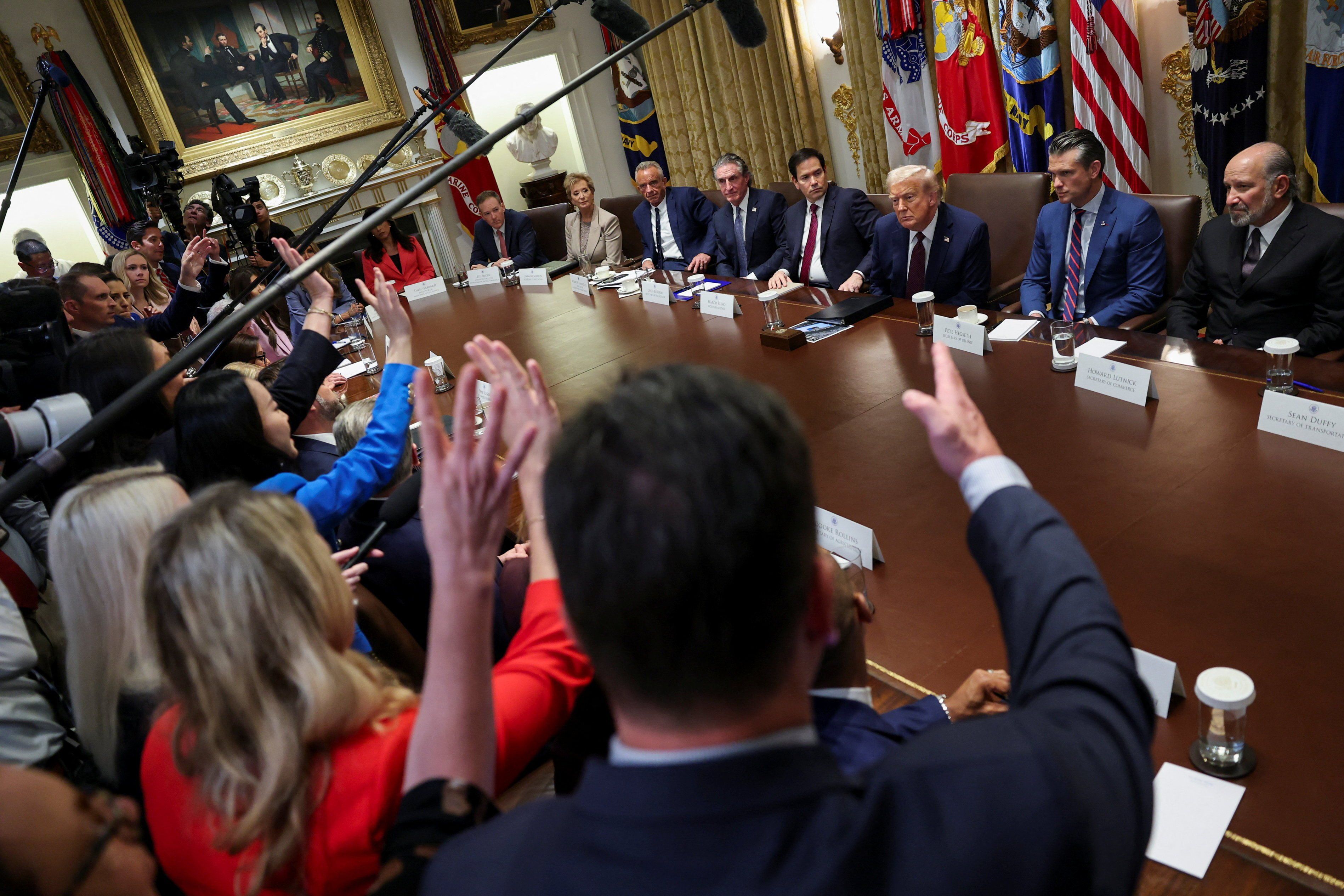
Once prominent Make America Healthy Again supporters are turning their backs on Robert F. Kennedy after the Health and Human Services head walked back a major claim.
Though RFK Jr made it clear he would seek to outlaw glyphosate in the run-up to the 2024 presidential election, his position has since softened. Donald Trump confirmed the chemical, most commonly found in weed killer, would still be used in food production. RFK Jr released a statement supporting this decision.
He said on February 18, "Donald Trump’s executive order puts America first where it matters most — our defense readiness and our food supply. We must safeguard America’s national security first, because all of our priorities depend on it."
A further statement from the Health and Human Services Press Secretary, Emily Hilliard, backed the use of the pesticide. Hilliard says a sudden removal of glyphosate would be "severe".
Shaughnessy Naughton, the president of the science-forward political action committee 314 Action, and a former chemist and drug researcher, believes RFK Jr's actions are unforgivable and that the Health Sec must stand down from his post.
Naughton told Salon, "It’s time for [Kennedy] to resign. I just feel like it is the ultimate betrayal. He sounds like he wrote the press release for Monsanto, and I think this is a big problem for the MAHA movement."
Dr. Lori Hoepner, an assistant professor of Environmental and Occupational Health Sciences at SUNY, also urged caution over the continued use of glyphosates in food production.
She said, "Low doses over time would be a concern that would need to be followed up on, because early life is a critical time period for exposures. As with almost every pesticide, there is a potential for neurodevelopmental outcomes.
"It could lead to poisoning. It really does depend on the amount that one is exposed to, and the frequency. These chemical companies don’t make just one product- they’re making things like weapon-grade chemicals.
"They’re making lots of different products from these key ingredients. If you’re limiting their ability to produce glyphosates, you’re limiting their ability to produce phosphorus and profit from it."