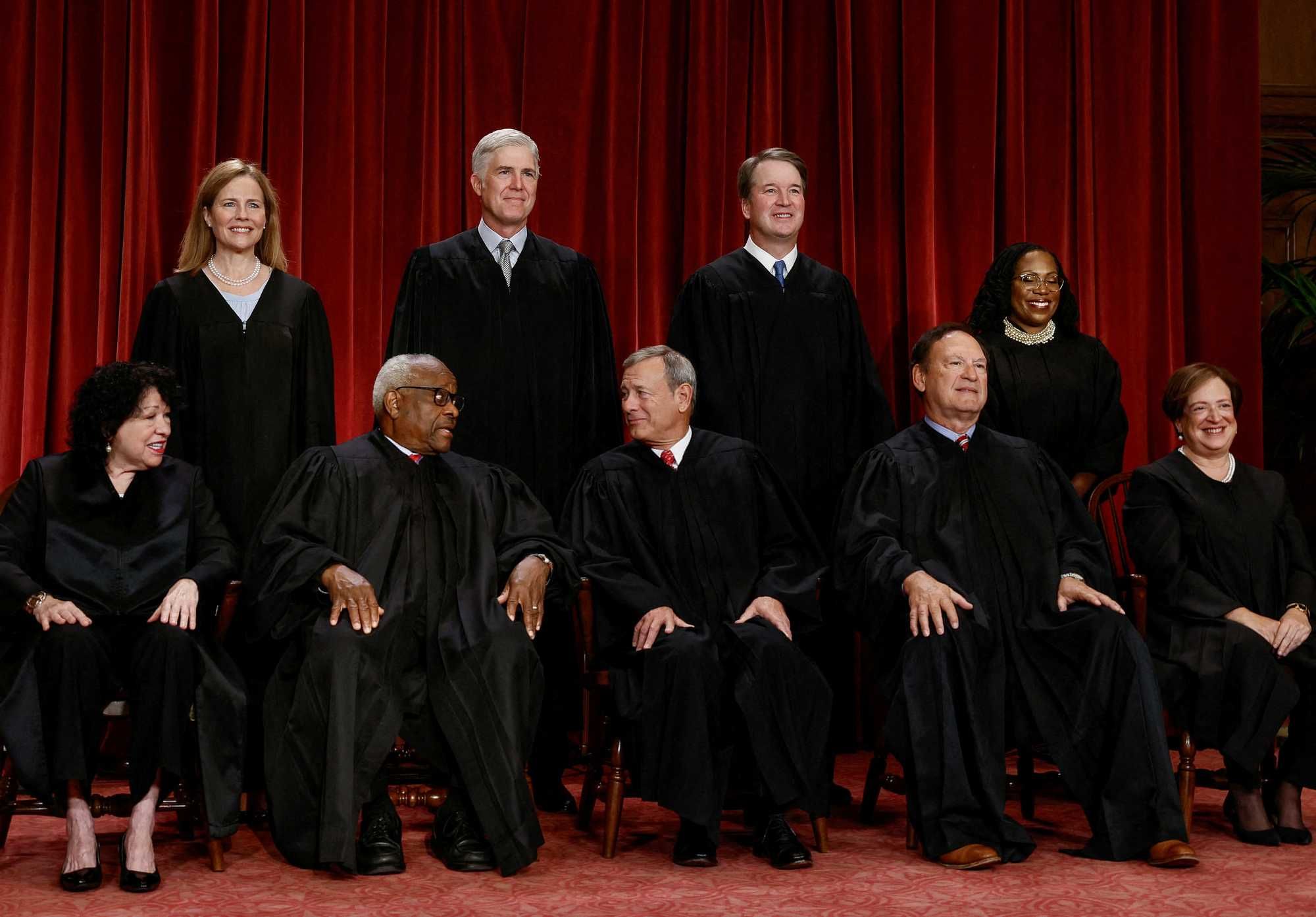
Georgetown University law professor Stephen Vladeck sounded the alarm this weekend over the Supreme Court and its increasing use of what legal scholars have dubbed the “shadow docket,” a process by which the court institutes rulings unsigned, and without oral arguments, explanations or written opinions.
The Supreme Court has utilized the shadow docket well over a dozen times since President Donald Trump retook the White House in January, at least 14 of which were in cases that tested the president’s power, with the court siding with Trump in the vast majority of its rulings.
Supreme Court Justice Brett Kavanaugh has defended the court’s use of the shadow docket, but instead has endorsed the term “interim docket,” citing the temporary nature of rulings decided using the tactic. Vladeck, citing the “massive and permanent effects” such rulings could have on the nation going forward, clapped back at Kavanaugh’s position.
“When you’re going to have rulings producing these massive and permanent effects, it seems kind of disingenuous to label them as interim,” Vladeck said, speaking with the Wall Street Journal in its report published Saturday night.
The New York Times spoke with 65 federal judges in an October report and found that 47 of them had argued the Supreme Court made inappropriate use of the shadow docket since Trump returned to office, with some describing the court’s use of the shadow docket as “a slap in the face to district courts,” and “incredibly demoralizing and troubling.”
The Supreme Court has been a key player in Trump’s consolidation of power within the executive branch, with the court ruling in Trump’s favor on
expanding presidential presumptive immunity, and
prohibiting lower courts from instituting nationwide injunctions on Trump’s agenda.