Trump's shameless enabler just signaled he may be having second thoughts
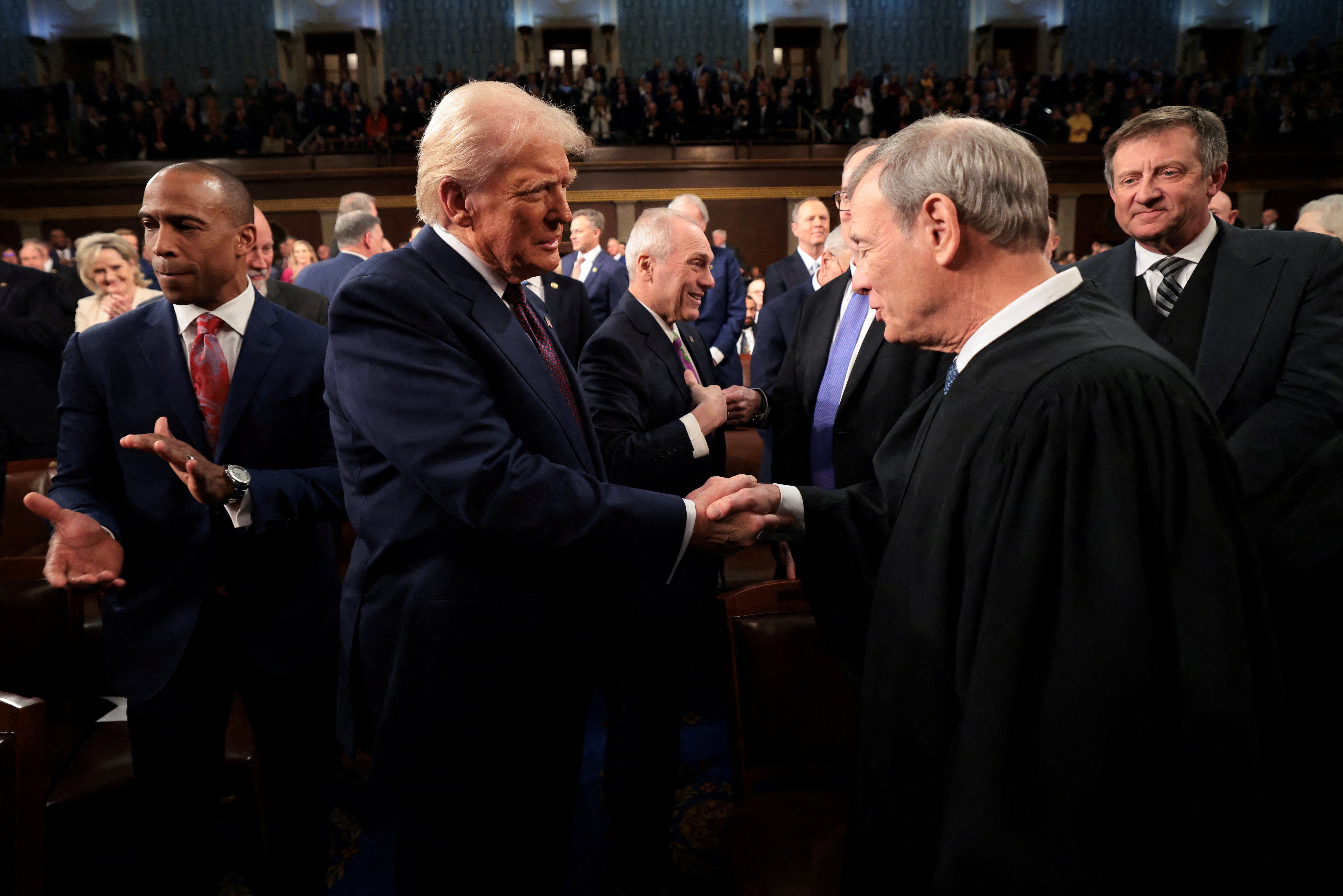
Donald Trump greets Chief Justice John Roberts at the U.S. Capitol. Win McNamee/Pool via REUTERS
January 14, 2026
I was struck by the inspirational tone of the year-end report issued by Chief Justice John Roberts.
Roberts went back to basics with his review of the fundamentals spelled out by Thomas Paine in his Common Sense pamphlet and the principles laid out in the Declaration of Independence. Although the Declaration of Independence is not part of U.S. law, Roberts viewed the founding document as having “played a signal role in the nation’s constitutional, statutory, and common law.”
Roberts then highlighted points in U.S. history when the nation made progress in vindicating the promise of the Declaration. He pointed to the abolition of slavery in the 13th Amendment, the recognition of women’s right to vote in the 19th Amendment, the recognition of equal rights in Brown v. Board of Education, and the adoption of the landmark civil rights legislation in the 1960s. Roberts saw these events as part of the “never ending quest to fulfill the Constitution’s promise of a ‘more perfect union’.”
Roberts wrote: “These national accomplishments illustrate that the responsibilities for livings up to the promises of the Declaration rest on all three branches of government as well as well as on each successive generation of Americans.” Roberts placed particular emphasis on the critical role of federal judges in this process. Roberts wrote that the judges “must continue to decide the cases before us according to our oath, doing equal right to the poor and to the rich, and performing all our duties faithfully and impartially under the Constituion and laws of the United States.”
I consider the stirring words of this report to be truly inspirational. But what was the Chief Justice actually signaling to the nation with his words? Roberts devoted much of his leadership role as Chief Justice to undermining the “national accomplishments” he now celebrates. And in ruling on shadow docket cases, Roberts has repeatedly sided with the majority in undermining the role of lower federal court judges as bastions against abuses of executive authority.
So now, what are we to make of the Chief Justice’s inspirational year-end report? Is Roberts having second thoughts about his prior actions because of the imminent threat to democracy posed by Trump? The recent Trump invasion of Venezuala may feed that theory. If that is Roberts’ thinking, he could be signaling a change in course on how he approaches critical questions like tariffs, birthright citizenship, racial discrimination, or separation of powers.
The other possibility is that Roberts is presenting his inspirational theme just to placate an increasing angry public. Polling suggests the public no longer holds the Supreme Court in particularly high esteem. Roberts cannot reverse this trend with empty platitudes.
We should have some idea by the end of this term if the year-end report has any lasting significance.