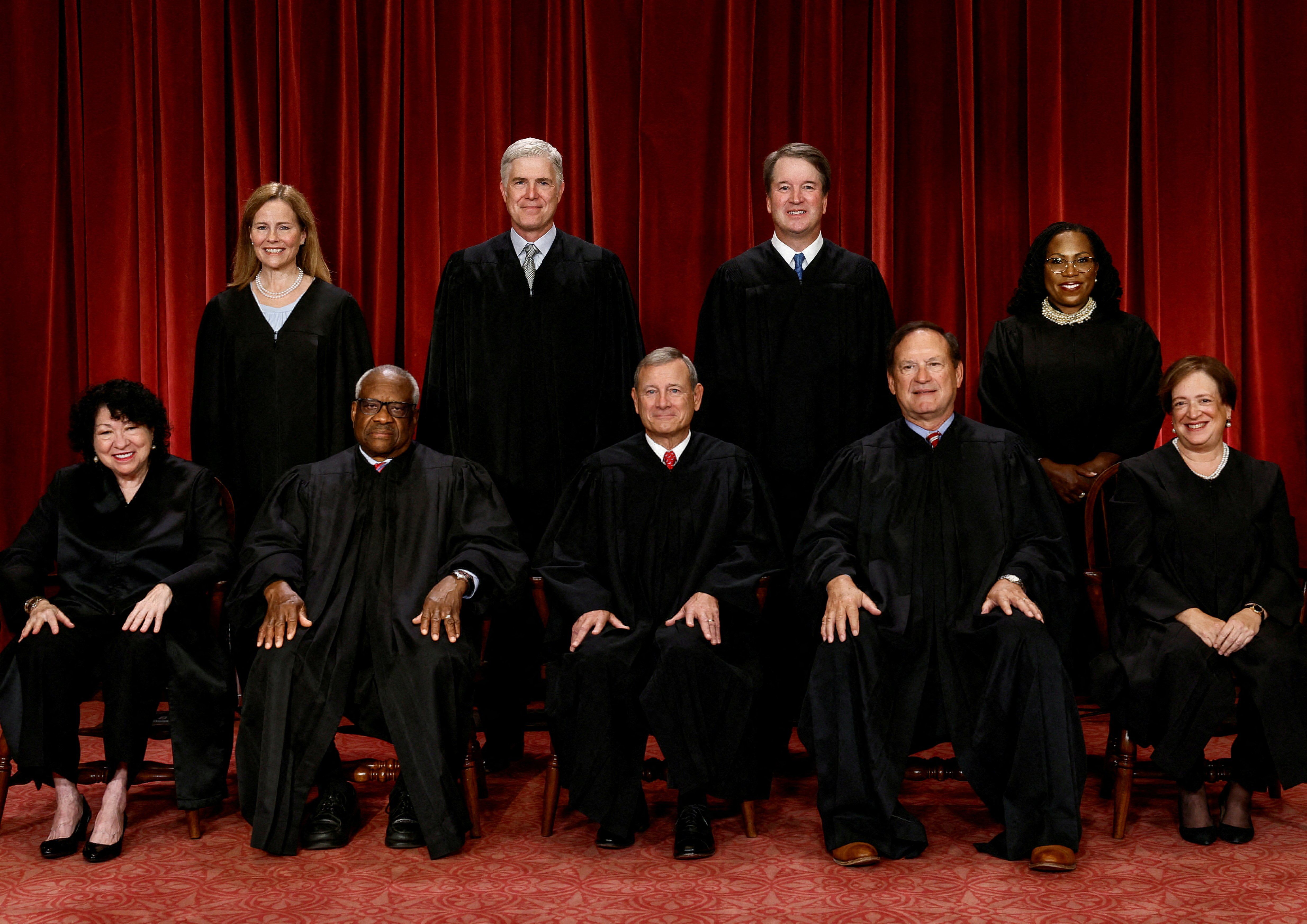
The Supreme Court appears poised to make a ruling on the legality of President Donald Trump’s unprecedented tariffs “as soon as today,” Axios reported on Friday, a ruling that could have colossal impacts on the global economy, and, according to Trump, crash the entire U.S. economy.
“Analysts had initially expected a swift ruling from the highest court, but the uncertainty has dragged on for longer than expected,” wrote Axios senior economic reporter Courtenay Brown. “The delay is a possible sign of the enormity of the decision that, either way, could rattle the global economy.”
The Supreme Court began hearing arguments for and against Trump’s tariffs last November after business owners challenged their legality. And, despite the Supreme Court having ruled in favor of the Trump administration more times than not, the majority of justices expressed skepticism when listening to the Trump administration’s arguments for why the tariffs were lawful.
As the Supreme Court decision drew near, Trump has grown increasingly panicked, lashing out at the court and warning that if it were to rule against his tariffs, the United States “could be reduced to almost Third World status.”
As to when the court may make its decision, justices could rule as early as Friday, though if the decision is delayed further, the next opportunity may be as early as next Tuesday or Wednesday, Axios reported. The decision could also have an enormous impact on the power of the executive branch.
“Upholding the tariffs would rubber-stamp an enormous expansion of presidential power that could define economic, trade and tax policy in the Trump 2.0 era – and for decades to come,” Brown wrote.
While the authority to impose tariffs largely rests with Congress, the Trump administration has justified the president’s so-called “
reciprocal tariffs” under the International Emergency Economic Powers Act, a 1977 law that grants the president broad authority to impose tariffs in response to emergencies. That emergency, the Trump administration has claimed, is the United States’ trade deficits with other countries.