New revelations show the end is near for Trump's Epstein defense
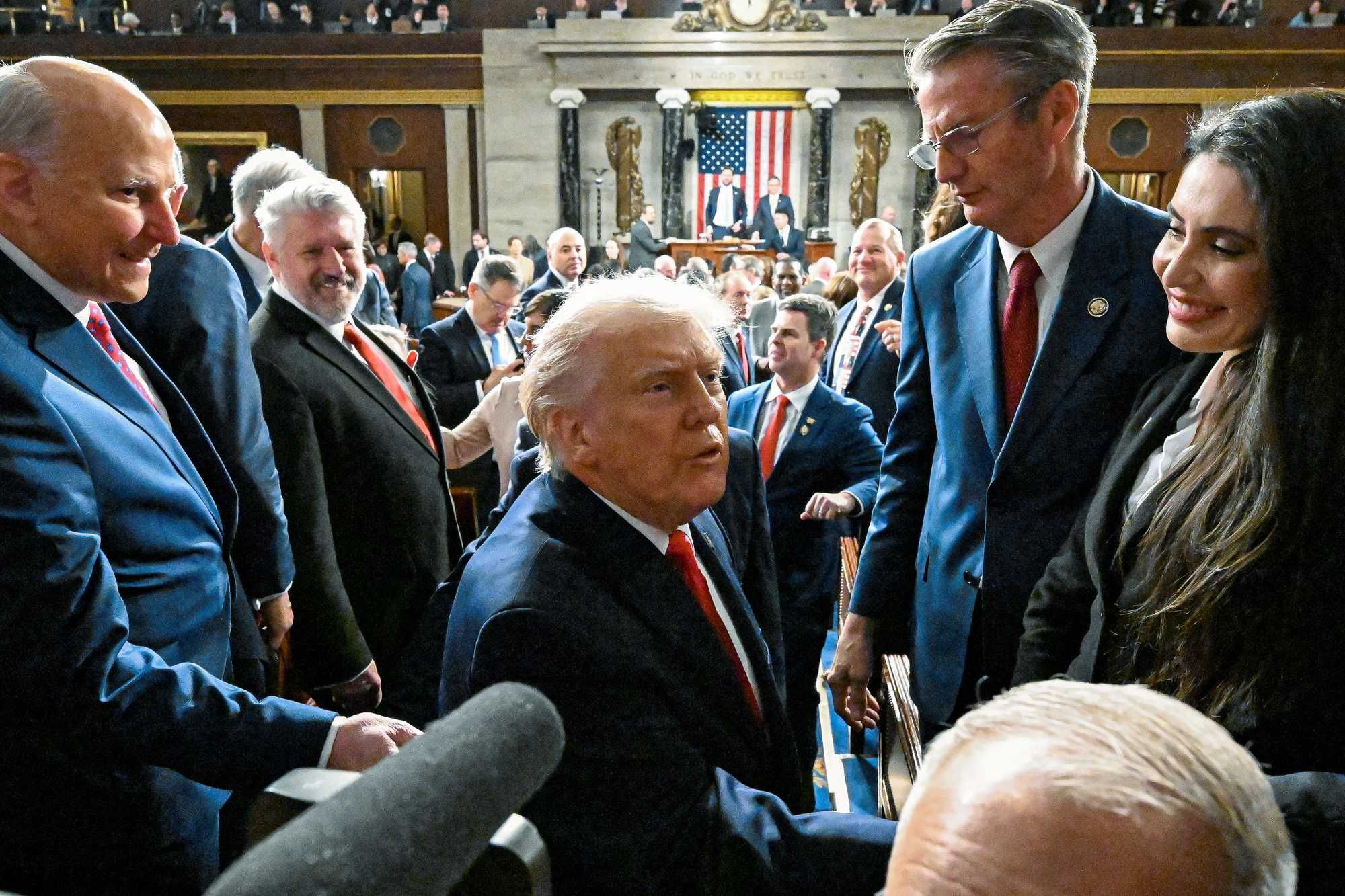
Donald Trump exits the House Chamber after the State of the Union address. Kenny Holston/REUTERS
February 26, 2026
For close on 20 years, the American public has been promised the truth about Jeffrey Epstein’s crimes. For close on 20 years, that promise has been broken. Again and again and again.
We know Epstein ran a sex trafficking operation that preyed on underage girls. We know he cultivated relationships with the rich and politically connected. What we still don’t know — after two decades — is the full scope of his network, who enabled him, and who continues to shield such people from view.
That absence of critical information is not accidental. It is deliberate. Of that much we can now be sure.
What defies logic is not just the horror of Epstein’s conduct, but how long it took for scrutiny to reach the upper tiers of power. For years, it was treated as an unseemly scandal. His 2019 arrest briefly reignited attention. Then he died. And it seemed that was the end.
Then came Donald Trump.
He didn’t just promise transparency. He stoked his base with vows to expose a shadowy “cabal” and unravel Epstein’s web. His supporters believed him. Trump would expose it all.
Ha!
Instead, Trump became all about delay, deflect, deny. Trump, his Department of Justice, and the FBI have played a shell game with the documents, deploying partial releases and procedural excuses. It echoes Watergate, but here the stakes involve sexual exploitation and powerful men who may have known.
Increasingly, the cover-up seems set to expose the truth. That’s the way these things play out. It happened with Watergate.
Late last year, when the bipartisan Epstein Files Transparency Act (EFTA) passed overwhelmingly, it was hailed as a breakthrough. The public would finally see everything. But this is Trump. The shell games continued.
Fragments. Stretched deadlines. Redactions shielding entire narratives while, incredibly, unredactions exposed victims’ names and personal information. It was a horror show — especially for survivors promised protection.
Then came the revelation this week that 53 pages of FBI interview documents and notes were removed from public release.
Fifty-three pages do not vanish by accident. This screams “cover-up” louder than Trump barking furiously at a MAGA rally.
Those notes reportedly contained allegations from a woman — scratch that, a child — who claimed Trump sexually assaulted her when she was around 13 years old. The DOJ called it a “temporary removal” for redactions. The explanation strains belief.
It raises an obvious question: Is this why Trump is fighting so fiercely and so obsessively to keep the full Epstein files sealed?
Trump’s history with Epstein is no longer speculative. It’s all well known. In 2002, he called him a “terrific guy” who liked women “on the younger side.” As the scandal grew, Trump repeatedly revised the narrative. They were distant acquaintances, no contact for years. They had a falling out. On and on and on.
Yet the record shows shared social circles, flights on Epstein’s jet, and a 50th birthday card featuring a crude drawing attributed to Trump — which he pathetically denies.
Reporting indicates Attorney General Pam Bondi warned Trump his name appeared extensively in the Epstein files. When file releases showed Trump’s name thousands of times, he dismissed them as “boring.”
You do not suppress documents that exonerate you. You suppress documents that implicate you. Vintage Trump.
Bondi oversaw the partial and incomplete releases, claiming “full compliance” with the law even as millions of pages remain unreleased. Deputy Attorney General Todd Blanche has defended delays as procedural and cited “victim privacy” to justify sweeping redactions.
All these two have done is to make sure that Trump is protected. End of story.
Atrocious FBI Director Kash Patel once demanded full transparency. Now the files remain incomplete, and the Bureau was involved in handling the missing 53 pages. Congressional oversight has been narrowed, through restrictive “reading room” rules.
All this hiding. This ongoing shell game. All these denials. But all of this obfuscation will fail.
The numbers don’t add up. The DOJ cites roughly 3 million pages as the full record. Internal figures reportedly approach 6 million. A 2.5-million-page gap is glaring.
Second, the suppression is totally out in the open. Missing pages. Shifting explanations. In the digital age, deletion leaves footprints especially when tracking codes tied to alleged victims make records traceable.
Third, public patience is exhausted — but defiant. The EFTA passed the House 427-1 because Americans across party lines are tired of elites escaping accountability. The public is not giving up on this.
Trump’s strategy appears to be to wait out the outrage by releasing fragments, stretching deadlines, and letting attention drift. But the opposite is happening. With each misstep, scrutiny intensifies.
Every withheld page sharpens suspicion. What might once have faded is becoming a test of whether powerful men are subject to the same standards as everyone else.
Bondi, Blanche, Patel, and their allies may delay disclosure but they cannot contain it. Too many journalists are digging. Too many records exist, across agencies and courts. Too many hands were in this pot of filth. Too many survivors want the truth.
The truth about Jeffrey Epstein was never just about a single predator. It was about a network — and the system that protected it.
Donald Trump is woven into that network more deeply than he admits and more deeply than we’ve seen. No volume of redaction can erase that. Whistleblowers surface. Courts compel disclosure. Information leaks. People talk. Victims come forward.
Suddenly, it seems as if a confluence of events are coming together and creating cracks in Trump’s dam of deniability.
And when it breaks, it will be because the effort to bury the truth became more revealing than the truth itself.