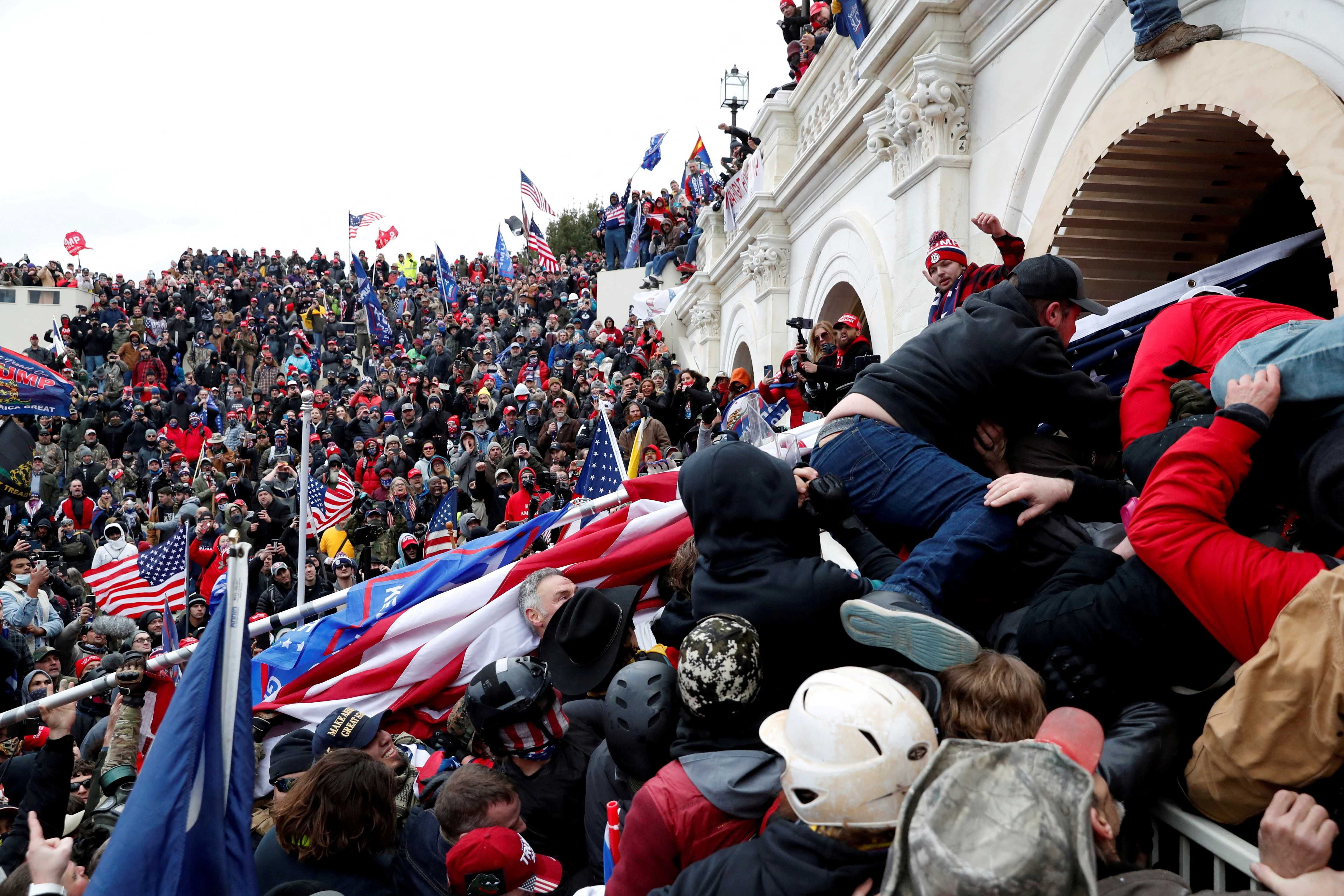
A federal judge opened the door for an appeals court to decide whether President Donald Trump's Jan. 6 tweet — sent as rioters stormed the Capitol — was protected by presidential immunity.
U.S. District Judge Amit Mehta ruled Wednesday that he would not reverse his earlier decision shielding the tweet from a civil lawsuit filed under the Ku Klux Klan Act of 1871, a Reconstruction-era law that bars conspiracies to prevent members of Congress from carrying out their duties.
But Mehta certified the question for interlocutory review — allowing plaintiffs to challenge the immunity ruling at the U.S. Court of Appeals for the District of Columbia Circuit now, without waiting for the full case to conclude. Their deadline to file is Aug. 5.
The suit was originally filed in February 2021 by Rep. Bennie Thompson (D-MS), according to court records. Thompson later withdrew as a plaintiff to chair the House Select Committee investigating Jan. 6, and former Rep. Barbara Lee of California became the lead plaintiff. The complaint accuses Trump of conspiring with former personal attorney Rudy Giuliani, the Proud Boys, and the Oath Keepers to block Congress from certifying the 2020 election results.
At issue is a tweet Trump sent at 2:24 p.m. on Jan. 6, as rioters were breaching the Capitol. The tweet said: "Mike Pence didn't have the courage to do what should have been done to protect our Country and our Constitution."
In March, Mehta ruled the tweet was an official act and therefore immune from civil liability.
His reasoning, per Wednesday's ruling, was that moments before Trump sent it, White House Chief of Staff Mark Meadows and White House Counsel Pat Cipollone had walked into the dining room to urge Trump to stop the riot. Trump refused — and then posted the tweet.
Mehta acknowledged the tweet "arguably poured gasoline on the fire" but said that did not change the analysis.
"Any act taken by the president — no matter how outlandish (like organizing a poker game) or plainly office-seeking (like firing a campaign pollster) — would become official simply because they occurred after the President received some advice about not engaging in such acts from government officials," plaintiffs argued in their reconsideration filing.
Mehta rejected the argument but agreed the question was close enough to warrant appellate review. Plaintiffs must file their notice of appeal no later than Aug. 5, with the D.C. Circuit's opening brief due Aug. 10.