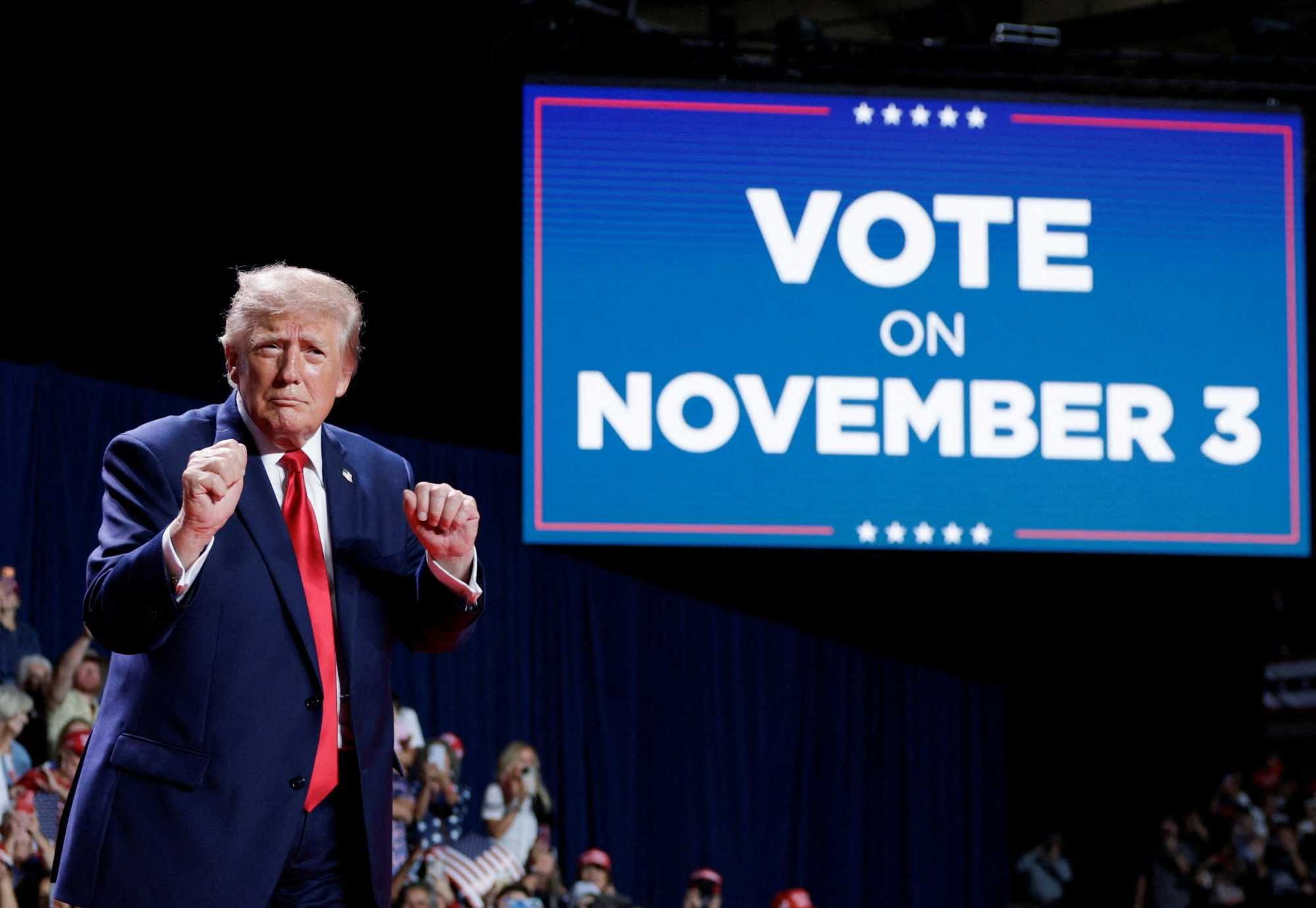
Normally, the subject of midterms doesn't beget questions concerning possible impeachments as a matter of course. Of course, Trump is not normally president (it only seems that way to Gen Z), nor is the anticipated Blue Wave due to be any "normal" comeback.
But it shouldn't have shocked anyone on Wednesday when Peter Doocy of Fox News asked Trump to comment on possible incoming impeachments in the new year.
Trump, of course, responded with an impeachable threat, a fascist threat, the worst threat:
"I could have done very bad things to Hillary Clinton. I could have done very, very bad things to Joe Biden. I could have done very bad things to Barack Hussein Obama. I thought it was inappropriate to do so. Because, you have to treat the office of the presidency with respect."
The quote is getting far less coverage than the one in which he nearly invited Iran to blow up L.A. or San Diego, but in some ways it is far more sinister, certainly more constitutionally violent and a bigger immediate threat to American success and leadership in the world than anything Iran can do to us.
Trump says that he hasn't done these very bad things to his least favorite people but, apparently, only because he respects the office of the presidency ever so much — a self-serving statement as ever. But also note, he's saying that he feels constrained only by his ethics — and then didn't break out laughing or get nailed by a lightning bolt.
What Trump meant to say is that he's only constrained by what he perceives to be his self-interest, which only he equates with ethics, and right now the balance shifts away from "doing bad things" to former rivals. No promise on tomorrow.
He went on and made it worse because, of course he did:
"Then I found out they impeached me twice. And, I certainly, to this moment I have, I can do whatever I want. If I want."
And there's the threat. Impeach me again, and I start doing very bad things. But let's also note a couple related elements to his (unconstitutional and impeachable) "point."
First, isn't it interesting that none of the people Trump just listed impeached him? Clinton and Obama weren't even in office during the last two impeachments, never mind in Congress. Biden had just taken office as president during Trump's second impeachment and refused to take a position on the matter. “That's a decision for Congress to make. I'm focused on my job.”
When Trump says "they" impeached me, he's not talking about Obama, Clinton, or Biden. He is talking about everyone who doesn't support him or might not support him in a coming impeachment.
Good people and bad people, good things and bad things, Trump's world is so blessedly simple. Good people love him, and everyone else is bad. Good things are those he likes; everything else is bad. So when he says "they impeached me," he's listing the captains of the "very bad people team" who did nothing, while other members of "Team Bad People" did something wholly within their rights under the Constitution. But Trump found it to be bad.
Similarly, Trump considers the presidency as part national ownership, in some way. He couldn't and wouldn't threaten the actual people impeaching him because they're not owners; they're minor leaguers. He wants the people at the presidential level that either ran against him or represented team "bad." He wants his true "enemies," the people who the world and the country hold in higher regard than him.
Well.
Obviously, Trump just said that if "they" come after him again and impeach him again, he will unleash very bad things on Obama, Biden, and Hillary Clinton. (He must believe that Democrats operate like MAGA and that Obama can tell them all what to do on any given day, so blissfully simple.)
But in speaking about impeachments, look at what he just said. He didn't even nod toward the law; he personalized every element of this — the Framers' worst nightmare. Congress justly punishes the president under the law; in turn, Trump personalizes his powers to render his retribution — punishing his enemies outside the Constitution. We know because Trump can't list any of these bad things he might punish, only that he knows, as he finishes:
"They've done some very bad things, you just mentioned it, it was mentioned in the form of a question what they did. Very illegal, what they did, many illegal things. But I view the presidency as a very sacred position, very sacred."
Our entire Constitutional framework is set up such that if Trump truly believed that any of these people really did do "illegal things," then Clinton, Obama, and Biden should be charged and tried, not subject to some nebulous, stochastic terrorist-like threat. Not that such prosecutions should be driven by Trump — that's a question for prosecutors. But we all know what's meant by this.
Ironically, in this entire recitation, the House impeachments and the Senate trial were the most legal and constitutional actions taken. All done by law and procedure according to the House and Senate rules, and as authorized by the Constitution. Ironically, Trump stayed in office because the country followed the law. The Senate failed to convict and remove him.
So now that the laundry is done, the challenge must go forth. A president cannot announce that he can do "whatever he wants" regarding "bad things" to past Democratic leaders and rivals (and two former presidents) without the media stepping forward and demanding specifics. Or at least, better not.
And because the "racehorse" election coverage really isn't all that exciting with a ringer in the race, it profits us far more to hear Trump cornered on what he intends to do when Democrats truly find the underlying basis of the Qatari plane "gift," dig out Trump's obstruction of the Epstein investigation, or prove he traded on secrets? Because yes, impeachments are coming, or there is little point to even having a Congress anymore. If this president is not impeached and at least forced to defend his actions, the entire clause is rendered useless. If Democrats get accused of "lawfare," so be it. The law is there to be used so one doesn't have to threaten "very bad things" to someone because they "can do whatever I want."
So we want to know:
What sort of actions fall under "bad things"? Arrested in the middle of the night? Held without charges? Would he order his attorney general to arrest a "captain" of the blue team because the House again impeached Trump?
When you say 'I can do whatever I want,' do you see yourself limited by the Constitution and the law? It doesn't sound like it.
Most importantly: Are you saying that if the House impeaches you again next year, you will lash out in revenge?
Because that's all this is.
For Trump, the world comes with another simple rule by which he can live. Everyone does what he does; everyone thinks the way he does. He truly must believe that if he just hints around things, he can get it out there that, "If you impeach me again, I will do very bad things to President Obama," then Obama is likely to order Democrats (and maybe a few Republicans) to stand down.
Trump has worn the press down and punished the media almost as much as he has the American people; there should be some esprit de corps among the press in getting to the bottom of whether Trump believes the Constitution limits him at all.
Ask him: Is anything off the table if you were allowed to do anything to President Obama?
We know the real answer. But hearing the response itself might be important. Perhaps impeachable.
Jason Miciak is a Raw Story columnist, former editor at Occupy Democrats, an author, consultant, attorney, and single parent girldad. Please follow on Bluesky, and he can be reached at jasonmiciak@gmail.com