MSN
Trump to usher in global ‘age of instability’ after falling for clear ‘trap’: expert
June 1, 2026 9:47AM ET
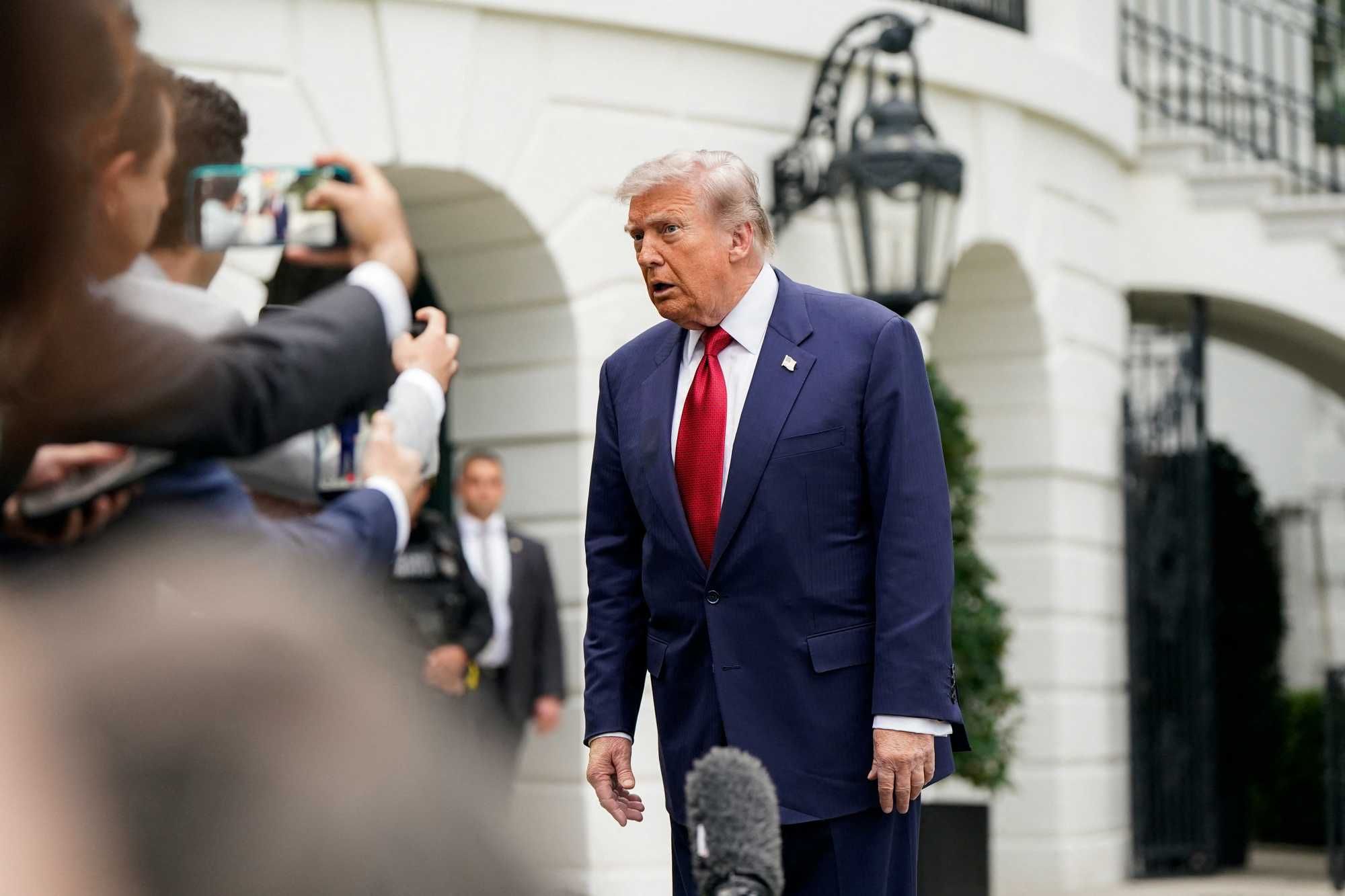
U.S. President Donald Trump talks to reporters at the White House in Washington, D.C., U.S., May 8, 2026. REUTERS/Elizabeth Frantz
While President Donald Trump has, for now, held back on re-launching major military operations against Iran – and avoided walking into what one expert called "the biggest trap yet" – a new "trap” has emerged that the president appears to be heading directly toward, one that could spark a new era of global "instability," renowned professor Robert Pape warned Monday.
An international security expert and professor at University of Chicago, Pape has written extensively on what he calls the “escalation trap,” a model for how military retaliations and counter-retaliations exponentially reduce options for de-escalation. Trump, Pape has argued, has walked squarely into this trap.
But on Monday, Pape warned of a new phase of the trap, one that he argued Trump appeared poised to fall for.
“If instability generates bargaining leverage, weakens rival coalitions, and shifts regional alignments, then instability itself becomes a strategic resource. Iran may not simply be enduring instability. Iran may increasingly be benefiting from it,” Pape wrote in an analysis published on his Substack.
“The Age of Instability is not replacing power politics. It is creating a new pathway through which power can be accumulated. Iran certainly bears economic costs from prolonged instability. But those costs must be compared against the leverage instability creates.”
Pape noted that while the United States has been “winning battles” and achieved “genuine tactical successes” in the conflict, the asymmetric nature of the war had created a dynamic in which instability caused by the conflict benefits Iran by increasing its leverage, and thereby makes the United States “strategically weaker,” even if its military continues to achieve victories on the battlefield.
As such, Pape argued, an extended conflict would disproportionately benefit Iran, a dynamic that Trump, by refusing to budge on key demands from Tehran in the ongoing peace negotiations, is inadvertently bolstering.
“The most important legacy of this war will not be the bombing campaign, the negotiations, or even the confrontation over Iran’s nuclear program. It will be the emergence of a new strategic reality,” Pape wrote.
“A world in which instability itself becomes the new normal -- because it is increasingly a source of geopolitical power. And if that world emerges, the Age of Instability will outlast the war that created it."