Trump is letting Putin get off easy for his campaign of international murders: op-ed
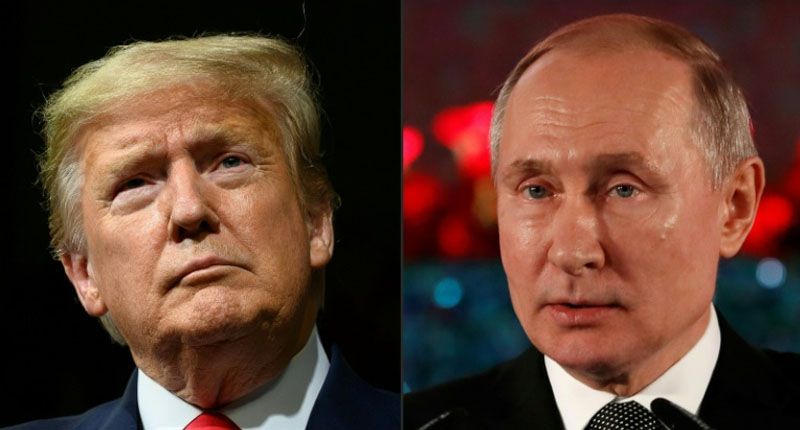
While Vladimir Putin has suffered significant sanctions and other consequences for his various foreign interventions, he's gotten off scot free for his murder and attempted murder of dissidents. The most recent example is the murder in Berlin of an exiled Chechen militant who was killed by a Russian agent. But even though it was proved that the hit was carried out by Russia, the only consequence leveled at Putin by the German government was the expulsion of two diplomats.
Writing in the Washington Post this Monday, Jackson Diehl points out that even "other hits in Britain, and perhaps one or two in the United States, have failed to provoke much reaction," partly because of the fact poisonings are harder to detect than common methods of assassination.
"In that respect, no case is more intriguing — or, perhaps, more pressing — than that of the activist Vladimir Kara-Murza, a former top aide to slain opposition leader Boris Nemtsov. Kara-Murza, who contributes opinion columns to The [Washington Post], is a permanent U.S. resident who divides his time between Moscow and the Virginia suburbs of Washington, where his family lives," Diehl writes. "He has been poisoned twice while in Moscow, in May 2015 and in February 2017."
After his 2017 poisoning, Kara-Murza’s wife, Evgenia, hand-delivered a sample of his blood to FBI agents, who said that some indications of poisoning had been found in his blood and they would have more results for her soon. A few weeks later, Kara-Murza says, the FBI agent called him to say that “there were some inconsistencies between the different tests, and that the results would be delayed.” Then came complete silence.
'The dissident wonders whether the bureau’s failure to report has something to do with a meeting between senior Russian and U.S. intelligence officials in Washington in January 2018," writes Diehl. "Kara-Murza says the FBI agent had told him a report on his poisoning would be given to the visiting directors of the FSB and GRU."
Lawyers for Kara-Murza filed a lawsuit in a U.S. district court last week seeking the release of the test results -- results Kara-Murza says could be “a small measure of protection against repeated attacks on my life.”
"Granted, the Trump administration is not much for defending dissidents, or holding Putin to account," Diehl writes. "But this doesn’t seem like much to ask."
Read the full article over at The Washington Post.