Trump's claim that a 2024 trial runs afoul of the DOJ debunked by expert
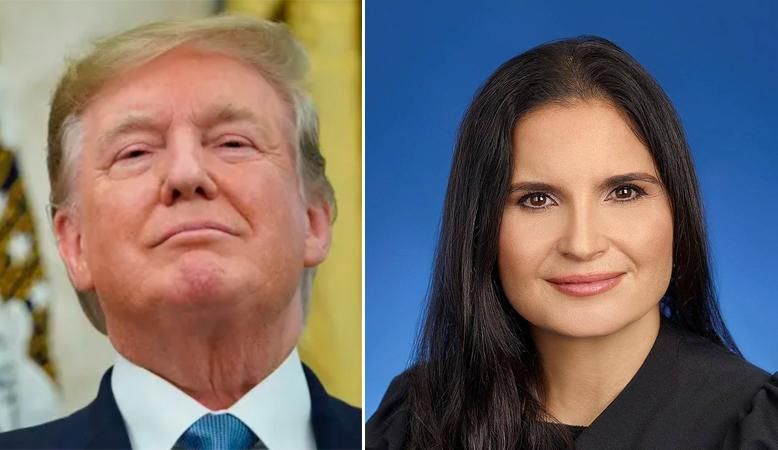
Donald Trump, Aileen Cannon (Photo by AFP/ Cannon photo via U.S. District Court for the Southern District of Florida)
March 01, 2024
Donald Trump and his lawyers are claiming any attempt to hold a 2024 trial conflicts with Justice Department rules requiring a pause of any investigation into a presidential candidate 60 days prior to an election — but a legal expert has debunked that as wishful thinking.
University of Alabama School of Law Professor Joyce Vance explained that a Friday morning hearing before Judge Aileen Cannon had the goal of outlining a trial schedule for the classified documents case in Florida. Trump's preference is to pause the trial indefinitely or, at the very least, hold it after the 2024 election — which could allow him to order his Justice Department to stop the prosecution.
“As the leading candidate in the 2024 election, President Trump strongly asserts that a fair trial cannot be conducted this year in a manner consistent with the Constitution, which affords President Trump a Sixth Amendment right to be present and to participate in these proceedings as well as, inter alia, a First Amendment right that he shares with the American people to engage in campaign speech," Trump's lawyers wrote.
READ ALSO: 11 ways Trump doesn’t become president
His co-defendant in Florida, however, Walt Nauta, proposed that the trial start on Sept. 9 because his lawyers are involved in something personal from Aug. 5 to Aug. 23. Special counsel Jack Smith has requested it begin July 8.
"In this case, where there is a search warrant at stake and lots of classified evidence, the government will push to get rulings from Judge Cannon before the trial starts so they can appeal adverse rulings where that option is available," said Vance. "But judges can reserve their rulings until trial has started or even change prior rulings. There won’t be cameras in the courtroom, so we’ll have to rely on reporting to understand how Judge Cannon makes these calls."
Trump's first claim about delaying the trial is that holding it before the election would violate a Department of Justice policy, but Vance said that he's misunderstanding the rule.
The Justice Manual that he's citing reads: “Federal prosecutors and agents may never select the timing of any action, including investigative steps, criminal charges, or statements, for the purpose of affecting any election, or for the purpose of giving an advantage or disadvantage to any candidate or political party.”
The language, Vance explained, applies to "decisions by the government about the timing of steps in a criminal investigation that could lead to it becoming publicly known an individual is under suspicion (like executing a search warrant) or scheduling an indictment close to an election."
All of the investigative measures have been done in Trump's case. It's only the trial that remains and the DOJ rule doesn't govern what happens after a defendant is already indicted, Vance wrote.
Trial dates aren't decided by the DOJ but by the judge in the case.
"Trump’s argument here doesn’t make sense if you stop and think about it — if it were correct, there would never be a moment when the government would have enough time to investigate, indict, and try a case given our election cycle, and politicians could never be held accountable," said Vance.
Vance also argued that, in her opinion, there shouldn't be an election in 2024 until the public has a verdict about whether a presidential candidate can be trusted to handle the nation's secrets.