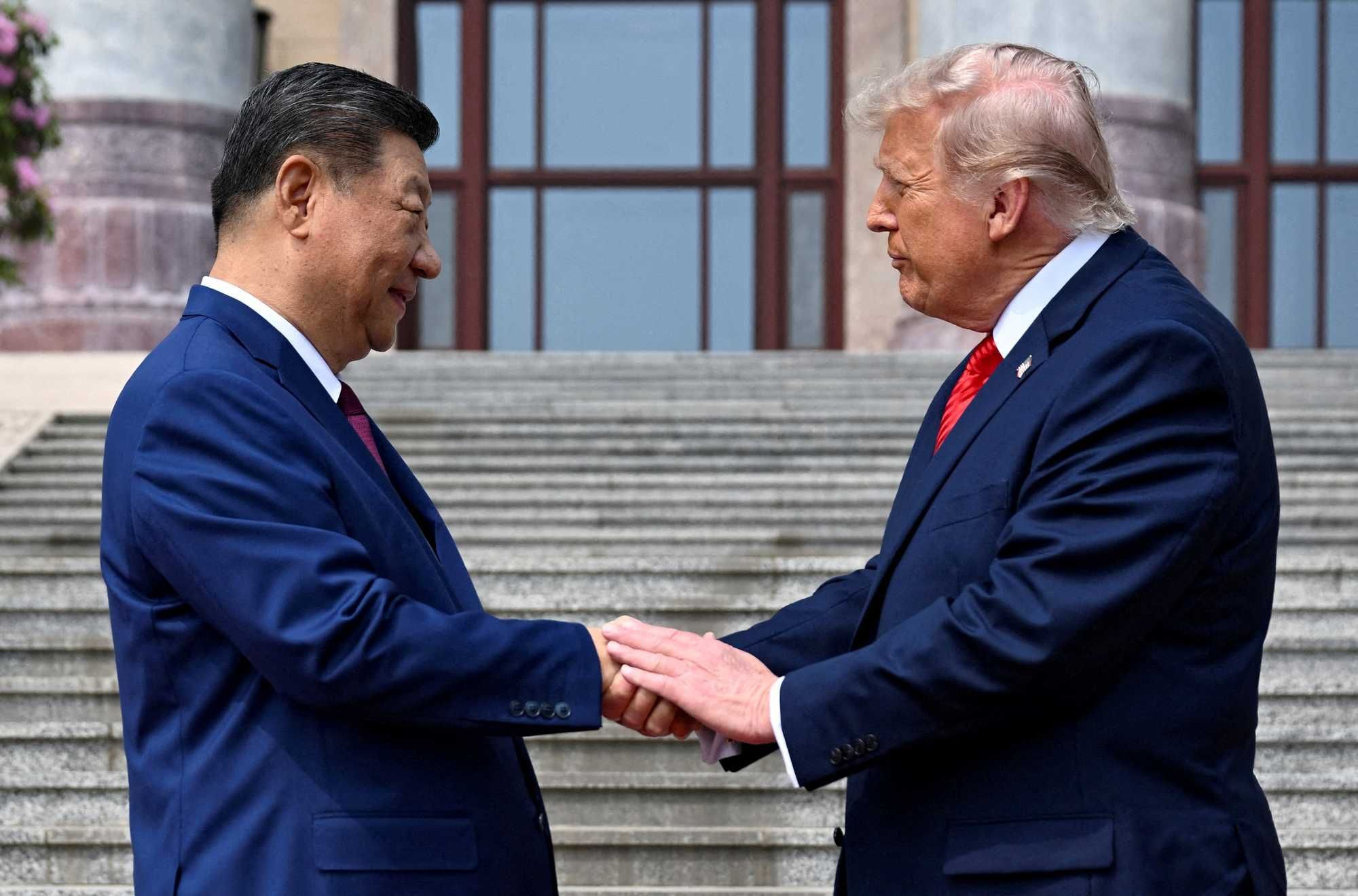
A former senior National Security Council official is warning that President Donald Trump's Beijing summit left Americans dangerously exposed, and that, unlike Richard Nixon's historic China opening, this one will have consequences that can't be undone.
"Trump is getting away with this move politically. Geopolitically, he will not. His new stance imperils Americans and emboldens China, which makes a future crisis likelier than ever," wrote Thomas Wright, a Brookings Institution senior fellow who served as NSC strategic planning director under Biden, in a new Atlantic essay.
The sharpest moment of Wright's critique centers on Volt Typhoon, a Chinese state-affiliated hacking operation that U.S. intelligence says has spent years pre-positioning cyber weapons inside American water utilities, electric grids, and transportation systems, ready to trigger catastrophic attacks if conflict breaks out over Taiwan.
Asked aboard Air Force One whether he had confronted Xi about it, Trump shrugged.
"What they do, we do too,” he said. “We spy like hell on them too. I told him, ‘We do a lot of stuff to you that you don’t know about.’”
He struck the same posture when asked about a separate Chinese cyber intrusion the FBI described as a "major incident" just weeks earlier.
Wright argued that Trump fundamentally misunderstands the threat.
"Espionage—intrusions for the purpose of intelligence collection—is ubiquitous and, within limits, accepted. The pre-positioning of cyber weapons inside the civilian infrastructure of a country with which one is not at war is something else entirely. To conflate the two in public, alongside Xi, is to tell Beijing that one of the most aggressive components of its peacetime posture against the United States carries no political price," he warned.
The analysis comes after Trump went wobbly on a $14 billion Taiwan arms package, dismissing America's decades-long Taiwan defense commitments and calling Xi a great leader straight out of "central casting" — language that left analysts struggling to square with his earlier tough-on-China posture.
Wright delivered a blunt conclusion.
"His new posture is one that strengthens America’s top rival, leaves its vulnerabilities unaddressed, and makes a U.S.-China crisis more likely rather than less," he said.