Nobel-winning economist breaks down 'vicious circle' US must break 'before it's too late'
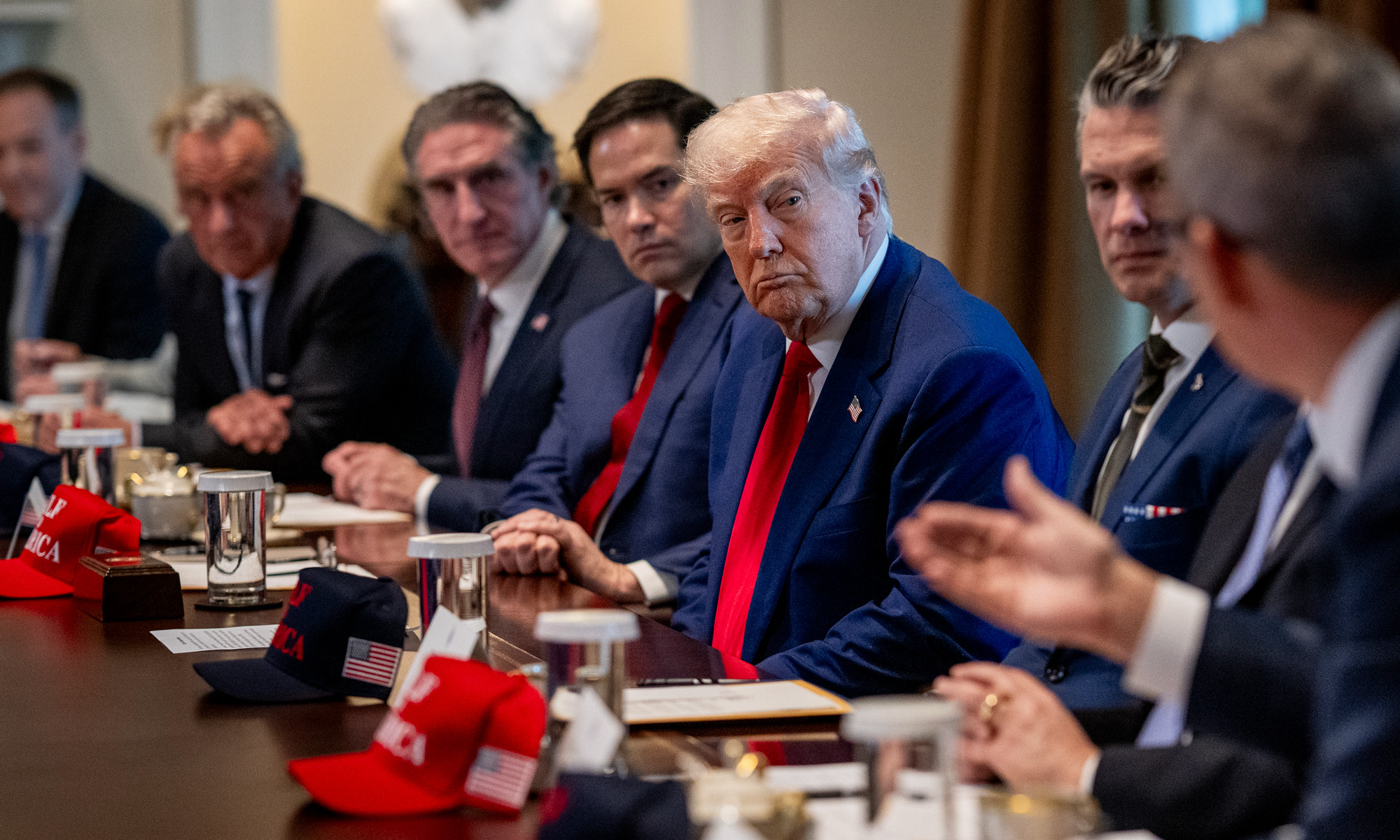
President Donald Trump holds a Cabinet meeting, Wednesday, April 30, 2025, in the Cabinet Room. (Official White House Photo by Molly Riley)
February 20, 2026
An award-winning economist has broken down what the US must do to course-correct on the economy before it is too late.
Nobel Prize winner Paul Krugman believes it may not be too late to steady the US economy and wrest it from the hands of the ultra-rich. His message appeared in a Substack column published today (February 20), by the economist, who suggested the problem is not the change itself but entrusting it to people who do not want it.
He wrote, "It’s clear that by any reasonable standard the extremely rich pay much less than their share in taxes. Why doesn’t the U.S. government try to close the loopholes that allow the extremely rich to pay so little? Don’t say that it would be technically difficult or that it would hurt the economy.
"We were able to tax the rich for a generation after World War II, a generation during which the U.S. achieved the best growth in its history. In general, governments in advanced nations have enormous ability to achieve their goals, if they want to.
"The problem, of course, is that too many politicians don’t want to collect taxes on the superrich, because the ultra-wealthy have used their wealth to achieve immense political power. And the failure to tax them effectively is reinforcing the vast accumulation of wealth at the top.
"It’s a vicious circle. And whatever you think of specific proposals for wealth taxes and other approaches toward reining in America’s billionaire class, we had better take action before it’s too late."
Krugman also explained how the ultrarich had pulled away economically from the rest of the country, saying it is a simple matter of taxation.
He wrote, "Why are the ultra-rich pulling away from everyone else? Partly because they pay much lower taxes than the little people. Some manage a full Leona Helmsley, paying no taxes at all. On average, according to recent estimates by Balkin, Saez, Yagan, and Zucman, they pay a total tax rate — federal, state, and local — of only 24 percent.
"That’s less than the average for the whole population, around 30 percent. And it’s much less than the tax rate for 'top labor income earners.' That means people who receive big paychecks — but who do receive paychecks. In contrast, the incomes of the ultra-rich flow largely from or through businesses they own."