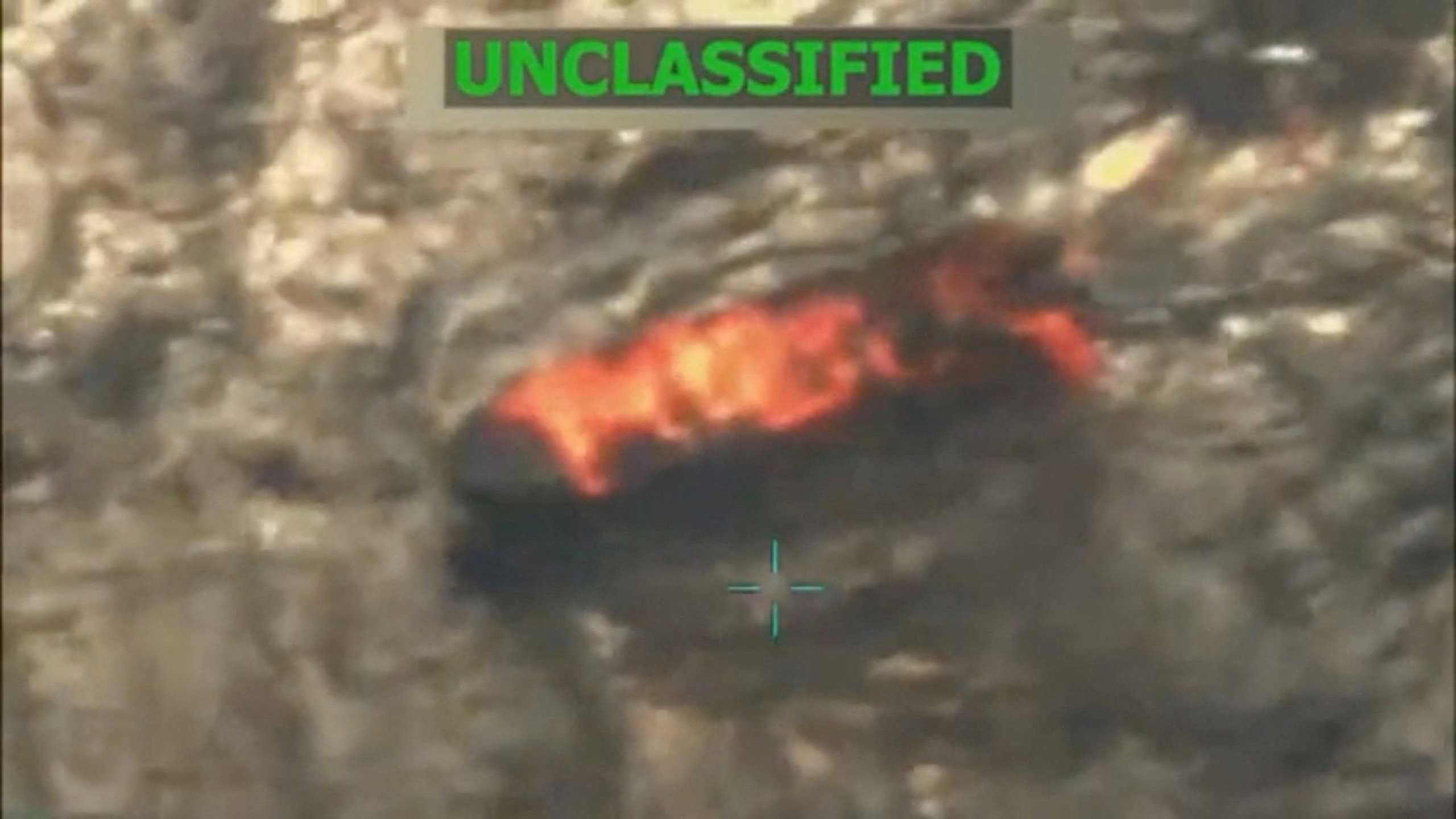
A year into President Trump's campaign of military strikes on suspected drug-smuggling boats, a group of retired Coast Guard officers says the operation isn't just legally dubious — it's "more troubling" than the administration lets on, and it isn't even working.
Writing in Just Security, retired Coast Guard officers Stephen Chamberlin, Leanne Lusk, and Brian McNamara argued the strikes represent something far more troubling than officials portray: an unlawful expansion of military force into what has always been a law enforcement job.
The authors say suspected traffickers are at worst criminals, not combatants, and that treating them as military targets stretches both domestic and international law past recognition. The Posse Comitatus Act generally bars the Pentagon from conducting civilian law enforcement, which is exactly why Congress has long relied on the Coast Guard, not the military, to handle maritime drug interdiction.
The authors, who collectively spent decades running Coast Guard search-and-rescue and law enforcement operations, say the new approach destroys the very evidence needed to dismantle trafficking networks.
"Dead suspects cannot be questioned. Destroyed vessels cannot be searched," the authors wrote.
Despite a year of strikes killing hundreds of alleged traffickers, the authors cite reporting showing cocaine's price, purity, and availability in the U.S. have largely returned to pre-operation levels, suggesting the campaign has produced little lasting impact. Worse, the strikes have already cost the U.S. cooperation from allies: the United Kingdom, Canada, and the Netherlands have all curtailed intelligence sharing over the killings.
Most damning, the authors point to reports that two survivors of one strike were killed while defenseless and adrift at sea, directly violating the maritime principle to "preserve life at sea whenever possible" that has guided American sea services for generations.
The authors argue the U.S. already had an effective, lawful model for fighting traffickers through Coast Guard-led interdiction — and that abandoning it for military strikes isn't a show of strength, but a dangerous departure from the principles that once set America apart.