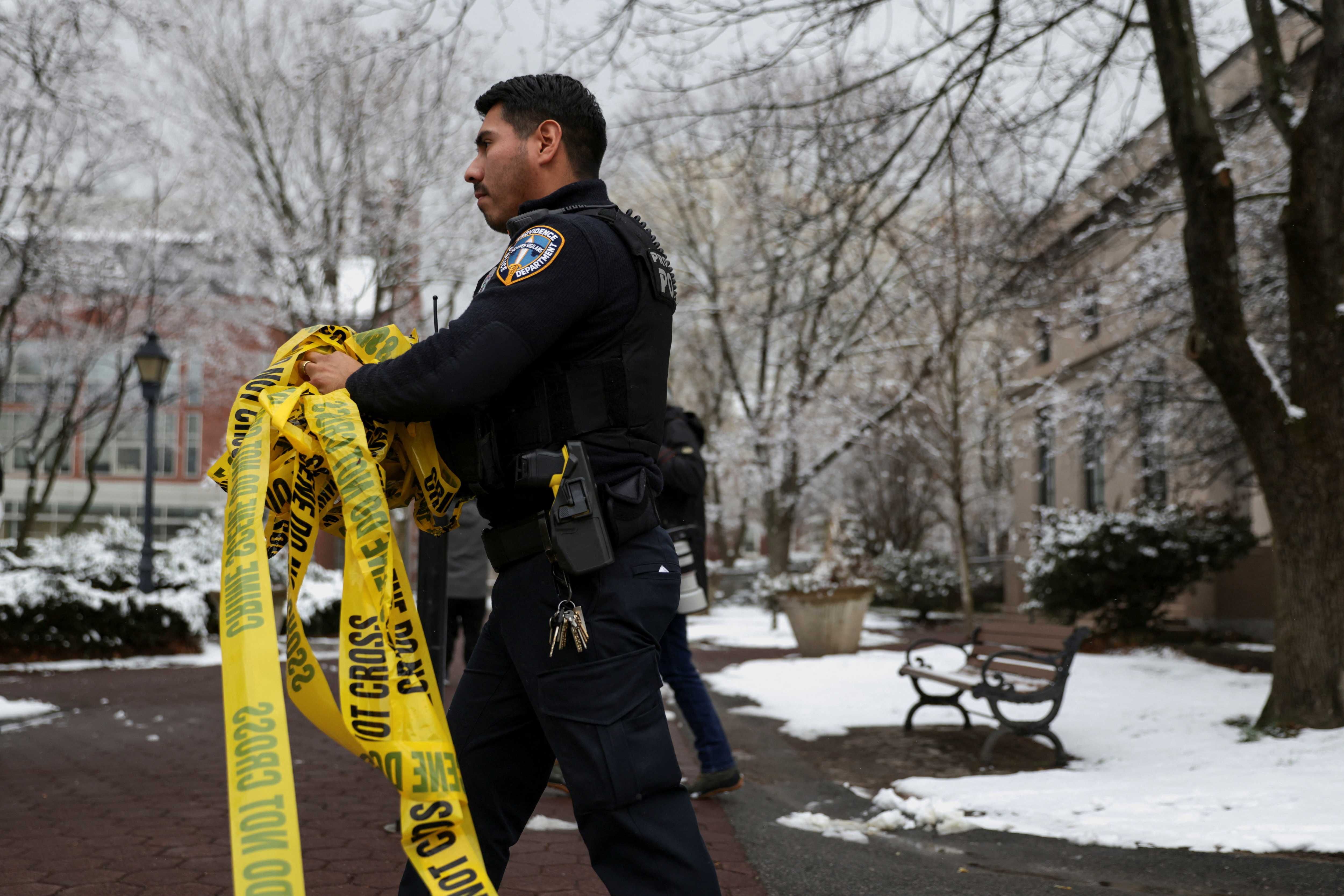
A person of interest has been released in the Brown University shooting, which a law enforcement analyst said was a "sobering reset" of the investigation in its crucial early stages.
FBI Director Kash Patel had announced that a person of interest had been detained Sunday, but police released him hours later, saying the evidence "now points in a different direction." Former Secret Service agent Jonathan Wackrow told "CNN News Central" that investigators were basically starting over from scratch.
"Listen tothat sigh of relief thatauthorities had announced whenthey stated that they had aperson of interest in custodyhas really been replaced by thissobering reset in the entireinvestigation, and the realityis it brings investigators backto square one," Wackrow said.
"They have nosuspect in custody, and, really,they're not even intimatingthat they have somebody thatthey're even looking at, andthe challenge is that as timegoes on, this investigation getssignificantly harder. So this isa really hard reset going backto square one, where they haveto go back and reassess everysingle lead that they had."
Wackrow said investigators were now reassessing the ballistic evidence and digital leads they've gathered since the shootings Saturday afternoon, which left two students dead and nine others injured.
"They have to go backthrough that surveillance videoand dig deeper," Wackrow said. "They have to digdeeper into the neighborhood andto the community, and anythingthat will give us a better imageof who this suspect potentiallyis and where they're going. So,again, there is a monumentaltask ahead with a lot ofchallenges around time, distanceand resources that are upagainst law enforcementinvestigators this morning."
Investigators believe the shooter was targeting a specific individual or the university itself, but Wackrow said they have little indication of who that gunman might be.
"Time has gone by now," he said. "Wehaven't seen any indication ofa secondary threat or a targetedgroup that's working together.So with that in mind,investigators really have tomove quickly through all of theevidence that they do have toensure that they identify asuspect and bring that suspectinto custody quickly."
The investigation will only get more difficult as time passes, Wackrow said.
"Immediatelythe shooter created that timeand distance by evading policein the moments after the attack, and so the challenge for law enforcement is they allowedfor potentially physicalevidence to degrade. Digital signals will also gocold," Wackrow said. "As they go back tore-interview witnesses, manyof which have now gone home forthe holidays, the memories startfading. Those details that arereally important in theaftermath of an incident around,you know, maybe the a particulargait that the person walked inor, you know, the way that theycomported themselves as theywere walking through a hallwayor out on the street, they startlosing that fidelity."
"So it puts investigators up to asignificant challenge on how arethey going to reset thisinvestigation?" he added. "And final pointhere is, in the immediateaftermath, we saw this surge offederal, state and localresources all converging on Brown University, right whereyou're standing. Look around – they're not there anymore. Sothe challenge is, is with thismonumental task of resetting theinvestigation, their resourcesare limited right now, and theyhave to rebuild those resourcesto lead this investigationforward."
- YouTubeyoutu.be