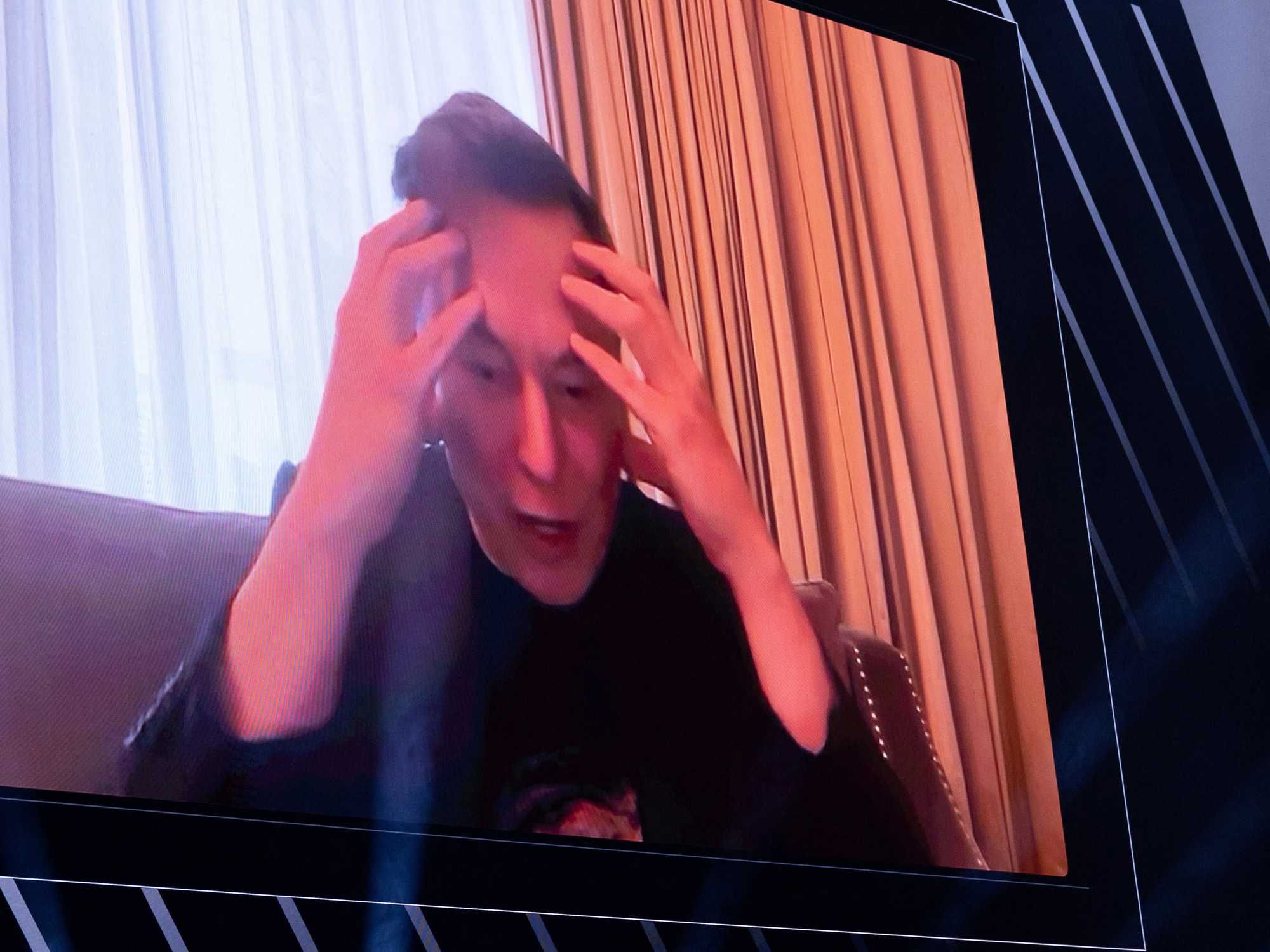
New York Times columnist Nicholas Kristof is back from a trip to South Sudan, where he saw firsthand the deadly consequences of Elon Musk’s destruction of the US Agency for International Development.
While leading President Donald Trump’s so-called Department of Government Efficiency (DOGE), Musk spearheaded the dismantling of USAID in early 2025, shuttering thousands of humanitarian programs that provided food, medicine, and other lifesaving assistance to some of the world’s poorest people. Researchers at Boston University estimated that the cuts contributed to 780,000 deaths in the first year alone, while a study published in The Lancet projected that they could result in the deaths of 3.1 million children under the age of 5 over the course of Trump’s second term.
Kristof, who has chronicled the savage effects of the aid cuts, called them Trump’s “most lethal policy”—more so than his war on Iran or rollbacks of US vaccine requirements—but said it has often failed to register because it “manifests itself in tiny unmarked graves in impoverished villages around the world.”
Musk has continued to insist that “zero” children died as a result of his decision to throw USAID “into the wood chipper,” as he put it. But when Kristof invited the world’s richest man on a trip to one of Africa’s poorest nations earlier this year to see the damage firsthand, Musk declined, calling Kristof “evil,” a “piece of shit,” and a “liar.”
Writing in the Times on Saturday, Kristof said, “I thought I still owed him an account of what he missed on this trip to South Sudan—and what South Sudanese people want to show him.”
Musk’s assault on foreign aid caused US funding for HIV programs in low- and middle-income countries to fall by $2.1 billion—or nearly a third—in 2025, according to a joint analysis by KFF and UNAIDS.
Margret Jokudu, a health worker who cared for children with HIV in South Sudan, told Kristof that after the cuts, many of those children died because they couldn’t get lifesaving medication that had cost the US less than 12 cents per day.
“I will take him to where the graves are, for this is the impact of his cuts,” Jokudu said. “Maybe he will shed a tear on these graves.”
South Sudan—one of the poorest countries in the world—was hit especially hard by the cuts. According to Doctors Without Borders, US humanitarian funding for South Sudan fell by 61% in 2025 compared with 2024.
More than 100 health centers in the country lost support, and 380 nutrition sites have suspended service. Action Against Hunger said 38 of its nutrition clinics have been forced to close, leaving it unable to help 35,000 children suffering from acute malnutrition.
Kristof said he’d first take Musk to the village of Halbul in the country’s northwest.
He wrote that the village, which he last visited in early 2025, “used to have an American-funded clinic that was wildly successful in saving lives... Villagers said that since the clinic had opened, there had not been a single maternal or infant death in the area.”
When Kristof returned this year, after the US cut off funding to the United Nations Population Fund, which supported the clinic, he learned that several people had died.
One 21-year-old mother of two, who could have given birth at the clinic, was forced to do so at home. Both she and her baby died in childbirth.
“If this had been open,” her husband said, “my wife would have delivered here, and she’d be alive.”
Another woman said her 15-year-old daughter received no prenatal care because the clinic had closed. She hemorrhaged at home and died in childbirth, along with her baby.
Before the cuts, the US-funded President’s Emergency Plan for AIDS Relief (PEPFAR) supported an estimated 95% of people receiving antiretroviral treatment for HIV in South Sudan. Spending through the program fell by 20% in the country in 2025, including a 45% reduction in spending on HIV prevention and a 35% reduction in spending on HIV testing, according to amfAR, the Foundation for AIDS Research.
Although these lifesaving drugs remain available at hospitals, many of the community health workers who previously delivered them to orphaned children have been fired. As a result, Kristof wrote, “these children—most of them infected during childbirth and kept alive for years by bipartisan American generosity—were left on their own.”
Agnes Mindra, a community health volunteer who lost her position, told Kristof she’d previously cared for six orphans who had AIDS and 28 mothers with HIV. After the cuts, she said, three of the children and five of the mothers had died.
“At first, there were not many deaths, but now it’s increasing,” she said. “There is more dying now.”
Another volunteer, Scovia Abau, gave Kristof the names of eight orphans who had previously received antiretroviral drugs from a hospital in Juba and had since died. The youngest was 6 years old.
“Pray tell, Elon Musk, how do you expect a 6-year-old AIDS orphan to obtain medicine on his own?” Kristof asked.
While Musk has described cutting USAID as a way to save taxpayers money, Kristof noted that “destroying it so abruptly turned out to be extraordinarily costly.”
Earlier this year, the Trump administrationtold Congress it needs $19 billion just to close out USAID contracts—nearly triple the $6.4 billion originally estimated for the agency’s dismantling. Before the cuts, US foreign aid cost just 0.23% of US gross national income and saved an estimated 3 million lives a year, according to the Center for Global Development.
Kristof urged Democrats to put their attention toward restoring US humanitarian programs once they take control of Congress in January.
“I fear Americans will think that all this is tragic but behind us and that it’s time to move on. But if you’re a woman whose child is starving because of aid cuts, you can’t move on,” he wrote. “I hope we’ll not just deplore this catastrophe and not just regret the ugliness of the world’s richest man devastating the world’s poorest children, but also push for remedies.”
Kristof’s account came just days after the top Democrats on the House and Senate foreign affairs committees accused the Trump administration of attempting to conceal the human toll of USAID’s dismantling.
In a Wednesday letter to Secretary of State Marco Rubio and acting USAID Administrator Bill Woolf, Sen. Jeanne Shaheen (D-NH) and Rep. Gregory Meeks (D-NY) accused the administration of selectively releasing agency records to “cover up the appalling impact of the agency’s closure.”
Sen. Chris Van Hollen (D-Md.), who is challenging Senate Minority Leader Chuck Schumer (D-NY) to lead the chamber’s incoming Democratic majority, told NPR earlier this month that investigating the deadly consequences of USAID’s dismantling would be his top priority on foreign aid, pledging to use congressional hearings to expose the damage wrought by Musk.
“Priority number one is to do an analysis of all the harm the Trump administration has done,” Van Hollen said. “If these trends continue, you’re talking about millions of people dying in the coming years.”