Fossilized grass hints that dinosaurs ate hallucinogenic fungus similar to LSD
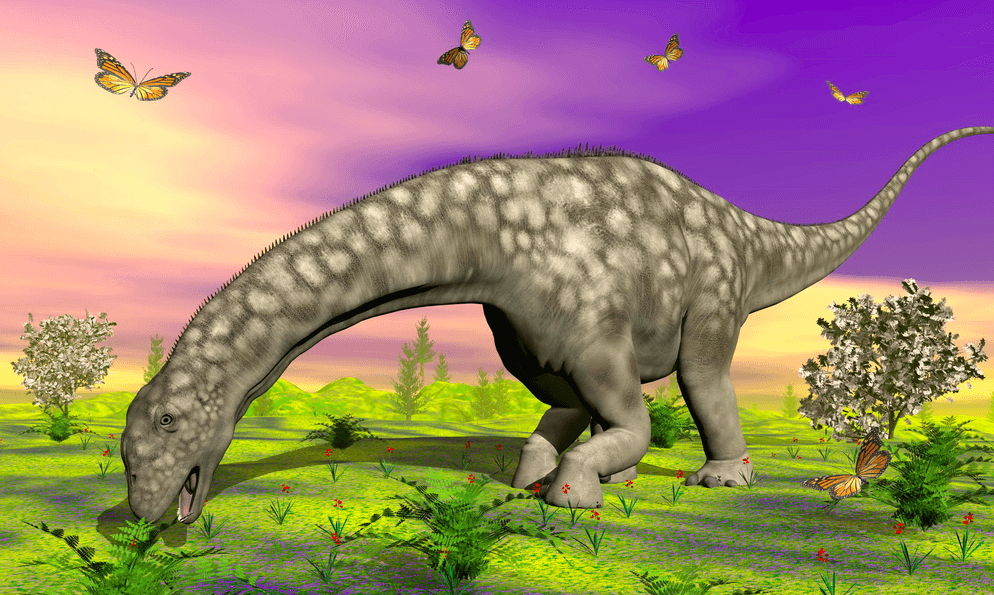
Big argentinosaurus dinosaur eating peacefully small plants (Shutterstock)
February 10, 2015
Dinosaurs ate hallucinogenic fungus that grew on prehistoric grass and was then preserved for about 100 million years in an amber fossil.
The fossil, which was discovered in Myanmar, provides evidence of the earliest grass specimen ever found, reported Eureka Alert.
The prehistoric grass played host to a fungus similar to ergot, a fungus blamed for disease epidemics and the Salem witch trials that was used for centuries as an labor-inducing or abortifacient drug and later synthesized as LSD.
"It seems like ergot has been involved with animals and humans almost forever, and now we know that this fungus literally dates back to the earliest evolution of grasses," said George Poinar, Jr., an Oregon State faculty member and expert on studying specimens found in amber.
He said the discovery helps scientists understand the timeline in grass development and how it relates to human food crops such as corn, rice, and wheat.
Researchers said dinosaurs undoubtedly ate the now-extinct ergot-like fungus, Palaeoclaviceps parasiticus -- which would have been toxic and naturally hallucinogenic.
"There's no doubt in my mind that it would have been eaten by sauropod dinosaurs, although we can't know what exact effect it had on them," Poinar said.
The fossil likely dates to the early-to-mid Cretaceous period, when land masses were dominated by dinosaurs and conifers but flowering plants, grasses, and small mammals were beginning to evolve.
Ergot may have acted as a natural defense mechanism for grasses, because it’s bitter and can cause illness in humans and livestock.