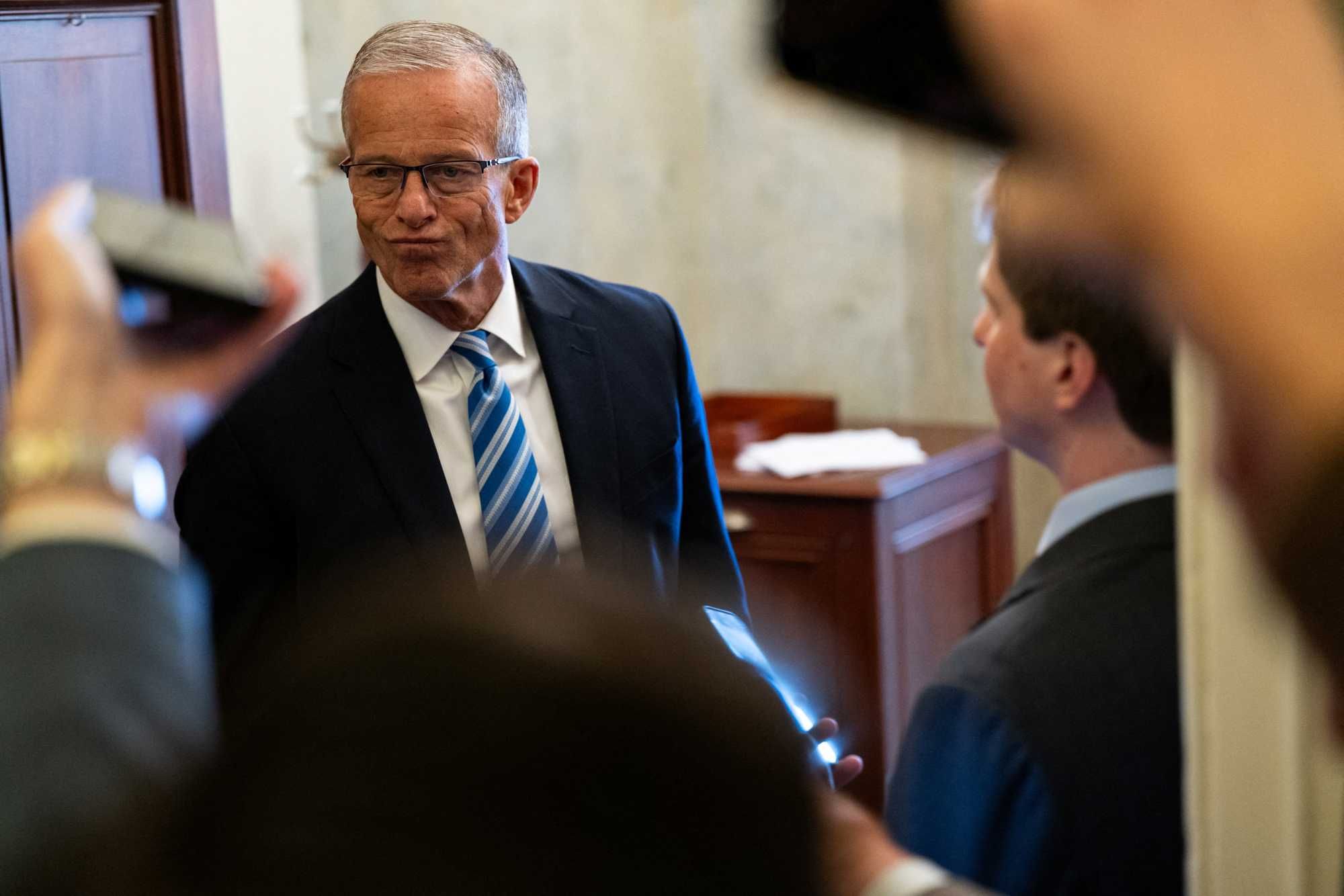
Donald Trump’s demand that the still-Republican-controlled Senate shove through a $350 billion bill is getting the cold shoulder from the GOP leadership.
While the president was overseas making nice with Xi Jinping of China and Vladimir Putin of Russia, Senate Majority Leader John Thune (R-SD) was making it clear that the president isn’t calling the shots at home now.
Trump wants the money for the military, and he wanted it passed by Republicans alone. Instead, after huddling with GOP senators Wednesday, Thune told reporters his party would first see whether Democrats might be willing to help, the Washington Post reported. Voters’ anger over the Iran war helped cost Republicans both chambers in the midterms, and that reckoning is now reshaping how the Senate handles the Pentagon request.
“We want to explore all the possibilities for funding the military, one of which would be seeing whether or not there’s an appetite on the Democrat side to do it,” Thune said. “I don’t know that they will. But we think that we ought to at least explore that possibility.”
Thune and Budget Committee Chair Ron Johnson (R-WI) stopped short of ruling out a go-it-alone bill, the report notes before adding that a week of private GOP meetings "exposed deep unease" with another partisan spending push, continuing the resistance Trump’s Pentagon plans have met inside his own party.
Sen. Rand Paul (R-KY) warned some colleagues had missed the message voters sent.
“There’s quite a few of them that I guess did not, were not aware of what happened with the election recently. All the exit polling showed that people were upset about the price of gas and the Iran war,” he told the Post.
With 53 Senate seats, Republicans can't risk defections on a party-line measure, with the clock ticking toward Dec. 15. when Sen. Jon Husted (R-OH), who was appointed to fill JD Vance’s old seat, sees his term end and Sen-elect Sherrod Brown (D) takes his place.
Some GOP appropriators, led by Sen. Susan Collins (R-ME), also want the money to move through the normal bipartisan appropriations process. Democrats have raised alarms about the war’s price tag for months and remain firmly against the request. They want a stopgap bill to prevent a December shutdown and push the fight into next year, when they’ll run Congress, the outlet is reporting.