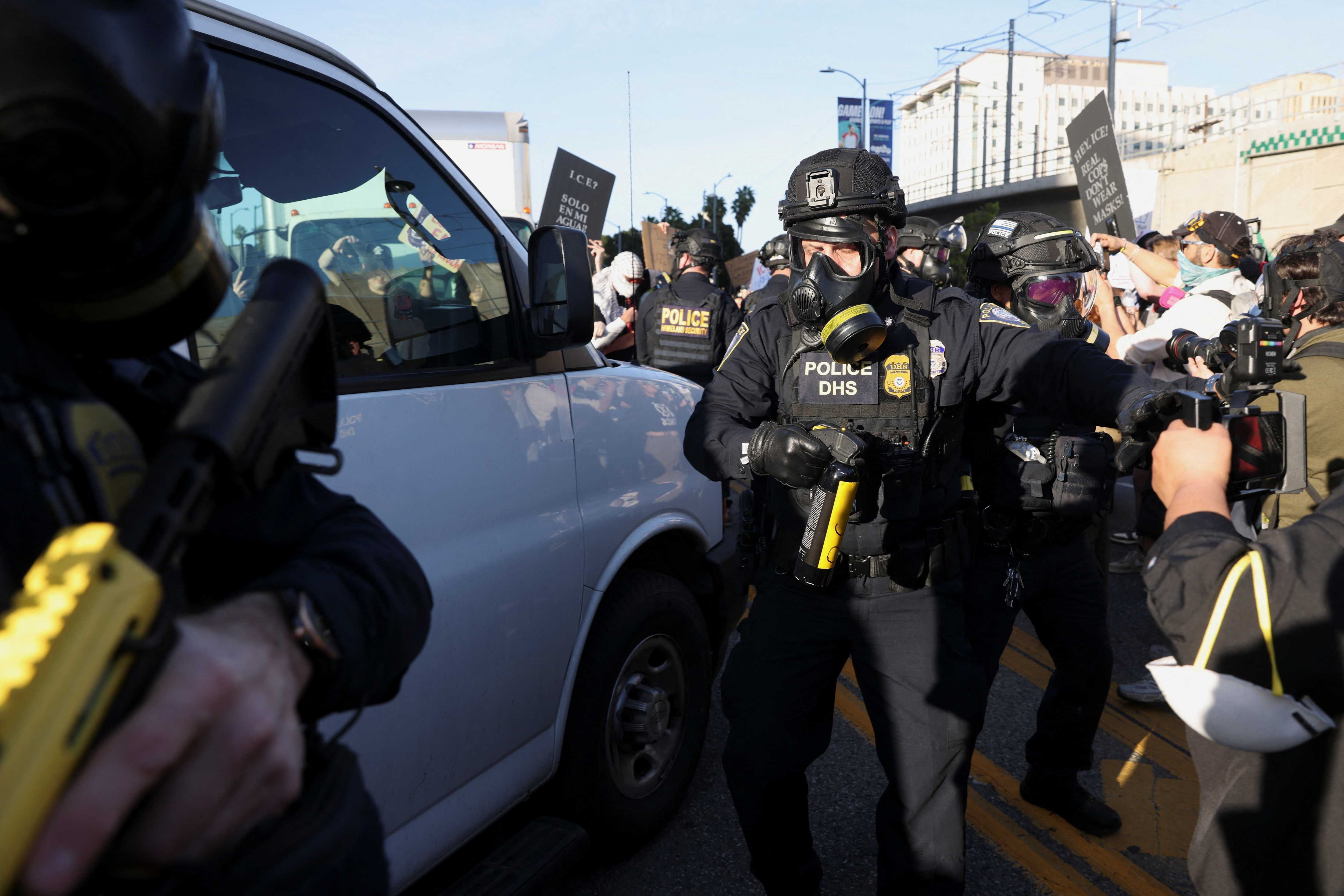
ICE agents turned a protester's violent arrest at gunpoint into a social media campaign, which a federal judge has now called a "vindictive effort" to punish him, The Guardian reported on Friday.
Christian Cerna, 28, a carpenter from Boyle Heights and United States citizen, was targeted by ICE agents after he attended a protest against the aggressive federal immigration crackdown in Los Angeles. Cerna was driving with his partner and their two children in Los Angeles on June 11, 2025, when two vehicles slammed into his car, and a group of armed men ran towards them. They detonated flash-bangs and drew assault rifles on the family while another agent arrived with a handheld tripod to capture the chaos.
"I have kids!" Cerna pleaded. "Shut the [expletive] up and listen!" an officer barked back.
DHS then posted high-resolution footage from the arrest on X, calling Cerna a "violent rioter" who "punched" an agent and claiming that he had attempted to flee the scene — footage that showed him surrendering immediately. The post invoked then-DHS Secretary Kristi Noem's "message" to LA rioters: comply or face prosecution.
What followed upended Cerna's life. He was charged with felony assault, which carried an eight-year sentence, but was ultimately released after a week in custody, and a judge sentenced him to house arrest with GPS monitoring. The ordeal took a toll on his family. His toddler had screaming nightmares. His partner lost 20 pounds. His youngest, a five-month-old, had a body rash. Cerna developed a stress-induced ruptured appendix.
Cerna later pleaded guilty to a misdemeanor charge of simple assault on a federal officer stemming from an earlier protest.
In March, a federal judge slammed ICE's tactics as "vindictive effort" and "extrajudicial punishment," sentencing him to probation instead. But the damage was done.
Cerna's lawyer and former federal prosecutor Scott Tenley said it was unlike anything he had seen in his 20 years of criminal defense — that he had never encountered officers planning and filming an arrest.
"You’re not making a documentary. You’re supposed to be fighting crime," Tenley said.