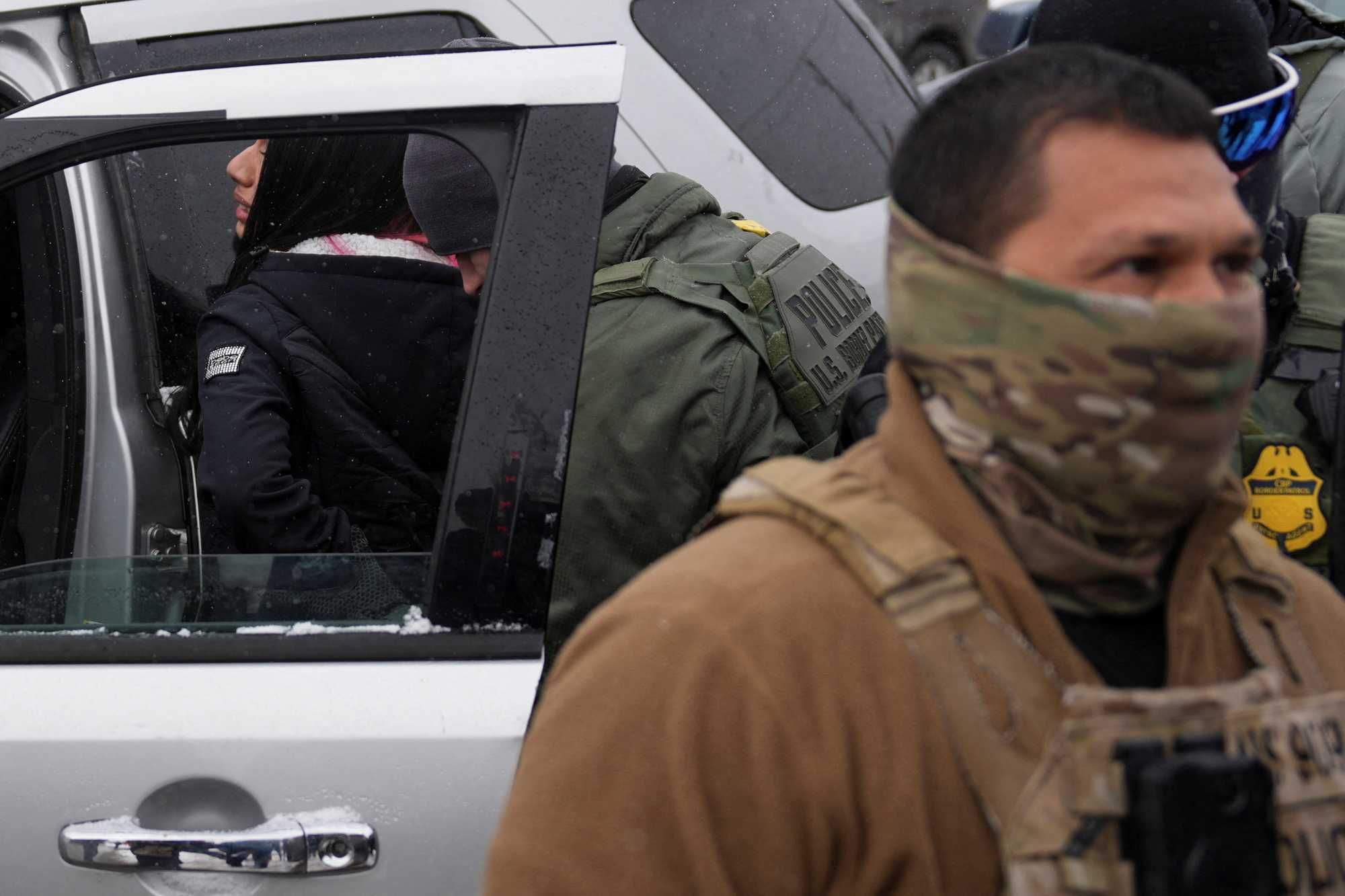
A key claim used by the Department of Homeland Security (DHS) to defend immigration enforcement agent-involved shootings was exposed as a “stunning failure” Wednesday following an exhaustive investigation from The Guardian.
On at least a dozen occasions, DHS has defended shootings perpetrated by Immigration and Customs Enforcement (ICE) or Customs and Border Protection (CBP) officers by claiming a vehicle had been “weaponized” against them. However, an exhaustive investigation published by The Guardian found that DHS and prosecutors had suffered a "stunning failure" in their attempts to prove those claims accurate.
In its report, The Guardian identified 26 individuals that had been accused of using their vehicles to “threaten, assault or injure immigration officers,” five of whom were shot by agents, one fatally. Of those 26, 15 never faced federal charges, and of the 11 that did face federal charges, eight had their charges dismissed.
Furthermore, even after cases against individuals accused by DHS of weaponizing their vehicle against immigration agents had fallen apart, DHS “repeatedly continued to promote people’s cases as evidence of violence,” The Guardian found.
“This whole narrative that all of these people were trying to run over officers with their cars is frankly bizarre and laughable,” said Margaret Hellerstein, a lawyer with The Jurado Firm in Long Beach, California, speaking with The Guardian. “It’s just brazen to tell the same story over and over when it’s been disproven over and over. They believe they have ultimate power and they’re phoning in their explanations.”
A leaked DHS memo that circulated internally last November explicitly warned ICE agents about stepping in front of vehicles, with immigration enforcement agents having a well-documented history of “intentionally” stepping in front of vehicles to “justify using deadly force.”
“The review of cases also reveals a pattern of DHS blasting statements to the press and on social media, painting the subjects of their traffic stops as violent assailants without evidence and then failing to correct the record when those claims collapse under basic scrutiny,” The Guardian’s report reads.