Iran is systematically taking out crucial US missile defense tools: reports
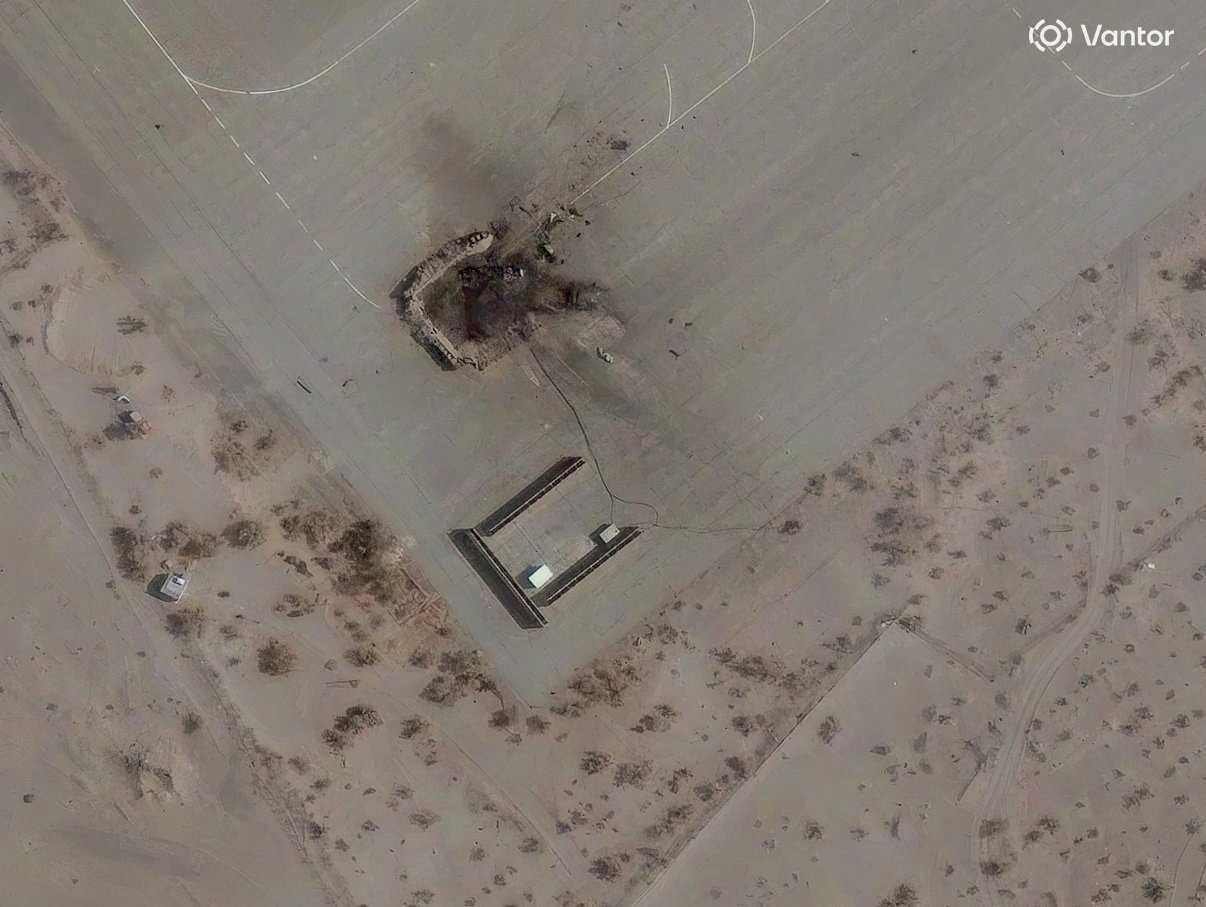
A satellite image of destroyed radar system at Zahedan airbase, Iran, March 1, 2026. Vantor/Handout via REUTERS
March 12, 2026
Iran has repeatedly and methodically targeted U.S. missile defense infrastructure in response to Operation Epic Fury.
The Pentagon has confirmed an Iranian strike on a radar system at Muwaffaq Salti Air Base in Jordan valued at $300 million, and Iran's response – called Operation True Promise 4 – has surgically focused on targeting the detection systems that underpin the entire U.S. defensive architecture in West Asia, reported Monthly Review Online.
“The AN-TPY/2 radar is essentially the heart of the THAAD battery, enabling the launch of interceptor missiles and contributing to a networked air defense picture,” munitions specialist N.R. Jenzen-Jones told CNN last week. “It also happens to be an incredibly expensive piece of kit."
THAAD, short for Terminal High Altitude Area Defense, is a missile defense system that functions with X-band AN/TPY-2 array and other radars to locate incoming missiles, calculates its path and provides interceptors with a target location, but those interceptor rockets are useless without the radars that Iran has targeted and possibly destroyed.
"The loss of even a single radar of this type would be an operationally significant event," Jenzen-Jones said. "It is probable that a replacement unit would have to be redeployed from elsewhere, which will take time and effort.”
Pentagon-aligned analysts insist the defense system remains in good shape, although it's clear that Iran has a sense of what infrastructure to target, but satellite images suggests the damage has been extensive.
"Satellite imagery reviewed by the open-source publication Islander Reports shows strike damage at four AN/TPY-2 sites across the Arabian Peninsula: Prince Sultan Air Base in Saudi Arabia, Al Ruwais in the UAE, Al Dhafra Air Base near Abu Dhabi, and Muwaffaq Salti Air Base in Jordan," Monthly Review reported.
In addition to the confirmed strike at Muwaffaq Salti, satellite images suggest Iran has hit an AN/FPS-132 early warning radar in Qatar valued at $1.1 billion and damaged or destroyed facilities at 11 U.S. military sites across the region since Feb. 28, including sites in Bahrain, Kuwait, Qatar, Saudi Arabia, the UAE and Jordan.
"If the strikes are confirmed, two THAAD batteries would effectively be rendered inoperative, significantly weakening regional missile defense amid sustained Iranian attacks," reported Defense Express. "Redeploying another AN/TPY-2 to the region might become necessary. However, this would require pulling the radar from another theater, thereby weakening U.S. missile defense elsewhere. There are no surplus AN/TPY-2 radars in storage, and redeployment would take considerable time."
Only about 20 of those radar units have been produced since the 1990s, and the estimated cost of a single AN/TPY-2 ranges from $500 million to $1 billion.
"If two units were indeed lost, replacement would likely take years and require hundreds of millions of dollars," Defense Express reported.