'Full stop?' CNN host startled by expert's prediction about Iran war's impact on travel
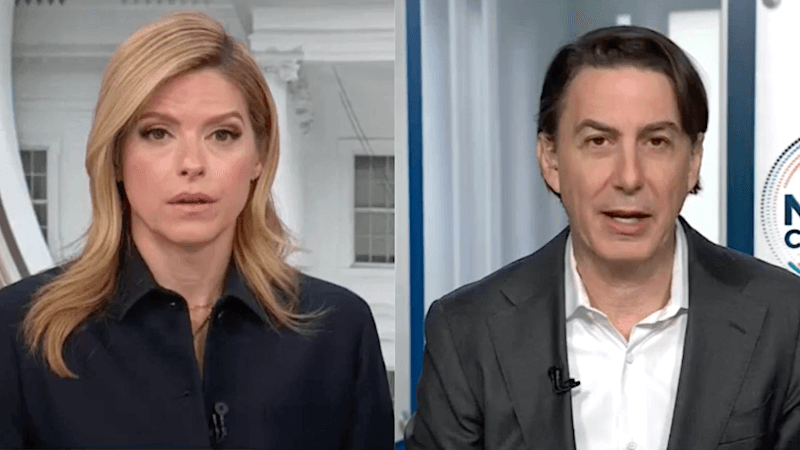
CNN's Kate Bolduan interrupted an economic expert to ask him to repeat his prediction about global fuel shortages looming in the coming days as a result of President Donald Trump's war against Iran.
At least 1,000 ships are reportedly stranded in the Persian Gulf after Iran shut down the Strait of Hormuz in response to the joint U.S.-Israel military operation, and former Biden administration adviser Amos Hochstein told "CNN News Central" that the impact of that closure would send ripple effects throughout the global economy that will soon become apparent.
"Ittakes time for things to, forthis kind of a shock to play outinto the market because peoplehave storage capacity so youdon't really feel it," Hochstein said. "But nowwe're so far into it that you'restarting to feel it. So as yousaid, consumers are feelinggasoline price pinch with $4 agallon today on average,which means some are getting ita lot more than that. Dieselprices are going up dramaticallyin the United States and aroundthe world, which means that ourfood and all the stuff that wethat comes to us on a truck,whether it's from an Amazon delivery truck or through ourshopping, is all going to go upin the next several days andweeks, and a lot andfertilizer and all kinds ofother chemicals."
"What happenswhen you have a disruption isthat when it goes on for awhile, when you turn it back on,it's not like flipping theswitch and the light goes backon," Hochstein added. "You now have to startrestarting all the production ofthe oil, the restarting of theproduction of the gas. Then youhave to refine it, then you haveto deliver it. So it will take awhile for that to enter into themarket. We have some airportsaround the world that may runout of jet fuel in the comingdays, and planes will have to begrounded."
Bolduan interjected to make sure she had heard him correctly.
"Wait – so full stop, like, airports are going to run out of jet fuel," she said.
"Full stop," Hochstein repeated. "In about a week or so. There'll be airports around theworld that will run outcompletely, and we're alreadyseeing it because airports, someairports in the world arerestricting how many flights cantake off. So in some Asiancountries, we're seeing themlimiting the amount of flightsalready in order not to get tothe point where they run out."
The Iran-backed Houthis are targeting the critical Bab el-Mandeb Strait connecting the Red Sea to the Gulf of Aden, and Hochstein explained the downstream effects of both those critical shipping lanes being closed to commercial traffic.
"Every day of delay costs moremoney, so any product that's onthose ships, whether it's oilor container ships, now getsmore expensive," he said. "When ships takelonger to voyage, that also meansthey're not available as oftenbecause they reach destinationslater, so they can't turnaround. So the whole system isgetting bogged down. Thisstarted as a crisis in Asiabecause of how reliant they wereon the Middle East. It's nowspreading to Europe, where jetfuel prices are now double theprice they were a month ago, double, and they will run out offuel, and then it's alreadystarting to come to the United States. Any American that isthinking about traveling thisspring and summer is going tohave a rude awakening if theyhaven't bought their ticketsyet. Those plane tickets aregoing to cost a lot more money,and it's going to take a longtime for that to happen."
"There's one other point, Kate,that you have to always thinkabout when you get so tight,like in the United States, wherewe're almost self-reliant, we'renot really – any one accident cantake us off kilter," Hochstein added. "Lastweek there was an accident atthe Valero refinery in Texasthat took out a significant partof the facility. Accidents likethat will now hurt us and hurt our ability because we now don't have the ability to import anything from the outside."