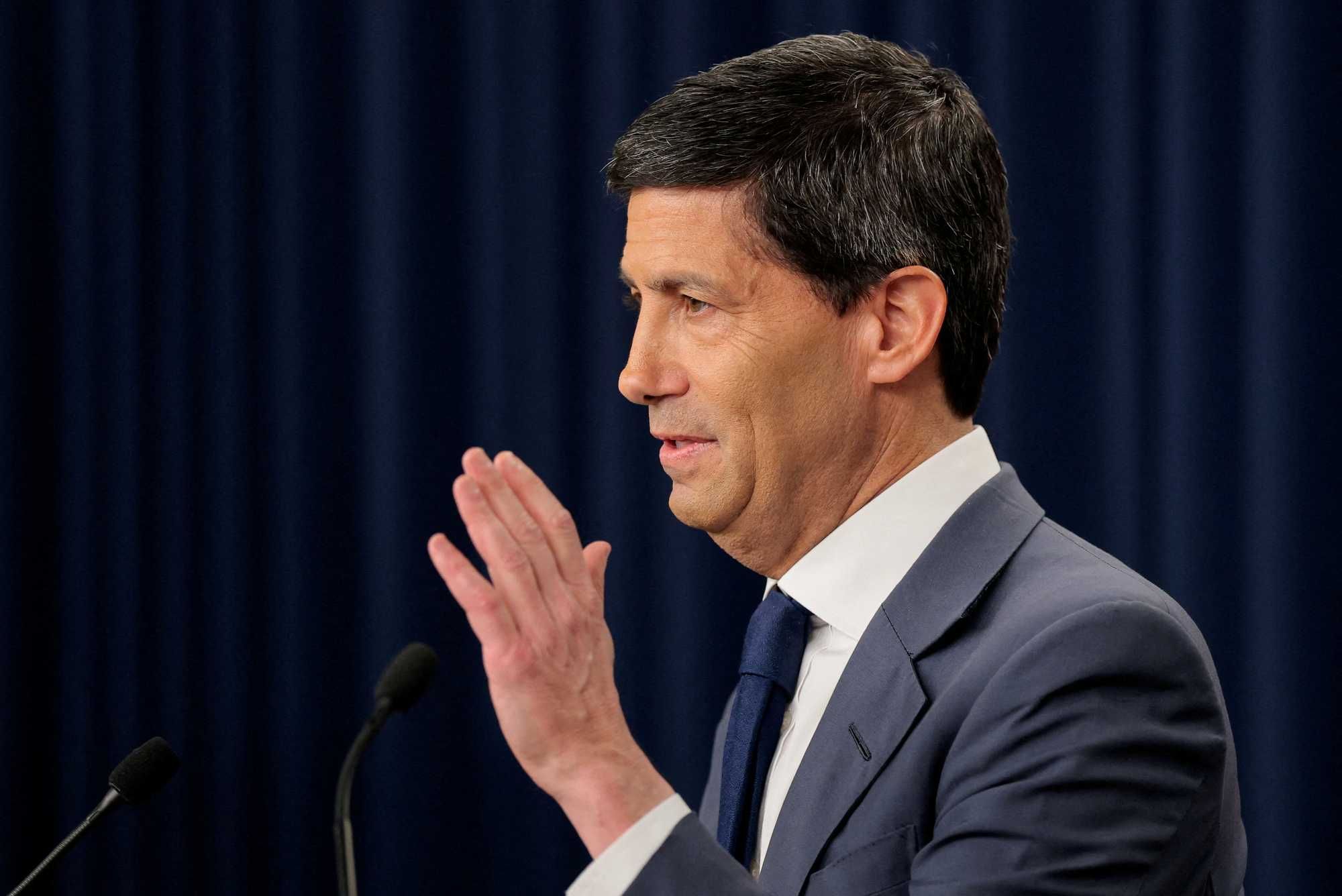
President Donald Trump's Federal Reserve chair is quietly rewriting how the central bank operates, and former insiders fear what it could cost.
Kevin Warsh, who took over as Fed chair in May, is cutting back on how often the central bank votes on interest rates while revealing far less than his predecessors about where policy is headed, The New York Times reported Friday. Several former Fed officials warned the paper that pairing those two moves could leave markets in the dark and set up more dramatic rate swings.
Under a revised calendar the Fed released Thursday, officials will still gather eight times in 2027, but one of those sessions in late October will be set aside for big-picture strategy talks rather than a rate decision. Starting in 2028, only six meetings a year will include a policy vote.
Fed officials largely seem to support the shift, since evenly spaced meetings would give them more economic data to weigh before each vote. Next month's meeting, for instance, wraps up a day before fresh numbers on November prices come out.
But Warsh has kept his views on the economy and the rate outlook largely to himself since taking the job, The Times noted.
William English, a former director of the Fed's monetary affairs division who now teaches at Yale, told The Times that Warsh's tight-lipped approach undercuts public understanding of what the Fed is trying to do, and that the problem grows as meetings get fewer.
"If you had a committee that was meeting really often, then you don't necessarily have to communicate as much, because you're going to be taking another step or not taking another step very soon," English said. "The longer the gap, the more communication does matter."
The new schedule will leave roughly two months between rate votes around the turn of 2028, even though most of the Fed's recent rate moves have come late in the year. The Times noted that fewer meetings raise the odds of larger-than-usual rate moves to catch up with a fast-changing economy, or of emergency sessions that were once saved for crises.
Donald Kohn, who was Fed vice chair while Warsh served as a governor, argued that clearer signals could help the central bank avoid those disruptive steps altogether, since markets can't adjust ahead of time to worries the Fed never voices.
Esther George, who led the Kansas City Fed from 2011 to 2023, noted that how the Fed makes decisions matters more than when, adding that the committee is having trouble explaining its message.