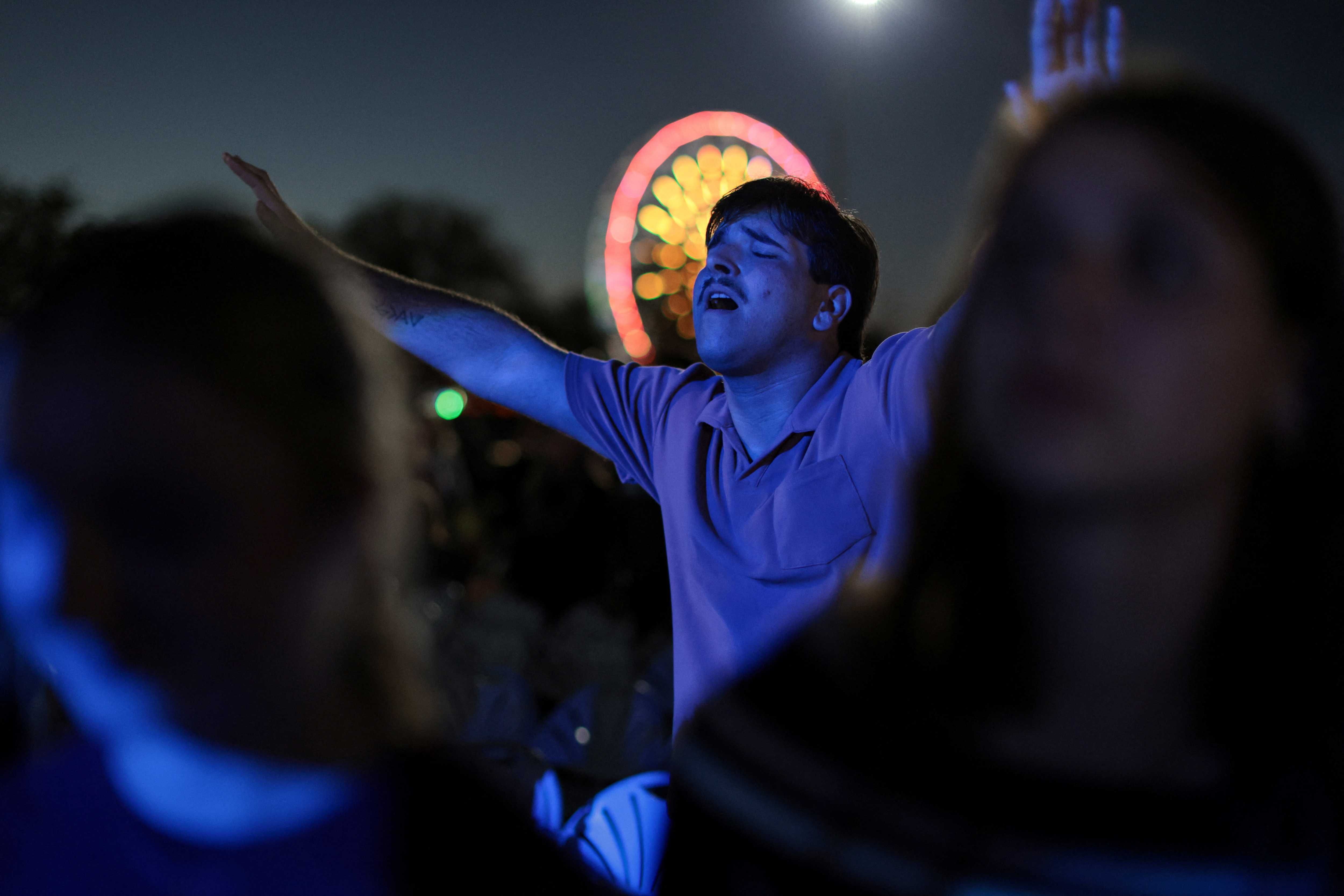
The right's long-held claim to Christianity in American politics is coming apart, and one faith leader says he's enjoying every minute of it.
Pastor Paul Brandeis Raushenbush told columnist Jennifer Rubin and lawyer Norman Eisen on Wednesday's episode of "Coffee with Contrarians" that Democratic candidates who openly talk about their Christian faith, many of them seminary-trained, are rattling a right wing that assumed it had a lock on religion.
Rubin raised the issue, telling Raushenbush that faith "is not the property of any one group of people" and that it has been "wrongly appropriated by the far right." She pointed to Texas Senate candidate James Talarico as part of "a new flourishing of faith in the big tent coalition that is pro-democracy."
Raushenbush, who said he attended seminary with Sen. Raphael Warnock (D-GA), noted that faith leaders, particularly in the Black church, have long moved into politics. "There are many instances of faith leaders who have gone into politics," he said. "And certainly the religious right has no monopoly on religion."
"I think what is strange to people may be that they haven't seen such high-profile candidates be so open about their faith, maybe since Jimmy Carter," he added.
He said the current crop of candidates "have gone to seminary and are overtly talking about religion," which he said "drives people nuts" on the right. He mentioned Adam Hamilton, the Democratic pastor running to unseat Sen. Roger Marshall (R-KS).
"They're like, wait, we thought we owned Jesus," Raushenbush said, adding that "Trump likes to talk about 'my Christians.'" He argued there's "an amnesia" about the Americans who have used their faith "to move us forward."
"I do actually kind of relish this moment where it's driving people crazy that they see Adam Hamilton and Talarico talking about Christian faith in the way that millions of Americans do talk about their Christian faith," he said.
Raushenbush also accused the Trump administration of using Christianity as a political weapon, saying Pentagon chief Pete Hegseth and others have invoked it to justify attacks on immigrants and "Hegseth's holy war."
He described the current moment as "a next great awakening" that "is not rooted in any one faith tradition."
"I want my most conservative Christian neighbor to be able to practice their faith, raise their family, do however they want," he said. "That is their right. And the democracy makes it possible for them to do that and for me to do something different with my life."