Michelle Alexander blasts the racism inherent in using cops to enforce coronavirus rules
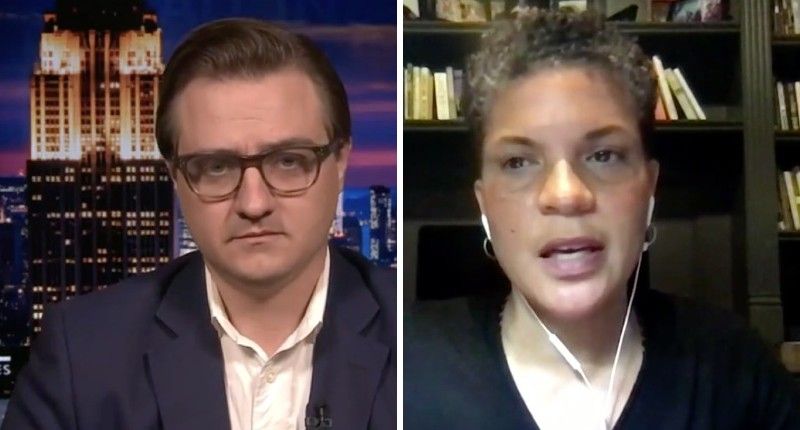
Prof. Michelle Alexander blasted society for the injustices revealed by the disparate response to the COVID-19 pandemic.
MSNBC's Chris Hayes interviewed Alexander, who is the author of the bestselling 2010 book The New Jim Crow: Mass Incarceration in the Age of Colorblindness, about the use of police to enforce coronavirus rules.
"If you use law enforcement, you're going to -- I guarantee -- extend, exacerbate, and replicate inequalities in the already broken criminal justice system," Hayes explained while introducing the interview.
"Well, you know, as you indicated earlier, what we're witnessing now is egregious but it's nothing new," Alexander explained. "What we're talking about is the persistent devaluation black life and I hope we can see the similarities between Trayvon Martin and Ahmaud Arbery."
"I hope we can see the similarities between drug law enforcement and social distancing enforcement.
"You know, as the drug war was kicking off we were told that mass arrests of impoverished black people were necessary because illegal drugs were so harmful -- so harmful to our people and our communities that police must throw us in cages if we're caught with them and then discriminate against us for the rest of our life," she noted. "This was the answer to drug addiction in black communities. Meanwhile, white kids using and abusing illegal drugs -- often at higher rates -- were heading off to college."
"Now we're being told that because the government is so incredibly worried about us dying from COVID-19, that they're going to arrest those without masks. Not all of us, but some of us, throw us in cages where we're far more likely to contract the virus and potentially die," she explained. "Meanwhile, there are videos of the police handing out face masks to white people sunbathing in groups on the lawn in city parks in clear violation of social distancing rules."
"So we're in a moment in which it's glaringly clear yet again that black lives don't really matter," Alexander explained. "But of course, black people aren't the only ones who are suffering in these times, and so the question is whether we are willing collectively to develop a politics of deep solidarity and stand up for one another across the lines of race, ethnicity, gender, religion, disability, sexual orientation, and class -- and raise our voices to defend the most vulnerable in these times."
Watch Part I:
Watch Part II: