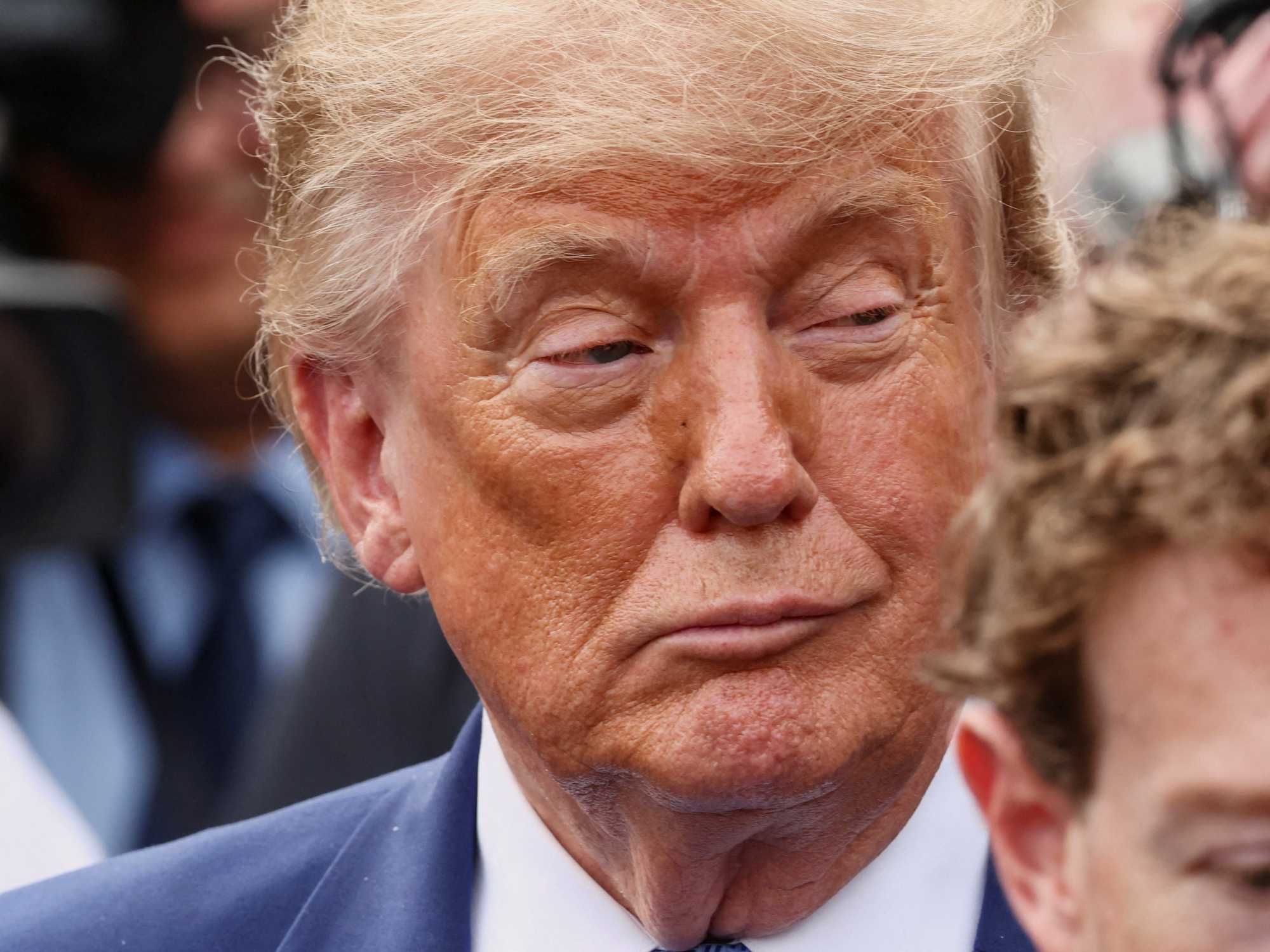
The Trump administration’s new series of taxpayer-funded ads is “obviously illegal,” multiple Trump administration officials told Zeteo in a series of shockingly blunt admissions.
A new series of TV ads began airing in select U.S. markets this month praising Trump, all of which included disclaimers that they were “paid for by the U.S. government.”
One ad features a photo montage of Trump set to the song “Love Me” by JMSN — allegedly used without permission — that includes audio of UFC President Dana White praising Trump as the “toughest, most resilient person” he’d “ever met.” Another features a black-and-white video of Trump walking as audio of the president vowing to “expel the warmongers from our government” is played.
Critics, including some prominent Republicans, have called the ads illegal, or in the case of Sen. John Kennedy (R-LA), “probably illegal,” due to federal law explicitly prohibiting “the use of government expenditures for propaganda purposes.” A Wednesday report from Zeteo revealed that multiple Trump officials consider themselves among those critics.
“The Trump allies and administration officials who spoke to Zeteo all believed the ads were so ‘obviously illegal,’ in the words of one senior Trump official, that they wanted nothing to do with them,” Zeteo’s report reads.
“In their minds, involvement all but guarantees a congressional subpoena and having to pay costly legal bills, given that Democrats are widely expected to win back the House and potentially the Senate.”
Another source “close to the Trump White House” told Zeteo they were offered an opportunity to “be involved” with the ad blitz but turned it down, telling the outlet that “it did not sound legal at all.”
The Trump administration has pushed back against critics of the ad campaign, insisting that the videos in question were not ads, but rather, public service announcements. Such claims, Zeteo exclusively reported, were “somewhat undermined” by the president himself, with two insiders telling the outlet that Trump had privately referred to the videos as “midterm ads.”