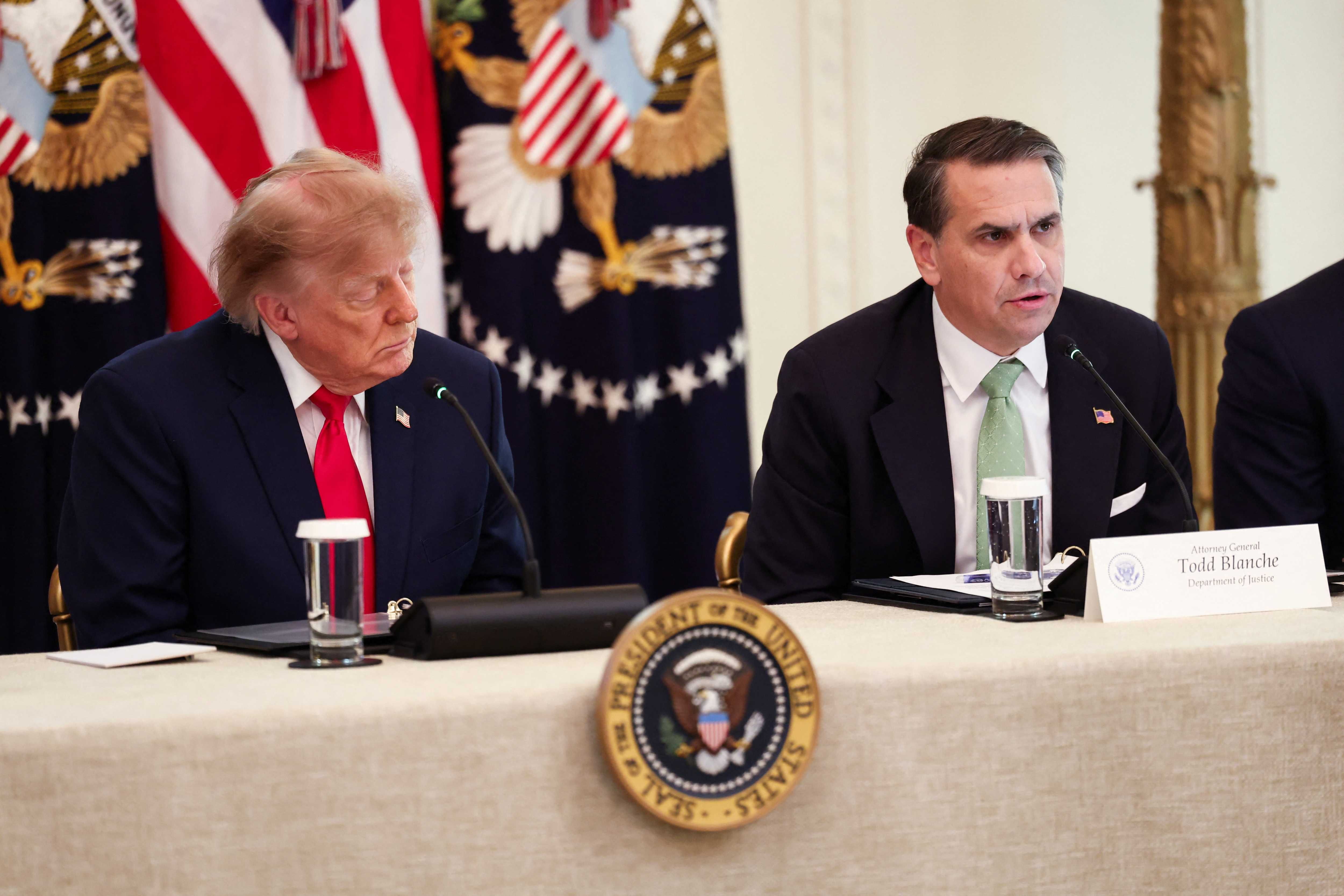
President Donald Trump’s Justice Department filed an “emergency” request with an appeals court to order California to set aside the mail ballots of more than 20,000 California voters, even though the judge handling the case has not yet ruled.
In a motion filed Friday with the 9th U.S. Circuit Court of Appeals, the department asked the court to act by Saturday.
U.S. District Judge David O. Carter, who in January dismissed a separate Justice Department lawsuit seeking California’s voter rolls and called the demand “unprecedented and illegal,” has scheduled a hearing for Tuesday on the department’s push to have the ballots set aside, court records show.
The department wants California to set aside the mail ballots of more than 20,000 registered voters whom federal agencies flagged as likely noncitizens, and to keep them out of the count until each voter’s citizenship is verified. In January, Carter wrote that “the Executive may not unilaterally usurp the authority over elections.”
Los Angeles County officials called the federal list “unreliable” in a court filing on Oct. 20, NPR reported. In a preliminary review of a 200-person sample, 38.9% of records with a meaningfully reported birthplace indicated the person was born in the United States, according to the filing.
“As of the time of this filing, no order has issued, and because of the extreme urgency of this emergency that continues with each passing minute, the United States brings this motion,” the department told the appeals court.
The department said it needed a fast ruling because election officials “are presently counting potentially noncitizen ballots.”
It argues that Carter “constructively denied” its request by failing to rule by its deadline. In other words, the department treats the judge’s decision not to rule before Tuesday as a refusal it can appeal, citing a 2025 Supreme Court ruling.
Shortly after 6 a.m. Pacific time on Friday, the department asked Carter to order the ballots set aside while the appeal plays out and to rule by noon. At 11:14 a.m., department lawyers notified the other parties that they would “imminently” file their motion with the 9th Circuit.
The department wrote that its motion “could not have been filed earlier.”
Friday’s emergency motion says the department sought a temporary restraining order on Oct. 15, the day it sued. Carter’s Friday order dates that same filing to Oct. 19.
Carter noted that the Oct. 19 request asked for a ruling “by November 3, 2026, before the end of voting in the 2026 federal election,” and said he set Tuesday’s hearing one week before that date. The department told the appeals court it is “a case that must be resolved by November 3.”
The judge wrote that on the evening of Oct. 21, after he set the hearing, the department asked for a ruling “before noon the following day.” California’s lawyers wrote in a filing Friday that the DOJ made that request before serving the lawsuit on any defendant.
Carter wrote that he “will rule promptly” after hearing from the parties Tuesday. His order set a 3 p.m. Saturday deadline for any more briefs opposing the request and gave the department until 3 p.m. Sunday to reply.
The state’s lawyers also told Carter that “there is nothing currently to appeal,” saying he “may disregard” the department’s notice of appeal and keep the case moving.
“[The government’s] dilatory, after-hours pivot on October 21 to demand a ruling by noon the next day does not create a valid basis for its purported appeal, which is without legal effect,” the state’s lawyers wrote.
Two immigrant advocacy groups, Mi Familia en Acción and the Services, Immigrant Rights and Education Network, asked to join the appeal Friday, the docket shows.
As of Friday evening, the appeals court had not acted on the department’s request, according to the docket.