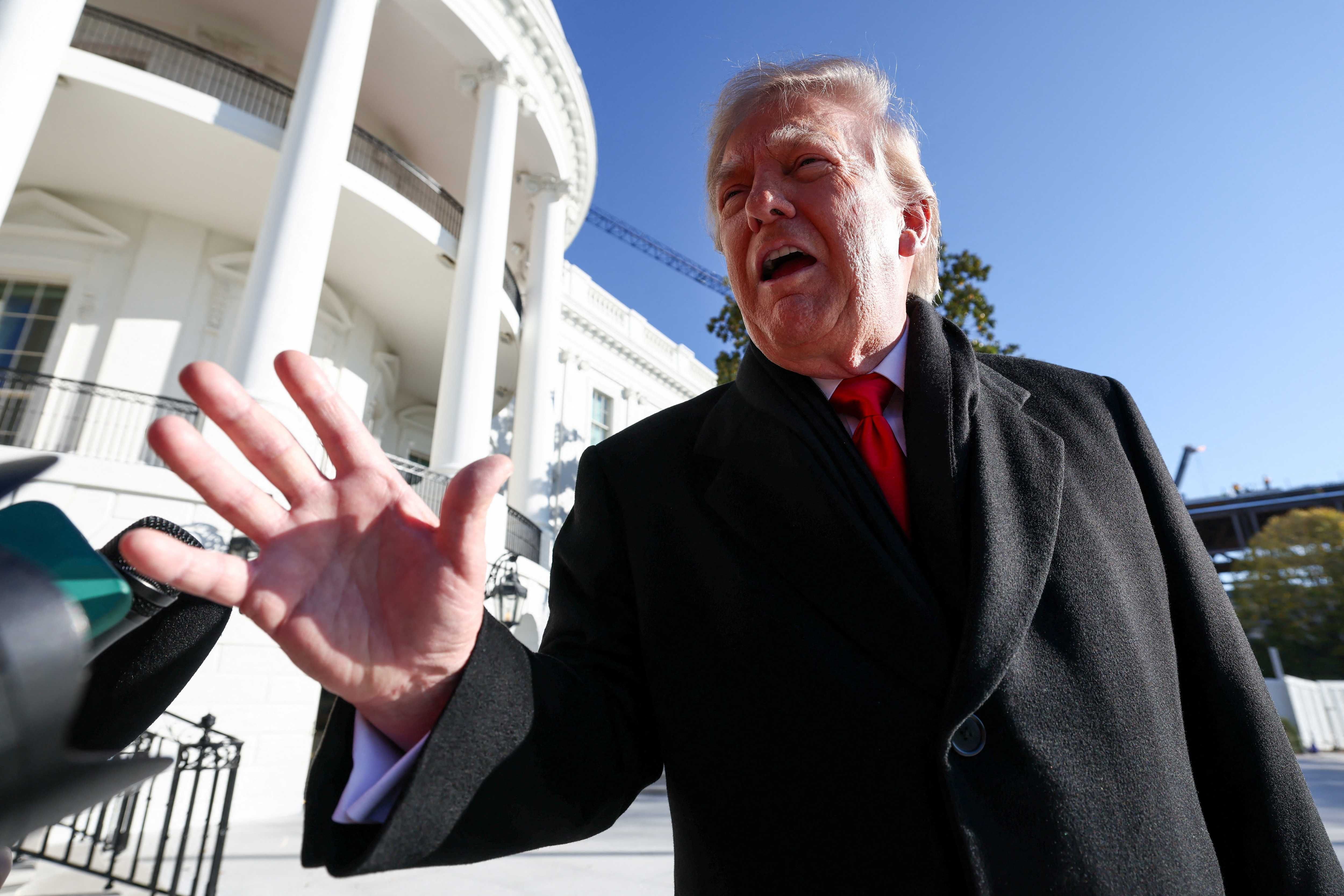
A clinical and forensic psychologist with a large YouTube following says President Donald Trump’s swaying during a press gaggle this week resembled a kind of movement that can sometimes show up in dementia.
Dr. John Paul Garrison, who runs the “Dr. G Explains” channel, posted a video breaking down what he called Trump’s “apparent neurological decline” after the president took questions from reporters outside the White House on Monday. Much of the gaggle centered on Friday’s nationwide ground stop, which lasted more than four hours and disrupted over 10,000 flights.
Garrison pointed to how Trump moved while he answered.
“Now one thing you’re noticing is that he’s having a really hard time standing still,” Garrison said. “He constantly wavers back and forth.”
He linked the swaying to a kind of movement sometimes seen in people with dementia.
“Now, this is something that we’ve seen get worse with age, and once again, sometimes this type of movement is something that we can see in dementia,” he said. “We can see this when people have less control over their bodies, when they’re not able to inhibit different kinds of motion.”
Garrison, a licensed clinical and forensic psychologist whose YouTube channel has more than 780,000 subscribers, said his commentary was “not a psychological evaluation of any kind.” He has posted similar breakdowns of Trump’s appearances at NASA, the United Nations and a Tennessee rally in recent months.
During the same gaggle, Trump called NBC News correspondent Yamiche Alcindor “pathetic” after she asked whether his focus on White House renovations had pulled his attention from the aviation crisis.
Trump often cites his results on the Montreal Cognitive Assessment, a short screening test for dementia, and said in May that he had scored a perfect 30 out of 30 for the fourth time. White House physician Sean Barbabella has said Trump is healthy and fit to serve.
However, Dr. Henry David Abraham, a professor emeritus of psychiatry at Tufts University School of Medicine, has argued that the number of tests is itself telling. He told the Daily Beast that one MoCA works like a quick temperature check, and that doctors keep retesting only when they’re watching for a change.