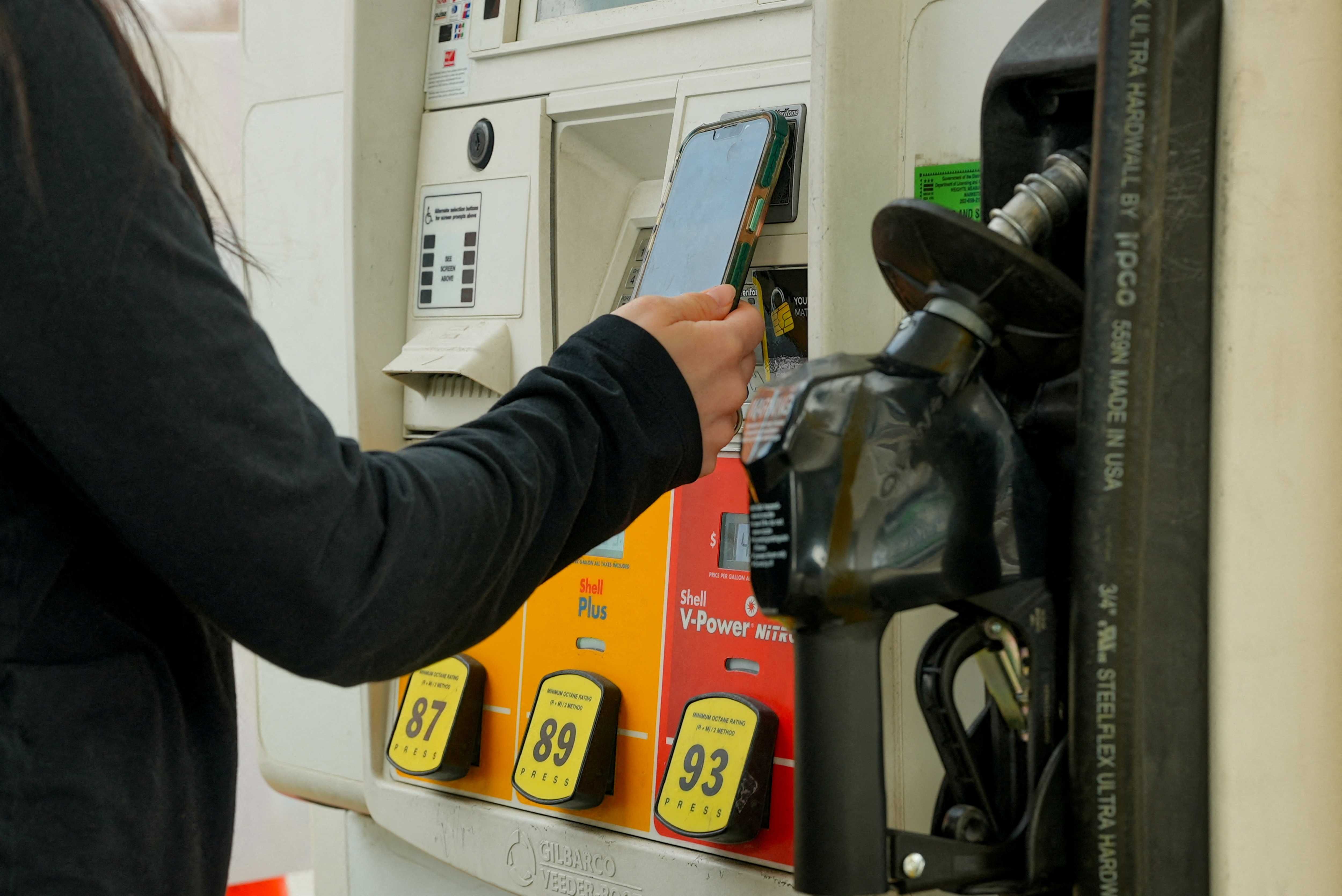
President Donald Trump's move to counter skyrocketing gasoline prices could ultimately make matters worse, according to a new analysis.
The 79-year-old president announced Monday that he's open to suspend the national gas tax as prices remained higher than $4.50 a gallon and the war against Iran persists in a stalemate, but MS NOW columnist Hayes Brown argued that Trump's plan would do little to help.
"It’s a proposal that would do more harm than good in the long term, while providing little immediate help for Americans draining their wallets at the pump," Brown argued.
The federal gas tax currently adds 18.4 cents per gallon on regular gasoline, 19.3 cents per gallon for aircraft fuel and 24.4 cents per gallon on diesel fuel, and the money that's collected goes directly to the federal Highway Trust Fund, but only an act of Congress can alter or even pause collection of those taxes.
"Notably, Trump isn’t the first person to think that pausing the tax is a potential political win — and it’s a policy proposal that has crossed political lines," Brown wrote.
Then-senators Hillary Clinton and John McCain proposed a "gas tax holiday" during their presidential campaigns in 2008, and former President Joe Biden asked Congress to pass a suspension in 2022 to counter soaring inflation ahead of that year's midterm election, but Republicans opposed that proposal that would have boosted Democratic chances.
"This time around, Trump’s backing might shift the dynamic," Brown wrote. "But just because an idea is bipartisan doesn’t make it a good one."
Senate Democrats actually introduced a bill in March to suspend the gas tax until Oct. 1, and Rep. Anna Paulina Luna (R-FL) responded to Trump's comments Monday to announce that she'll introduce a proposal of her own, but Brown explained that previous proposals have flopped because lower prices boost demand – and that benefits oil companies more than consumers.
"The funds diverted from the HTF wouldn’t all flow directly back into consumers’ pockets," Brown wrote. "A 2022 estimate from the University of Pennsylvania’s Wharton School found that pauses in state fuel taxes that year only partially went to consumers, with the rest going to corporations. The same is likely true at the federal level, given that gas wholesalers pay the tax up front and gas stations aren’t reaping the same benefits as the major oil companies, leaving them less likely to slash prices by too much."
The federal gas tax hasn't changed with rising inflation since the rate was fixed in 1993, and it's also far lower than most states impose, and Brown argued that funding was necessary to build and maintain U.S. highways.
"With gas prices likely to remain elevated until next year at the soonest without a sudden change of heart from Iran to open the Strait of Hormuz, a pause in the gas tax could easily become permanent," Brown wrote. "By treating only the symptom, the disease itself would be allowed to fester, leaving gas prices painfully high and letting politicians off the hook."