Ominous assessment reveals more economic pain ahead as Trump cedes 'upper hand' in war
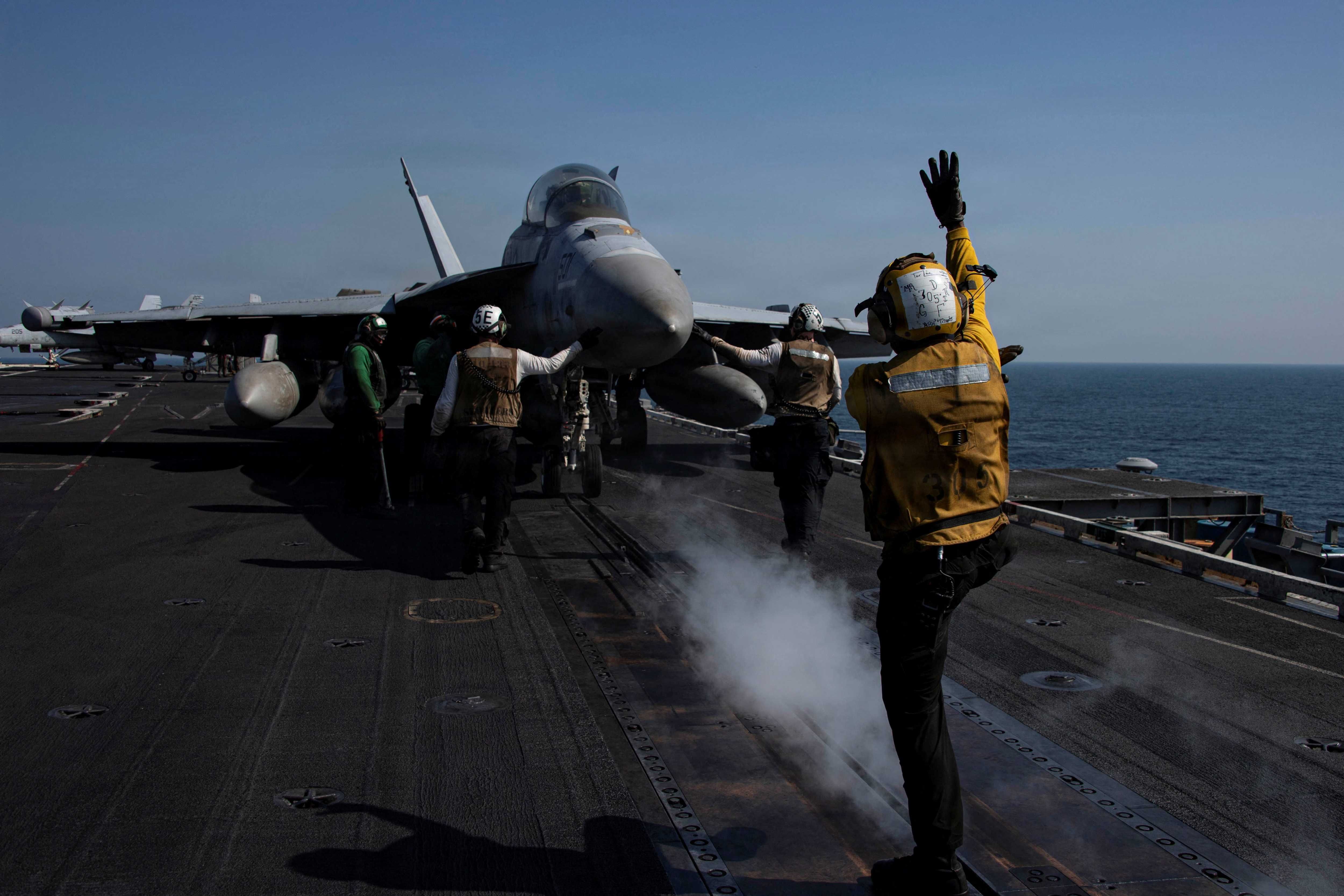
An EA-18G Growler prepares to launch from the USS Abraham Lincoln. US Navy/Handout via REUTERS
July 20, 2026
President Donald Trump's war in Iran is not going the United States' way, former Lt. Gen. Mark Hertling told MS NOW's Nicolle Wallace on Monday's edition of "Deadline: White House."
This came after the Pentagon announced yet another round of servicemember deaths, as the ceasefire of a few weeks ago becomes a distant memory and the administration has not mapped out any public endgame for the war — a development Hertling mourned as "tragic."
"You've got to take a look at the operational campaign of both nations," said Hertling. Specifically, the U.S. has shifted its strategy from attacking weapons to "attacking the systems and encircling the cities that allow Iran to regenerate military power."
"That's also an attempt to reduce their societal will, because the Trump administration believes there's a split between the Republican Guards and the Ayatollah and the citizens," Hertling added. "So, they are bombing places like Bandar Abbas and Isfahan, transportation hubs, bridges, fuel distribution sites."
The whole idea, he said, is to "force a strategic decision" that would force Iran "back to the negotiating table."
The problem, said Hertling, is that Iran has its own strategy underway.
"They're keeping the Strait [of Hormuz] closed," said Hertling. "They're continuing to deplete U.S. defense capabilities, especially the rockets or the air defense systems that we have in the region. They're dividing the U.S. from their allies in the region, as we've seen in Jordan and Qatar and Kuwait and the U.A.E. They are hurting us tactically because they know that the U.S. will focus on individual combat deaths, as we did this weekend."
And all the while, he said, "they're opening new fronts for the proxies ... especially the Houthis in the Bab-el-Mandeb Strait that could close another waterway and could cause even more economic problems."
In short, he said, while the U.S. continues to strike targets, Iran is "trading space for time, and they're putting our allies and internal elements in the United States against us." And ultimately, he said, Iran has the "upper hand."