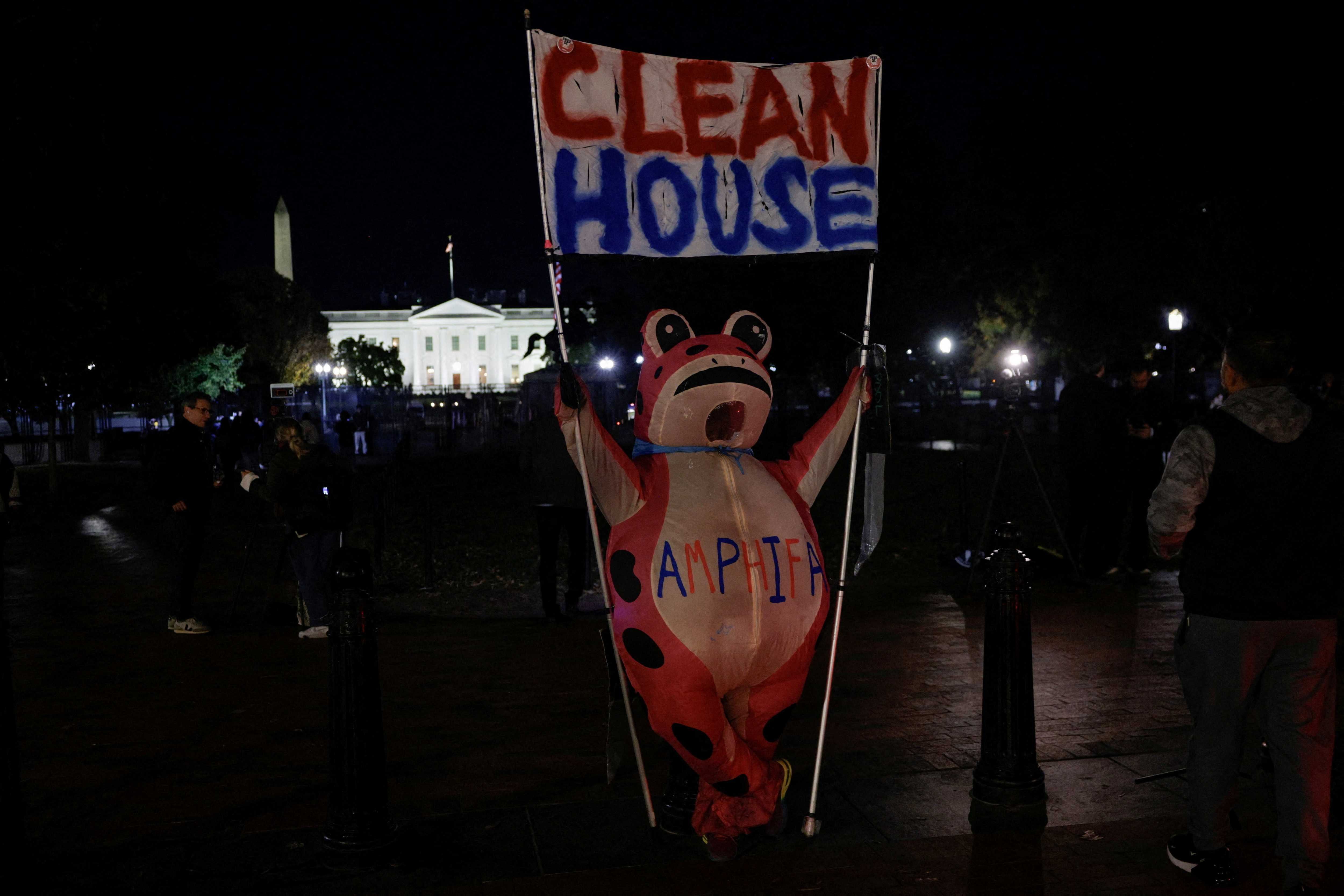
A legal analyst says Tuesday's midterm results spell new courtroom headaches for President Donald Trump, and the damage won't stop in Washington.
Chris Geidner, who writes the Law Dork newsletter, laid out major legal takeaways from the "blue tsunami election" in a Wednesday post, writing that the implications for Trump are "rippling outward" and still being weighed.
Republicans lost on a scale not seen since the election after Watergate, Geidner noted. Democrats will hold at least 54 Senate seats, are leading the two uncalled contests in Alaska and Mississippi and are expected to top 250 House seats.
Geidner argued Tuesday may have been "the last most powerful day of Trump's presidency," leaving him effectively a lame duck with two years to go. He warned Trump could still do serious harm but will face a far more confrontational landscape.
He also aimed a message at the Supreme Court. Chief Justice John Roberts wasn't on the ballot, Geidner wrote, but voters signaled they reject the free rein Congress and the justices have largely given the Trump administration. He predicted Roberts and the three Trump appointees will take note, adding that Trump is increasingly an obstacle to the justices' conservative legal agenda.
On the bench itself, Geidner urged the incoming Democratic Senate to block Trump's judicial nominees, especially for appeals courts, writing that "anything less than that is a failure." He also called on the House to pursue impeachment proceedings against Judge Emil Bove over his conduct at the Justice Department.
Geidner saved some of his sharpest analysis for state attorneys general. Democrats Nathan Johnson in Texas, Tanya Miller in Georgia, John Kulewicz in Ohio and Nate Willems in Iowa all won, while Chris Mann has declared victory and leads in Kansas. Geidner said that widens the reach of state lawsuits and investigations advancing Democratic priorities.
In Texas, he noted, Johnson will pick the state's solicitor general. Democrats will also hold at least 27 governorships, Geidner wrote, including in nine of the 10 largest states, giving them real power to push back on the administration. He added that Democratic secretaries of state could prove important heading into 2028.