Covid-19
Trump's coronavirus response is genocide: Yale psychiatrist
May 12, 2020 1:12PM ET
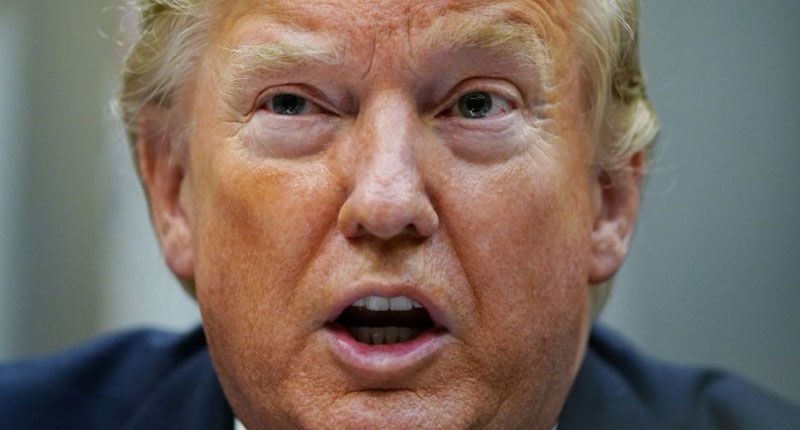
(AFP/File / MANDEL NGAN)
Based on my violence prevention work with international organizations, I had classified Donald Trump’s refusal to protect the American people against COVID-19 as “democide” and stated it was “democide of genocidal proportions.” But can we truly call it “genocide”?
Yes. According to the UN’s Genocide Convention, the perpetration of genocide requires an “intent to destroy, in whole or in part, a national, ethnical, racial or religious group.” Since the White House itself has acknowledged the disproportionate deadly effects of the virus on minority communities, the intent can no longer be denied.
If a government fails to protect a racial, religious, national, social, or political group against violence, it is considered governmental violence.
Over my 15 years of teaching Yale Law School students to represent asylum seekers, we emphasized that if a government fails to protect a racial, religious, national, social, or political group against violence, it is considered governmental violence. The Trump administration may not have produced the novel coronavirus, but an overwhelming majority of COVID-19 illnesses and deaths are attributable to his failure to act or to use the resources at the government’s disposal.
All this brings structural violence to sharp relief. “Structural violence,” coined by the great Norwegian sociologist Johan Galtung, refers to the avoidable limitations that society places on groups of people that constrain them from meeting their basic needs.
Unlike more visible and obvious forms of violence, where a person or a group of persons physically harms someone, structural violence works politically, economically, socially, and culturally to diminish its victims’ chances at life. At first glance, this does not seem like violence, since inequality and injustice are embedded in stable social structures that show little overt disruption.
But structural violence is by far the most lethal type of violence, causing excess deaths—deaths that would not occur in more equal societies—that dwarf the deadliness of behavioral violence. It causes more than 10 times the deaths from behavioral violence, or homicides, suicides, mass murders and wars combined, year after year, and is also the most potent stimulant of behavioral violence.
Structural violence imposes limitations that are socioeconomic, educational, medical or legal in nature, and usually originate in institutions that exercise power over particular subjects. Because these limitations are insidious and embedded in structures of long duration, people grow accustomed to them and overlook them as nothing more than ordinary, daily difficulties. Yet it is an adaptation to enduring conditions that are in truth more insidious and damaging than any other violence, even as they grow exponentially as unequal power differentials create more unequal structures. Crises such as the viral pandemic expose these vulnerabilities, as the acute worsening of injury and death causes untenable façades and collective denial to crumble.
I had introduced the collection of expert essays, The Dangerous Case of Donald Trump, with the disclaimer that: “the main point of this book is not about Mr. Trump. It is about the larger context that has given rise to his presidency, and the greater population that he affects by virtue of his position.” I was referring to a collective responsibility that the Trump presidency exposes and calls for. A president who separates children from their families and cages them, builds border walls, inspires white supremacist terrorism, institutes travel bans along nationality rather than infectability lines and calls a global pandemic a “Chinese virus,” vastly exacerbating racist attacks, is an expression of longstanding, systemic violence.
The president also becomes, by virtue of his position, the greatest perpetrator of structural violence, as his policies such as tax cuts that funnel wealth to the rich, or coronavirus stimulus packages that favor large corporate bailouts, accelerate economic inequality. His long-standing racism, such as wishing to kill five black men wrongly convicted of a Central Park assault and rape of a white woman, has found policy expression through the likes of Stephen Miller, Steve Bannon, Wilbur Ross and his enablers throughout the Republican party. If we know nothing else about the inner workings of Trump’s mind, we should know by now to take him at his word: He hates Mexican “rapists,” immigrants from non-European “shithole countries,” and “losers.” If COVID-19 kills some of them off, well, to Trump, all the better.
And as the occupant of the world’s most powerful office, Trump’s mere suggestions may be taken as orders for behavioral violence. Charging his followers to “liberate” the economy and exhorting governors to open their states is like Henry II asking: “Will no one rid me of this meddlesome priest?” Trump puts mostly minority workers in danger, principally to improve his reelection prospects rather than to protect public health.
With his inaction and sometimes cavalier attitude toward this COVID-19 crisis, Trump is facilitating the most insidious, enduring and most lethal form of genocide. Since violent societies support the rise of violent individuals, the path for healing is not to enable this attraction but to name it and to allow for a moment of redress, rather than to rush down the precipice of self-destruction.