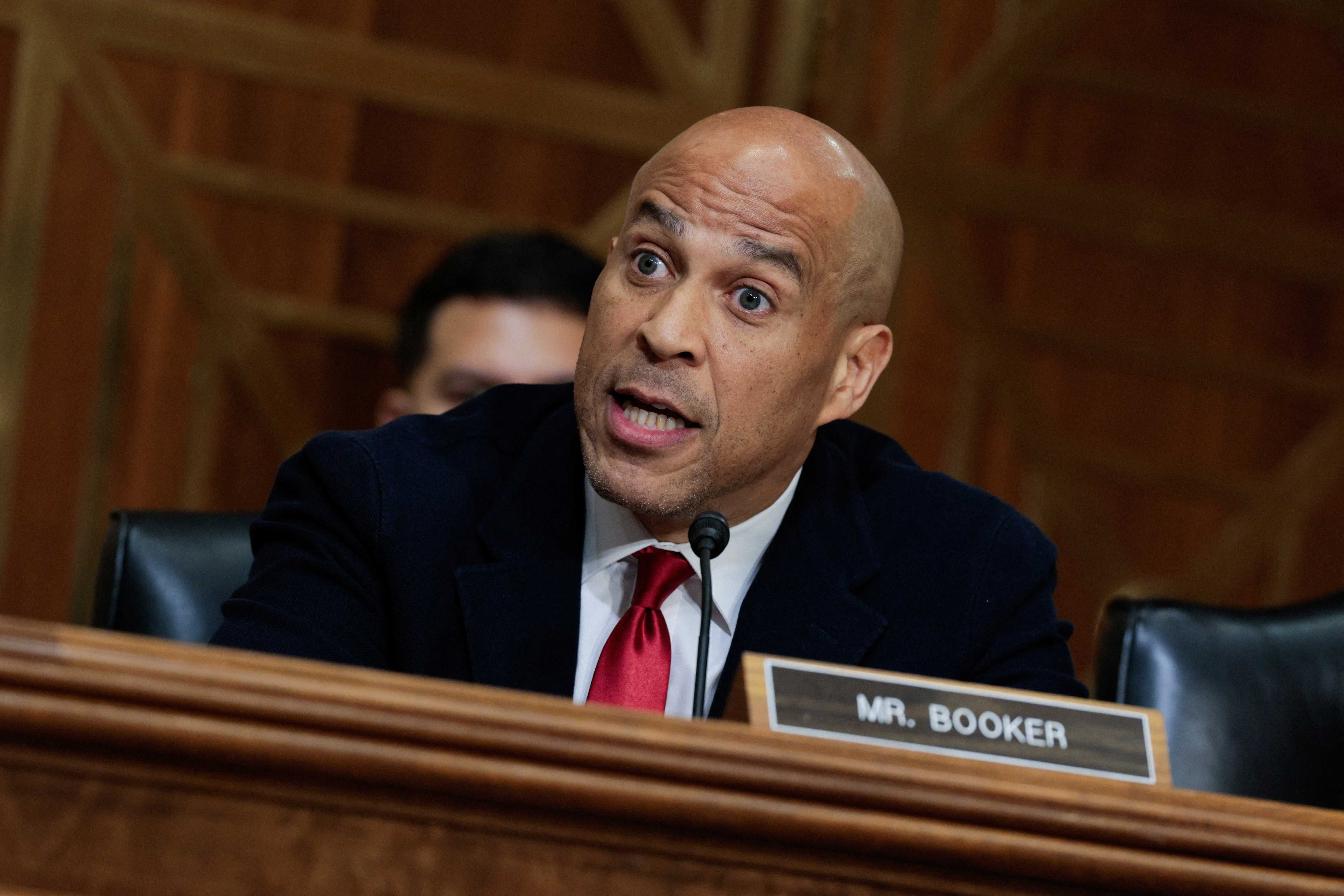
Secretary of State Marco Rubio got in a heated exchange with Sen. Cory Booker (D-NJ) during the Senate Foreign Relations Committee hearing on Tuesday.
Rubio was testifying for the first time since the United States launched the Iran war and Booker raised questions about the Ebola crisis and the military operation. Booker told Rubio he was concerned the U.S. had rolled back its investment in eradicating diseases in Africa, and expressed doubt that the Iran war was over, despite the Trump administration's claims that it was.
"With the crisis of Ebola, we seethe challenges have been broughtabout as a result of oursurveillance, early detection,and the like.I'm concerned about what theadministration's strategy is," Booker said. "We are clearly seeing that whatgoes on on the continent of Africa directly affects ourpublic health as well."
But Rubio did not see eye to eye with Booker.
"I don't agree withthe assessment," Rubio said. "It's not about cutting back.The response is that how muchmoney you spent it's the resultsyou will get.Ebola, the outbreak was in awar-torn, isolated, rural areain the DRC.Since then, our response hasbeen very rapid."
Booker pushed back.
"You did not cutearly detection?" Booker asked.
"That's not thereason there was Ebola," Rubio said.
Booker cut him off as the conversation intensified.
"I'm not trying toget in an argument.I would like to have myquestions answered," Booker said. "We cut early detection when itcomes to infectious diseases onthe continent, factually. This is not an opinion.We cut early warning systems onthe continent."
Rubio continued to argue with Booker and interjected the senator, saying "It had nothing to dowith the Ebola outbreak."
"I don't need totell you, we are living in aplace where an infectiousdisease crisis anywhere is athreat everywhere," Booker said, adding that he worried further budget cuts would complicate future outbreaks. "The United States made majorreductions in these areasputting us more at risk.If you're talking about the Ebola crisis, other cuts we havemade, you see it factually.Even our own State Departmentpersonnel I've talked to aresaying we are less prepared fora global outbreak than we werebefore."
Rubio denied Booker's comments.
"I don't agree withthat assessment," Rubio said. "I don't know who told you thatat the State Department."
"You can't evenagree on the facts.It is not accurate that we cutearly detection?" Booker asked, pressing Rubio to respond.
"Those have beenrepurposed," Rubio said. "The different arrangements withthe countries are an example."
But Booker wasn't convinced.
"If you're tellingme that we are as or moreprepared before the Trumpadministration came in, I wouldlike to see the facts," Booker said.
"I think when thereforms are finalized we will bebetter prepared.We are responding faster notjust humanitarian crises butfaster than before," Rubio said.
Booker then moved on to discuss the Strait of Hormuz blockade.
"The conclusion I have is the Strait of Hormuz was openedbefore this unjustified war," Booker said. "We are now scrambling to find away to get it back open again."
Booker argued the U.S. was now in a "worse situation,an adversary and our enemy iscausing havoc in the region,funding proxies and terrorists,has discovered, thanks to youall, the power of shutting downthe Strait of Hormuz." He said Iran was now in a better position, while America was worse off.
"It made our adversary have astronger negotiating position," Booker said. "We are the strongest on earthand we are in a stalemate with Iran.We are begging to get back intoa deal that you trashed in thefirst place."
"There is no onebegging," Rubio maintained.
Rubio argued that the war was over — and Booker pushed back, saying that although Trump says it has ended, it hasn't.
"You keep saying howwe are winning the war," Booker said.
"The war is over now," Rubio said.
"The war is notover.The American people see how weare losing at the pump and withcosts.Yet this thing has not beenresolved," Booker said.