5 lessons from the coronavirus about inequality in America
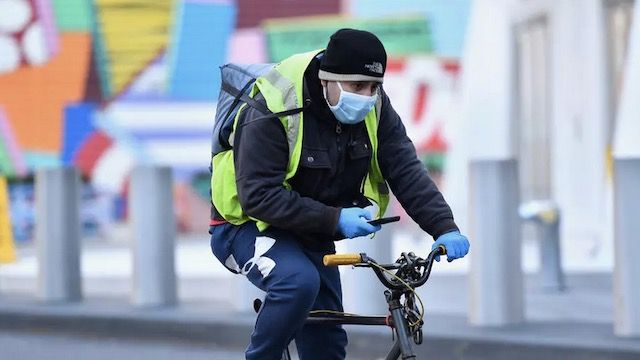
Food delivery personnel for Instacart were among those joining US job actions to press for improved health and safety measures for key employees during the coronavirus lockdown Angela Weiss AFP/File
The coronavirus is a global threat, but the pandemic has an uneven impact across the U.S. It exacerbates existing inequalities and creates new challenges.
I think this crisis can teach several important lessons about inequality in America: how it hurts, who it hurts the most, why that’s the case and what can be done about it.
1. Staying home is a luxury
For millions of Americans, staying at home is a luxury they cannot afford. The comfort and well-being of all Americans depends on grocery clerks, delivery drivers and factory workers putting their own safety second so they can stay on the job.
While the upper middle classes take their work with them, working and middle-class Americans are tethered to their jobs: 52% of college-educated people can work from home, as compared to just 12% of workers with a high school degree, and 4% of those without.
The same line cuts across race. White Americans are twice as likely as African Americans or Latinos to have the option to work remotely.
Wealth inequality means the coronavirus may pose a risk to some, but a double threat to others. As the Federal Reserve reports, 40% of Americans could not cover a $400 emergency expense.
The president blames the coronavirus on China and immigrants.
Meanwhile, the surgeon general has urged communities of color to avoid alcohol, tobacco and drugs, if not for themselves, then to protect their “abuela, Big Mama or pop-pop.” (When questioned later, he said that his remarks were not aimed only at communities of color.)
Scapegoats help maintain many Americans’ belief in a just world, where successful people pull themselves up by their bootstraps and poor people face hardship because of bad decisions.
My research shows a growing number of Americans believe that hard work is all that stands between failure and success.
The daily discrimination experienced by Asian Americans, sometimes singled out as culprits of the pandemic, is a reminder of the “probational nature” of immigrants’ existence. In normal times they face stereotypes, but in times of crisis they are to blame.
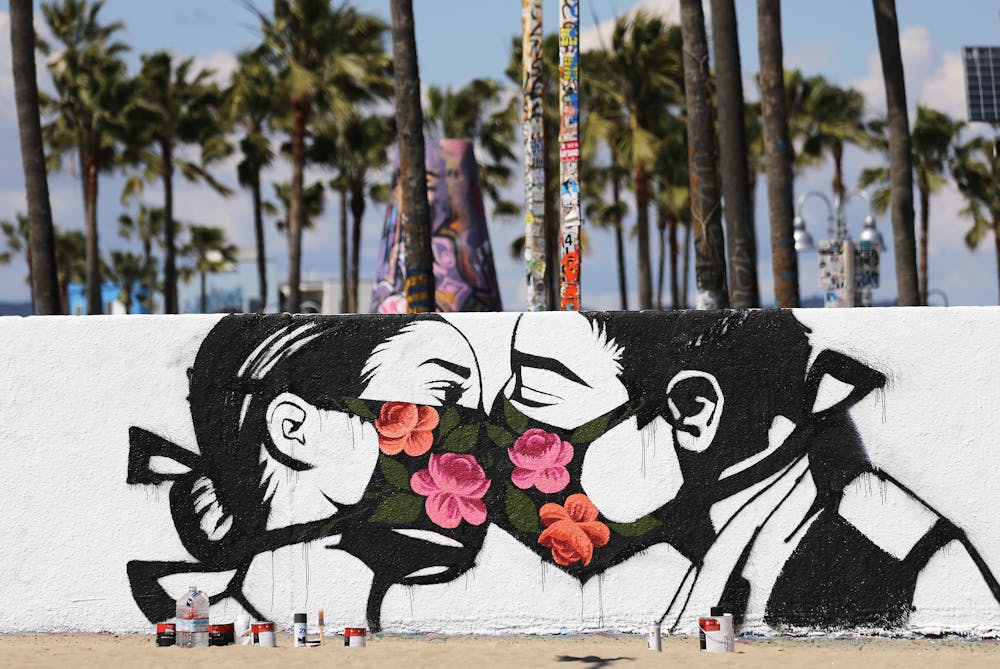
Street art in Venice Beach, Calif.
Mario Tama/Getty Images
5. Fragility gives hope
The collapsing economy is a rude awakening, but its fragility hides a transformative power.
The coronavirus proves a sociological truth, a theoretical perspective informing decades of research: The social order is what people make it to be.
In my view, the crisis is an invitation to put a new value on jobs and services — and to bridge the gap between worth and compensation. Why are today’s “essential workers” some of the lowest-paid in the country? Whose services, today, do people miss the most?
It is an opportunity to set the “new normal”: a greener, kinder and fairer United States.