GOP 'toadies' about to hand Trump a 'nuke' – and Democrats are on board: analysis
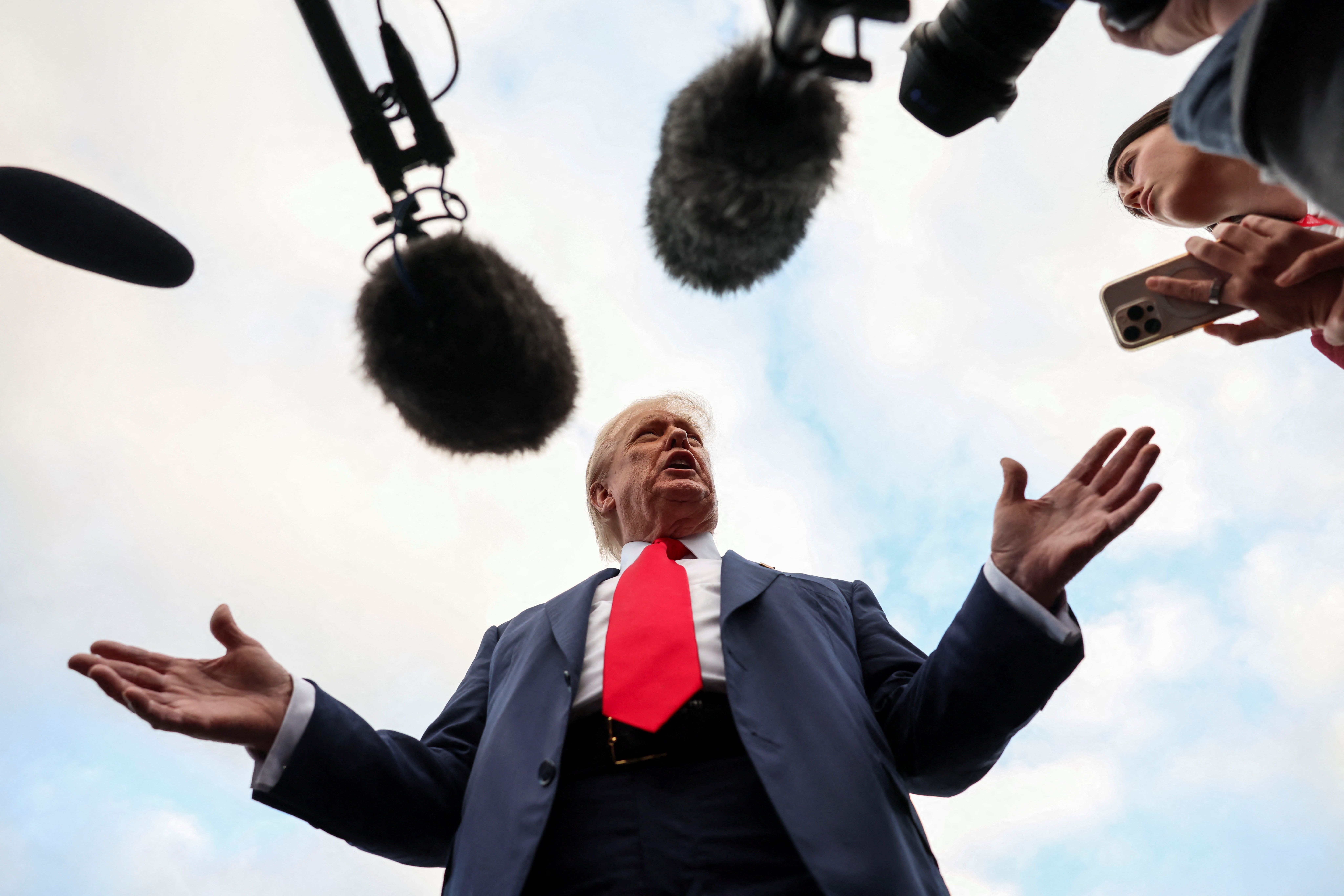
Donald Trump speaks to the media in Prestwick, Scotland. REUTERS/Evelyn Hockstein
August 07, 2026
A bipartisan bill moving rapidly through the Senate could hand President Donald Trump a "nuke" — and Democrats are sitting idly by, a new political analysis contends.
The Lindsey O. Graham Sanctioning Russia Act has 62 cosponsors, including 21 Democrats, and could clear the Senate as soon as this week, but The Bulwark's Catherine Rampell argued the bill accomplishes neither of its stated goals of honoring the late senator's legacy or punishing Russia with new sanctions.
"The bill, which is based on legislation originally introduced by Graham last year, does not actually grant Trump any new authorities to sanction," Rampell wrote. "Everything sanctions-related in this bill is something Trump could already do, but has chosen not to, presumably because he’s not interested in angering Vladimir Putin."
The bill grants no new sanctions authority Trump didn't already have, Rampell wrote, and it includes a broad waiver allowing him to bypass sanctions entirely by certifying they conflict with the "national interests of the United States."
Georgetown law professor Jennifer Hillman called it "an absolute waiver," saying Trump would have "unfettered authority to waive sanctions, on any individual, any sector, any country."
The bill's real significance, Rampell contends, lies in tariff authority requiring the president to impose tariffs up to 100 percent on goods from at least 15 countries across three categories tied to Russian oil and gas purchases and sanctions evasion — but leaves the criteria for those rankings largely undefined.
That ambiguity could let Trump target countries like Slovakia and Hungary, the columnist argued, potentially opening a path to tariff the broader European Union, or even shift tariffs onto Ukraine rather than Russia. Unlike Trump's earlier "Liberation Day" tariffs, which courts struck down, these would be explicitly authorized by Congress and harder to challenge legally.
"It's pretty obvious why Trump is salivating over these prospects," Rampell wrote, "and maybe why his toadies on the Republican side of the Senate are eager, too, especially those who want to pay tribute to the late colleague who put this legislation together."
"What’s more confusing is why so many Democrats are on board," she added.
The typical American household already pays about $1,100 annually due to existing tariffs, according to the Yale Budget Lab, and Rampell noted nearly two dozen industry groups have warned Senate leadership about the economic risk of further increases.
Democrats want to support Ukraine, she wrote, so a bill that explicitly sanctions Russia is appealing, but Rampell warned the bipartisan coalition that negotiated the deal don't seem to realize how much power they were giving Trump.
"If this bill becomes law, and not only enables Trump to expand his tariff agenda but mandates it, Democrats would have to own the economic carnage, too," Rampell wrote.