Kari Lake's lawyers finally respond to Hobbs demand for sanctions before the deadline
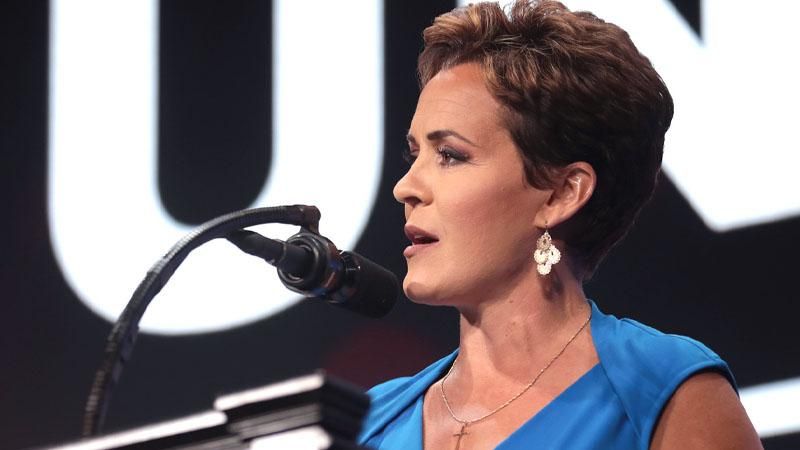
Kari Lake speaking with attendees at a "Unite & Win Rally" at Arizona Financial Theatre in Phoenix, Arizona. (Photo by Gage Skidmore)
December 26, 2022
Governor-elect Katie Hobbs (D) has asked an Arizona judge to sanction Kari Lake for filing frivolous lawsuits about her with false claims that have been dismissed by the judge.
On Monday, the day following Christmas, Hobbs asked for the judge to mandate her attorneys' fees be covered by the Lake team.
The document to the Maricopa County Court from Hobbs is described as: "GOVERNOR-ELECT KATIE HOBBS’S MOTION FOR SANCTIONS AND JOINDER IN MARICOPA COUNTY DEFENDANTS’ MEMORANDUM AND POINTS OF AUTHORITY."
Democracy Docket, which has been on the front lines of the fight against election deniers, posted the document, which can be viewed in the excerpt below:
As of the deadline, 5 p.m. MST, nothing had been uploaded responding to Hobbs's call for sanctions.
"Enough really is enough," the document concluded. "It is past time to end unfounded attacks on elections and unwarranted accusations against elections officials. This matter was brought without any legitimate justification, let alone a substantial one. The Maricopa County Defendants therefore ask this Court to impose sanctions against Plaintiff Kari Lake and her attorneys, Brian Blehm and Kurt Olsen."
It makes it sound as if Hobbs isn't just going after attorneys' fees but possibly even sanctioning Lake herself.
As of the deadline, Lake hasn't responded.
Earlier on Monday, Lake attacked the judge as a liberal puppet, but later deleted it.
Lake also hasn't responded to any of the sanctions requests on Twitter, as of publication.
At about 6 p.m. MST, one court website finally uploaded a response and a corrected response.
The argument says that there shouldn't be any sanctions because they filed their case "in good faith." That's debatable according to some legal analysts who accused Lake of using innuendo and conspiracies to justify election challenges. They argued that the court can't sanction Lake based on something she tweeted, but it must be based purely on the legal claims in court.
"First, Defendants cite no case law that supports sanctions based on Twitter posts. Plaintiff has a First Amendment right to voice her opinions. Second, Maricopa seeks to support the motion for sanctions by citing a tweet to an article authored by someone else "@Rach_IC" that Plaintiff simply retweeted. Tweets, especially those authored by others, do not support sanctions under Arizona law," the text reads.
The conclusion claims, "Plaintiff’s put forth evidence in good faith that showed substantial support for her claims." The "substantial support" is likely to be debated as well.
