Red state nominee walks away from GOP for Trump camp on divisive issue
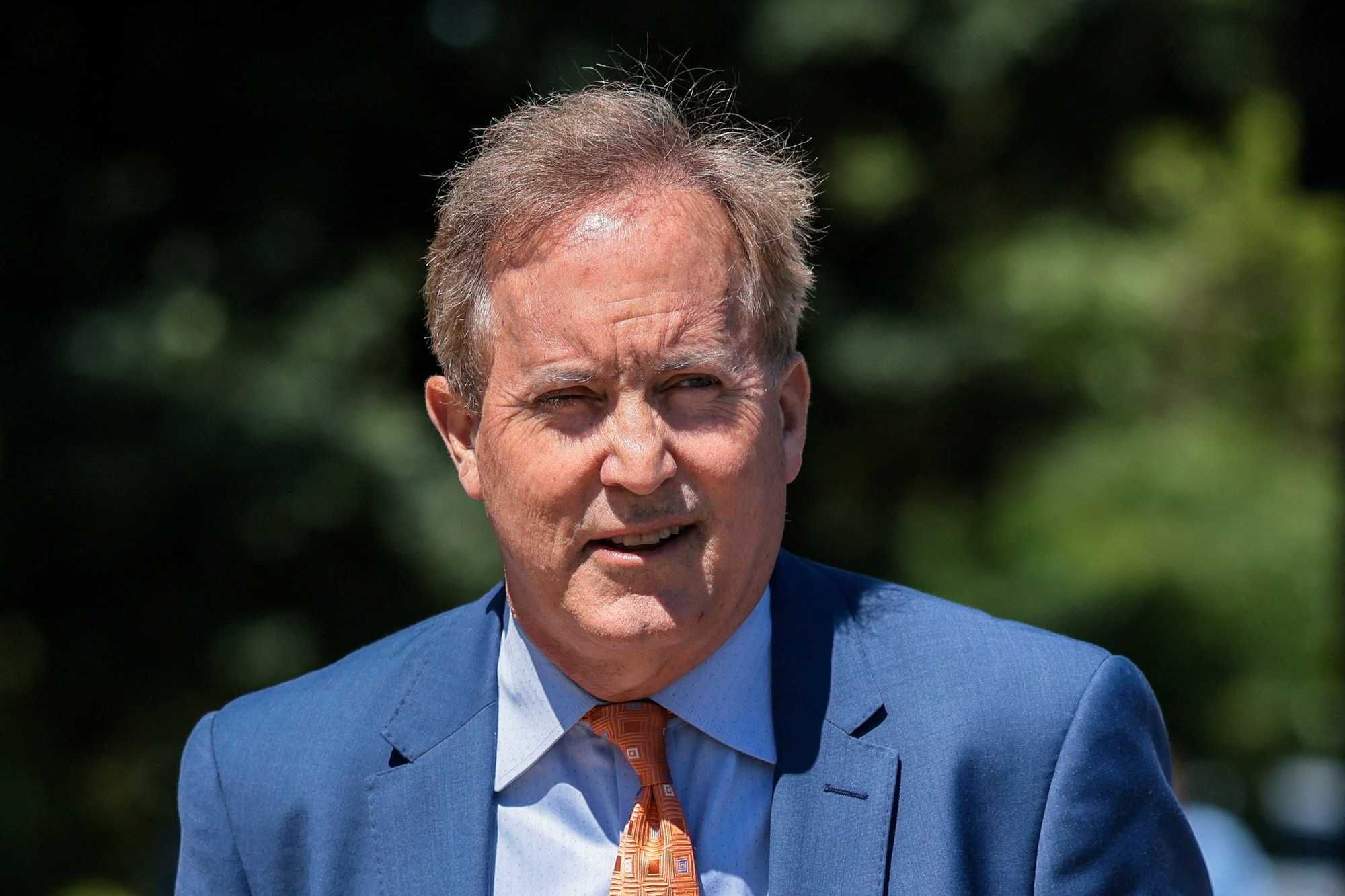
Texas Attorney General Ken Paxton walks outside the U.S. Capitol building on Capitol Hill, in Washington, D.C., U.S., June 3, 2026. REUTERS/Kylie Cooper
June 18, 2026
Attorney General and Republican U.S. Senate nominee Ken Paxton broke with his state party’s opposition to in-vitro fertilization Thursday, calling himself a “strong supporter” of the fertility treatment.
“Strong families are the foundation of a strong nation,” Paxton said in a statement shared exclusively with The Texas Tribune. “Every child is a blessing, and every family hoping to welcome a child deserves support and compassion. I am a strong supporter of IVF and pro-family policies that help Americans experience the wonders of parenthood.”
Paxton’s support puts him in the same camp as President Donald Trump, but on the opposite side of the issue as the Republican Party of Texas.
The state party, in a platform and legislative priorities adopted last weekend at its Houston convention, called on lawmakers to “protect fetal life from destructive practices, such as IVF and commercial surrogacy.”
Another plank of the state GOP platform states that the party opposes “public funding for procedures that destroy embryonic life, including IVF”, and called for regulation to prevent “embryo discarding, eugenic practices and commodification of human life.”
But Paxton’s campaign said he would work to safeguard IVF if elected to the U.S. Senate. The Republican nominee supports the IVF Protection Act, a bill from Sens. Katie Britt, R-Alabama, and Ted Cruz, R-Texas, to bar Medicaid funding for any state that bans IVF. Paxton will cosponsor the bill if elected.
Paxton had taken heat from Democratic nominee James Talarico’s campaign over the Texas GOP’s stated opposition to IVF.
Polling on IVF finds the treatment to be highly popular; a 2024 Pew Research Center survey found 70% of Americans say access to IVF is a good thing, while only 8% say it’s bad. But while high-level Republicans, including President Donald Trump, are supportive of IVF, the treatment is divisive among conservative activists and abortion opponents.
The fertility treatment was thrust into the political spotlight in 2024 when the Alabama Supreme Court ruled that frozen embryos are children, under a state law extending rights to “unborn children,” and that fertility clinics could be found liable for wrongful death if embryos are destroyed.
The ruling immediately chilled IVF access in the state, with several providers pausing treatments. Top Republicans came out in support of IVF, including then-candidate Trump, and Alabama’s Republican Legislature quickly passed a law shielding IVF providers and patients from civil and criminal liability for embryo destruction, allowing the state’s clinics to resume fertility treatments.
Numerous Texas Republicans, including Gov. Greg Abbott, affirmed their support for IVF access in the wake of the Alabama decision. And Trump made protecting IVF a plank of his presidential campaign, pledging to make the treatment affordable by mandating that insurance companies pay for it or by having the government pay.
As president, Trump has not gone that far. He signed an executive order asking for policy recommendations on the issue. His administration has proposed a rule to attempt to entice employers to offer fertility benefits and negotiated lower prices for a handful of fertility drugs on the TrumpRx government pharmaceutical marketplace.
Senators in both parties have expressed interest in protecting IVF, but the body has not passed any legislation and Republicans voted down a Democratic proposal to establish a nationwide right to IVF. Britt and Cruz’s bill to strip Medicaid funding from any state that bans IVF, introduced in 2024, did not receive a vote. Democrat Patty Murray objected to passing it via unanimous consent, saying it did not address what would happen in states that have fetal personhood laws or whether clinics could dispose of unused embryos.
A wing of the religious right opposes IVF on moral grounds. The procedure often involves the creation of numerous embryos, some of which end up discarded if they are not healthy or viable. Some religious conservatives — including Texas Republican delegates — see the destruction of embryos as abortion and think it should be banned. Others see procedures that create embryos outside of the mother’s body as the “commodification of human life.”
The state party platform states that life begins at fertilization, and that IVF is therefore destructive. The Texas GOP wants mandatory reporting on embryo creation, storage and disposition, and wants legislators to instead promote “ethical alternatives,” including holistic infertility treatments.
The Texas GOP’s platform, adopted every two years by delegates at its convention, is a nonbinding document intended to guide the state’s Republican legislators, but is often further to the right than the party’s rank-and-file voters and candidates.
This article first appeared on The Texas Tribune.