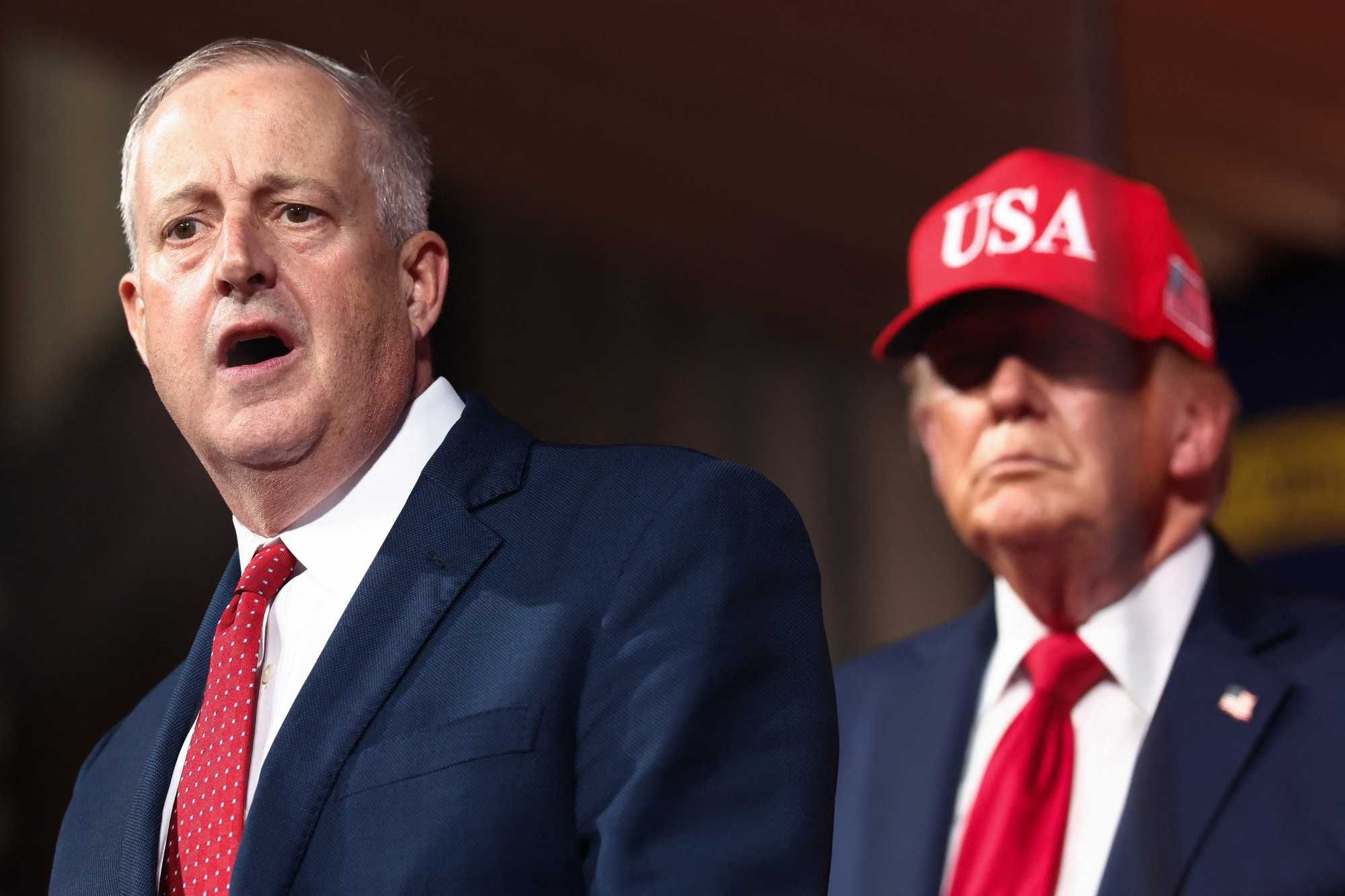
Republicans are heading into the final stretch with 39 days until the midterms, facing hard choices about which candidates to keep funding, as a nonpartisan forecaster now projects the party will lose its House majority.
Top Republicans told Axios they will likely have to make "painful spending decisions" by early October, and that could spell trouble for Donald Trump-endorsed Senate candidates Mike Collins in Georgia and Michael Whatley in North Carolina.
Both have trailed their Democratic opponents, Sen. Jon Ossoff and former governor Roy Cooper, despite millions of dollars in GOP spending. If their numbers don't improve, Republicans say the money could shift to Michigan and New Hampshire, where the party is on offense.
The GOP is also being forced to spend in places it normally takes for granted. In Kansas, polls show Sen. Roger Marshall locked in a close race with Democrat Adam Hamilton, who would be the first Kansas Democrat elected to the Senate since 1932. Vice President JD Vance recently traveled to the state to help Marshall, and the president's political operation has started spending to defend a South Carolina House seat Trump won by 13 points in 2024.
Republicans are relying heavily on money. GOP groups had spent more than $450 million through Sept. 23, more than twice what Democrats had spent, according to campaign finance analyst Rob Pyers.
However, GOP strategists admit they don't yet know whether the ads are breaking through voter anger over high prices, data centers and the war in Iran, and they expect a round of private polling in early October to answer that.
"September tests whether your messaging moves the needle in races — and early October is when the map locks in," a Republican strategist told Axios.
Texas is a key test. National GOP groups have spent more than $100 million backing Ken Paxton, yet several polls show him trailing Democrat James Talarico.
The House picture is also getting worse. Cook Political Report moved 15 House races toward Democrats on Friday and now projects Democrats will gain five to 15 seats.
Democrats need a net gain of just three, and they are now favored in 208 races compared to 205 for Republicans. Seventeen Republican-held seats are rated toss-ups, compared with five held by Democrats. The median toss-up district backed Trump by 7 points in 2024, but Cook says he is now underwater in many of them because of his handling of the economy.
The National Republican Congressional Committee pushed back. "Nobody outside the D.C. bubble cares what a bunch of pundits slap on a race rating," spokesman Mike Marinella said.
Trump is also a wild card. He now says he will campaign in 35 key races over the final 30 days, after his team's earlier promise of weekly campaign stops fell through.
Some Republicans are keeping their distance., however When Vance visited Iowa last week, Senate candidate Ashley Hinson skipped the event, citing scheduling conflicts.