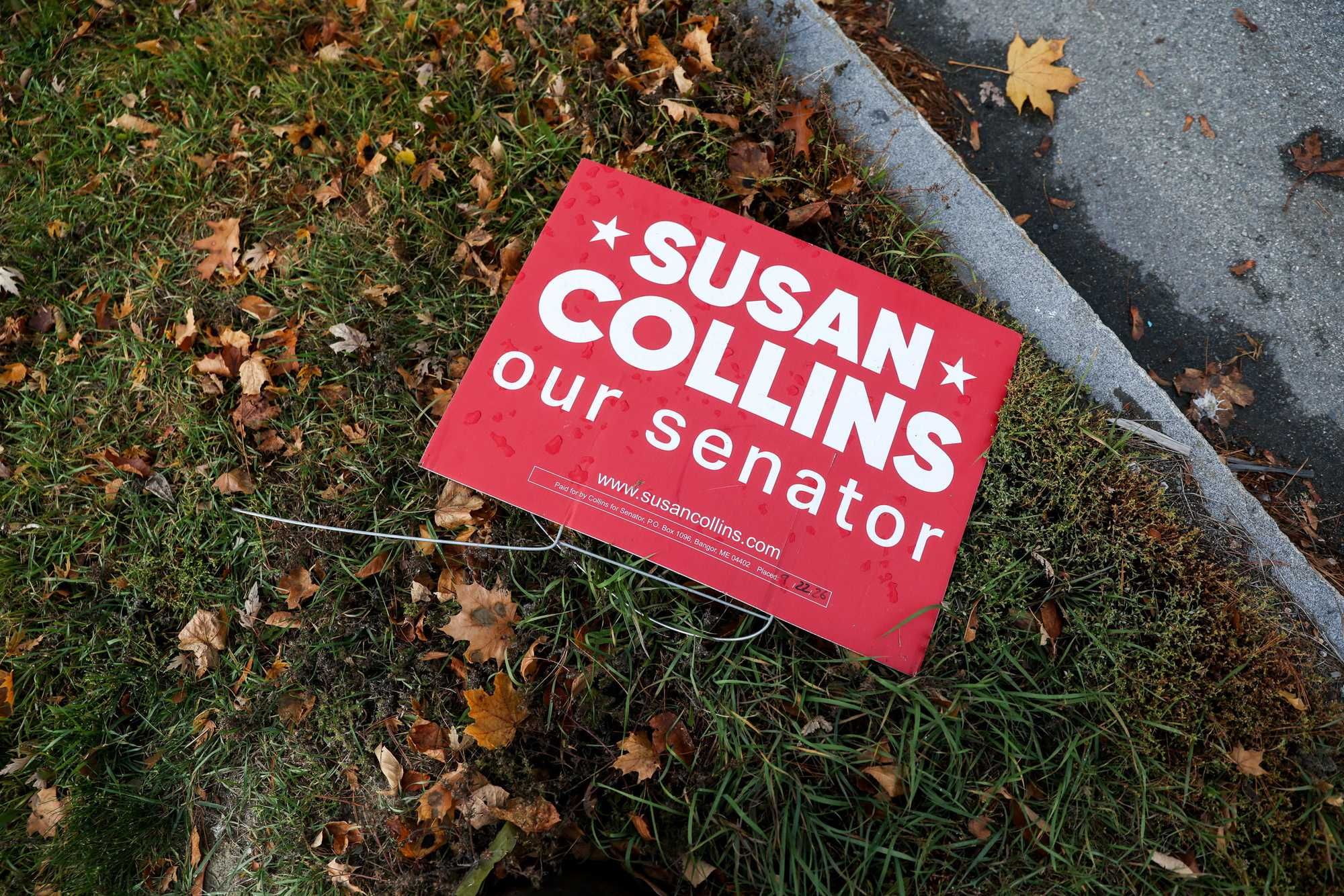
Maine’s soon-to-be ex-Sen. Susan Collins complained Thursday that voters weren't satisfied with her record when it came to Donald Trump — despite her vote to convict him.
“Everybody ignores the fact that I voted to convict him in the second impeachment trial. What bigger break could there be? It is never enough. I want results, and they want angry rhetoric,” she said delusionally.
Well, Senator, you finally got something right. It was never enough. The perception you have of yourself doing “enough to counter” Trump is farcical. You didn’t do enough. And that's precisely the point.
Maine voters weren't looking for angry rhetoric. They wanted something considerably more important: courage, conviction and a willingness to stand up to a president who has repeatedly demonstrated his contempt for democratic institutions, the rule of law and basic human decency.
They wanted you to do the right thing, even when it was difficult, especially when it mattered.
John F. Kennedy understood these stakes. InProfiles in Courage, published in 1955, he told the stories of senators who risked their careers because their consciences demanded it. His family later created an award in the book's name because courage in public life is rare enough to deserve celebration.
Former Vice President Mike Pence received the2025 John F. Kennedy Profile in Courage Award. TheJFK Library Foundation honored him for resisting extreme political pressure and putting his life and career on the line to certify the 2020 presidential election results on January 6, 2021.
I am no Mike Pence fan, but he is an example of a politician who earned lasting respect by putting his principles ahead of his political future.
Collins, on the other hand, spent years cultivating an image as a moderate, independent Republican who occasionally expressed reservations about her party and its increasingly erratic leader. Her favorite word was "concerned."
She was concerned. Deeply concerned. Very concerned.
As I wrote previously, Collins' repeated use of the word became a political punchline. She would express concerns about Trump's latest outrage or threat to democratic norms, but rarely follow them with meaningful action. It was a mealy-mouthed way of sounding independent while avoiding the consequences of actually being independent.
And now, after losing her Senate seat, she seems genuinely perplexed that voters weren't impressed.
What exactly did she expect?
You are not in Congress because people love you. You are there to represent your constituents and make the best decisions you can on their behalf, even if it puts your seat at risk. You are not there to protect one man at the expense of the stability of the nation and basic human dignity.
Collins had opportunities. Plenty of them. She waffled almost 100% of the time.
Yes, she was one ofseven Republican senators who voted to convict Trump after the January 6 insurrection. That was an important vote, and she deserves credit for it. But it was not a lifetime exemption from accountability or permission to spend the next several years enabling the same president she had once determined was guilty of impeachable offenses.
She voted to confirm Brett Kavanaugh to the Supreme Court, with grave consequences, and she has never expressed regret about that vote, even after the court overturned Roe v. Wade.
She voted to confirmRussell Vought, the architect of Project 2025, to run the Office of Management and Budget. She supportedTulsi Gabbard to oversee the nation's intelligence agencies. And when Trump needed congressional support for his agenda, Collins was overwhelmingly there.
According toCQ Roll Call's presidential support voting analysis, Collins voted in line with Trump's stated positions 94.6 percent of the time during 2025.
That's quite a record for someone who wants to be remembered as an independent voice.
She seems to believe that a handful of votes against Trump should have been enough to convince voters she was standing up to him. But courage isn't about occasionally taking a vote that makes you look independent, issuing a carefully worded statement or the simple response of rolling your eyes at the latest presidential crime. It is about using the power entrusted to you to make a difference.
It required Collins to do more than express concern about the cruelty and corruption of the Trump administration. It required her to challenge the ballroom, the Qatari jet, the Iran war, the treatment of our allies, the capitulation to Vladimir Putin, the racist, homophobic and xenophobic initiatives and rhetoric, and the steady assault on democratic institutions.
It also required her to stop pretending she could have it both ways: remain in Trump's good graces, protect her political standing in Washington and convince Mainers that she was a principled moderate.
Perhaps the most frustrating part of Collins' explanation is that she still doesn't seem to understand the difference between rhetoric and results. She complains that voters wanted angry rhetoric when what they wanted was a senator who would actually use her power.
They wanted her to say no when it mattered, stand up when it was difficult and put the country ahead of her party and her own political survival.
Instead, they got years of carefully calibrated concern. Susan Collins never once showed the ability to forge ahead and do the right thing, and exhibit the courage it took to do the right thing.
She had seniority, influence, a powerful position in the Senate and a reputation as someone who could cross party lines. She could have been a consequential voice in a moment when the country desperately needed one.
Instead, she spent much of her career explaining why she was concerned while continuing to support the man responsible for so many of those concerns. She never risked her job by standing up and forcefully doing something to stop Trump.
Now she's upset that it was never enough.
Well, Senator, that's because it wasn't.
And that's the lesson you should have learned long before Maine voters had to teach it to you.