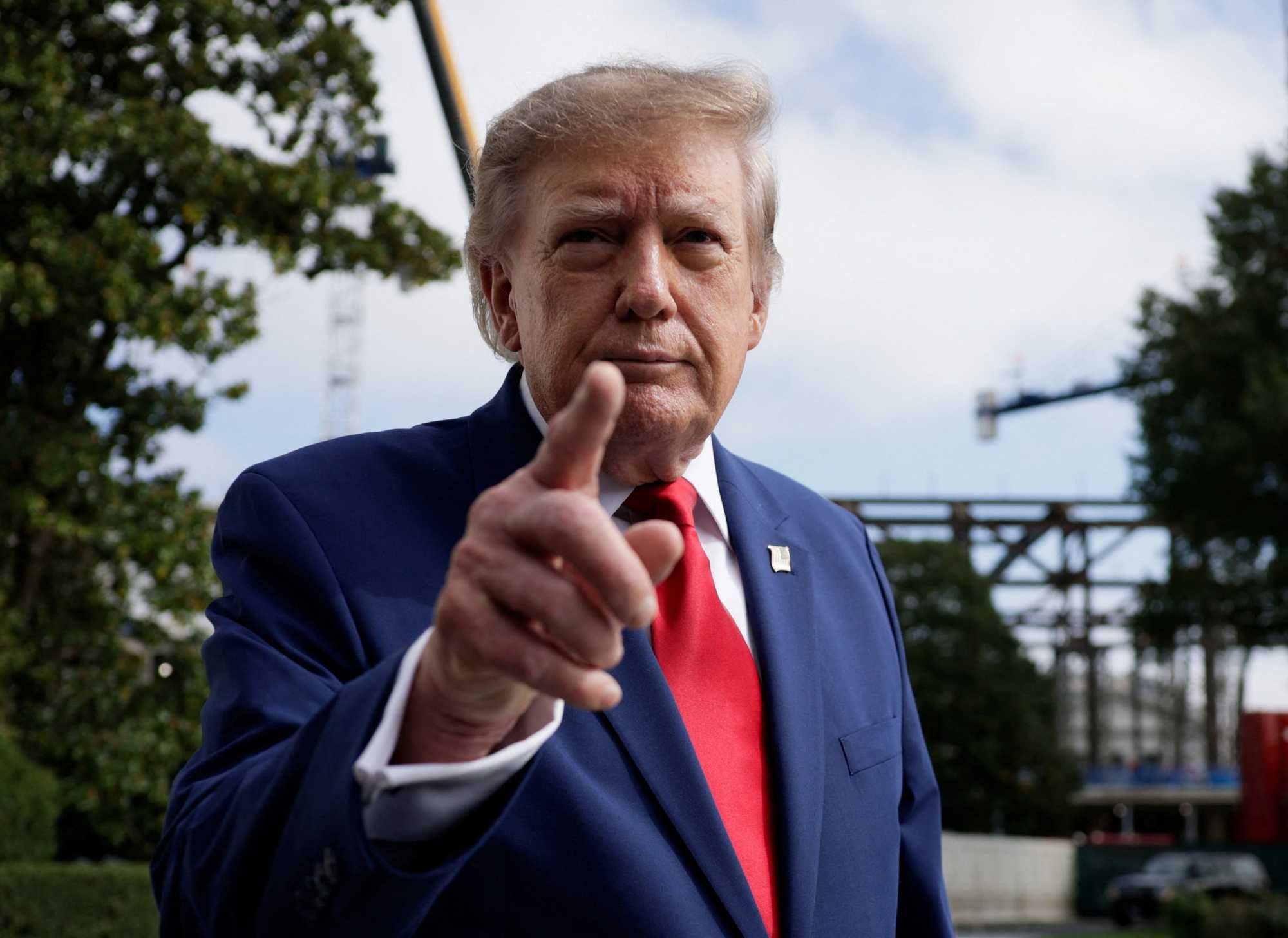
A federal judge has ordered President Donald Trump to sit for a deposition in his own $10 billion lawsuit against the BBC. Former federal prosecutor Joyce Vance is betting he’ll drop the case before that happens.
Trump sued the British broadcaster for defamation over its editing of his Jan. 6, 2021, speech. His lawyers say the BBC cut the part where he told the crowd to march “peacefully and patriotically” to the Capitol. The BBC has apologized for leaving that line out of the montage it aired.
On Thursday, a federal magistrate judge ordered Trump to be deposed on or before Dec. 11 and told his team to comply with discovery. If they don’t, they could face sanctions, which can include dismissal of the case.
“So which will it be? A pre-Christmas dismissal or a deposition?” Vance, a former U.S. attorney for the Northern District of Alabama, wrote in her Civil Discourse newsletter. “My money is against Trump sitting down to be grilled by opposing lawyers.”
Trump agreed in July to be deposed on Oct. 16. Just before that date, his lawyers told the BBC that “the President is no longer available for his deposition on October 16 due to other matters of national importance,” according to the BBC’s filing. They later offered a window in mid-January 2027 but didn’t name a specific date.
The BBC then told the court what Trump actually did on Oct. 16. He spoke at a campaign rally in Dalton, Georgia, and then traveled to Mar-a-Lago for a Republican National Committee fundraiser.
Vance noted that Trump is the one who filed the suit.
“He brought it. His lawyers are pursuing it, and he would have known going into it that he and his adult children would be subject to discovery,” she wrote.
The BBC has also struggled to serve subpoenas on Donald Trump Jr., Ivanka Trump and Jared Kushner. It says the three have relevant knowledge and records and have been using the Secret Service to avoid being served since August. The broadcaster got the court’s permission to serve them in other ways, such as certified mail.
Trump’s team has also fought the BBC’s request for data on Mar-a-Lago membership applications and dues. The BBC calls that information a “uniquely effective litmus test of Plaintiff’s reputation,” which is key to proving damages in a defamation case. And Trump’s team has objected, without explanation, to having his deposition videotaped.
Vance contrasted the BBC’s approach with how CBS handled Trump’s lawsuit over a “60 Minutes” interview. Paramount settled that case for $16 million.
“Instead of rolling over like CBS did,” Vance wrote, “the BBC is fighting back.”