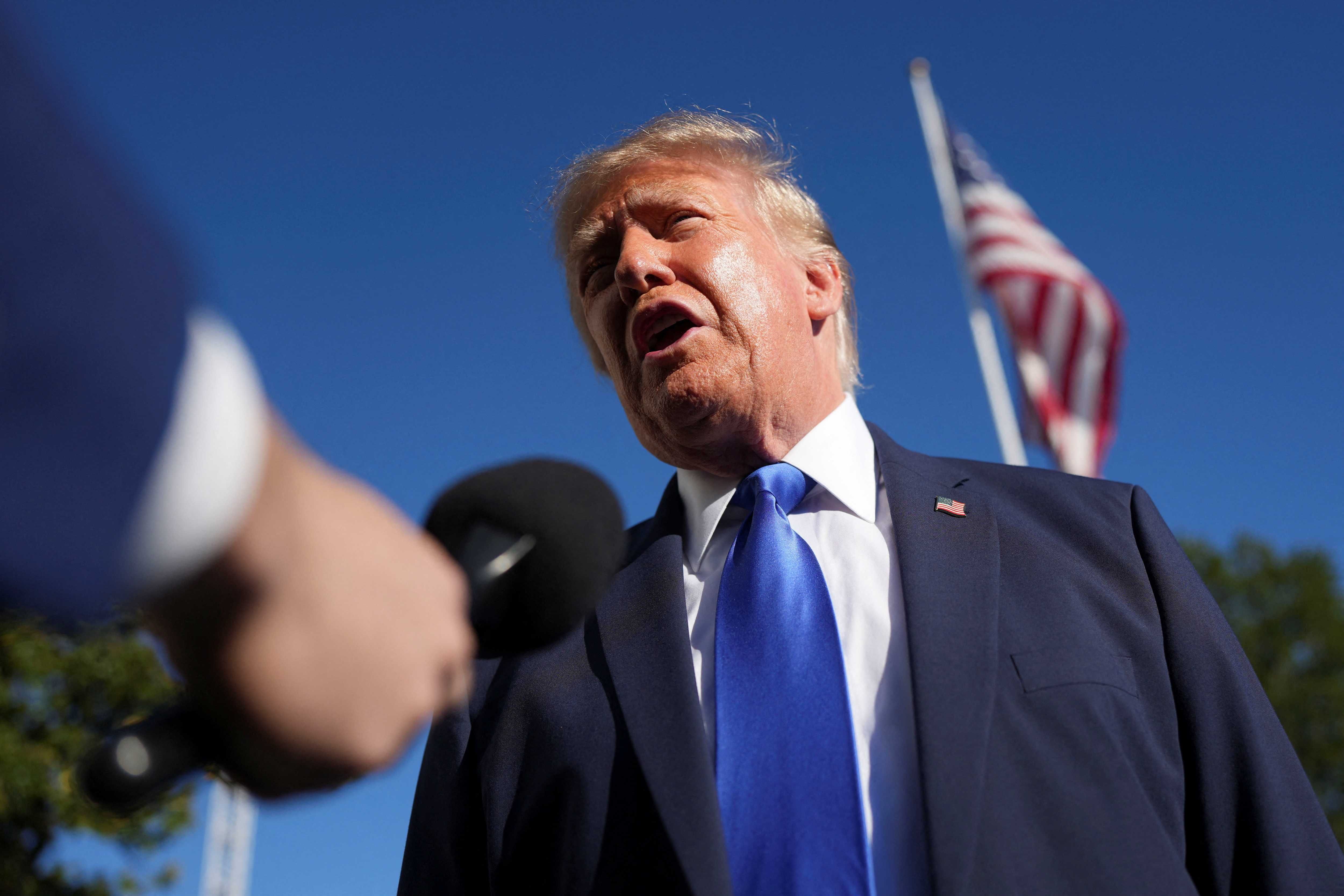
President Donald Trump risks reviving an Espionage Act prosecution over his alleged mishandling of classified documents at Mar-a-Lago as his Justice Department lays the groundwork with its fights to beat a deadline in a case against former FBI Director James Comey.
Comey’s lawyers asked U.S. District Judge Trevor McFadden in a court filing Tuesday to throw out the charges, which prosecutors filed as a criminal information, a charge they can sign without a grand jury. Prosecutors argue it meets the 10-year deadline Congress set for Espionage Act crimes.
That same deadline covers Trump, whose Espionage Act charges for keeping classified documents rest mostly on files the FBI seized on Aug. 8, 2022, CNN reported. If prosecutors win against Comey, the next Justice Department to weigh charges against Trump would have an easier time beating it.
Prosecutors filed the charges on Oct. 5, the last day of the 10-year window after a 2016 leak to a reporter they say Comey directed, the charging document shows.
“An indictment for any violation” of the Espionage Act “may be found at any time within ten years,” says Section 19 of a 1950 law, which Comey’s lawyers quoted Tuesday. An indictment is a charge approved by a grand jury of citizens.
A Justice Department official told CNN that filing such a charge to pause a deadline is “a widely recognized practice in federal court.” Prosecutors have also told McFadden that the court “is powerless to entertain” Comey’s challenge until a grand jury indicts him.
The new DOJ position would give any future prosecutor racing a deadline, including one weighing charges against Trump, a way to pause the clock without a grand jury and keep the charge beyond a judge’s review.
Comey's lawyers pointed out that the government would allow the allegations to "hang over Mr. Comey indefinitely, with the courts incapable of addressing the defect in its filing."
To go to trial, prosecutors would still need a grand jury to indict and would argue the indictment counts from the earlier filing date, a step three federal appeals courts have allowed under the ordinary five-year deadline, Comey’s lawyers wrote in an Oct. 16 motion.
Trump faced the same law in 2023, when special counsel Jack Smith charged him with 31 counts of willfully keeping national defense information at Mar-a-Lago.
U.S. District Judge Aileen Cannon dismissed that case in July 2024 over how Smith was appointed. But Trump’s term ends in January 2029. The deadline on most of those charges runs until August 2032, 10 years after the seizure, according to CNN.
“I found myself wondering if Trump could one day rue arguing in favor of 10 year statutes of limitation here,” national security journalist Marcy Wheeler wrote after seeing Comey's motion to dismiss the charges on Wednesday.
The leak case is the third the Justice Department has brought against Comey in 13 months, his lawyers wrote in the Oct. 16 motion.
In a recent podcast, Attorney General Todd Blanche dismissed the idea that the DOJ could act independently of the president's wishes, making it clear that a department serving Trump brought the Comey case.
“I work for President Trump," he stated.
Comey's lawyers said in Tuesday's filing that prosecutors wanted to indict their client on Oct. 9 but agreed not to seek an indictment for 30 days, a pause that runs out in early November. McFadden will hear arguments on the charges Friday at 11 a.m.